






An 87-Year-Old Problem
Imagine a mathematical machine. You put numbers in, and it spits out new numbers according to a specific rule. The Jacobian conjecture, a famous problem in algebraic geometry first formally proposed in 1939, deals with these kinds of machines, called
polynomial functions. The conjecture proposed a simple test: if a function passed a specific mathematical health check (calculating its Jacobian determinant), it should always be reversible. In other words, you should always be able to work backward from the output to find the original input. For nearly 90 years, mathematicians believed this to be true but couldn't definitively prove it. Disproving it would require finding just one counterexample—a function that passed the test but was irreversible—but that single example remained elusive.
Enter a New Kind of Thinker
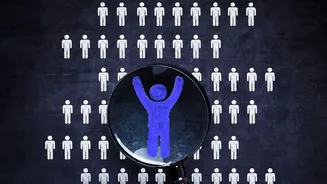
In July 2026, while many were watching the World Cup final, a mathematician named Levent Alpöge announced he had found the elusive counterexample. His collaborator was not a person, but an AI model from the company Anthropic called Claude Fable 5. This wasn't a case of an AI simply crunching numbers faster than a human. The challenge in the Jacobian conjecture wasn't complex calculation, but navigating a near-infinite search space of possible functions to find one with just the right properties. The AI was able to sift through this vast landscape of possibilities and pinpoint a function that met the specific criteria to disprove the long-standing idea for spaces in three or more dimensions. The resulting formula was so short and elegant it could fit in a single social media post, allowing other mathematicians to quickly verify the finding.
More Than a Counterexample
The discovery was hailed as a milestone, but not just for solving a single problem. It represents a fundamental shift in how mathematical research can be done. Historically, AI has been good at following instructions. These newer models are demonstrating a capacity for something akin to intuition. In a separate breakthrough, DeepMind's AI helped mathematicians discover a new theorem in knot theory—a field that studies the properties of complex knots, with applications in physics and biology. The AI didn't solve the problem on its own; instead, by analyzing huge datasets, it identified hidden patterns and connections that human experts had missed, guiding them toward a new and provable insight. This suggests AI's greatest strength may not be in replacing human mathematicians, but in augmenting their intuition.
The Human-AI Partnership
So what happens next? The consensus is that AI is becoming an indispensable tool for discovery. It can act as a powerful collaborator that surfaces interesting conjectures and finds unexpected connections between different areas of math. However, many mathematicians caution that finding an answer isn't the same as understanding the 'why' behind it. A counterexample can disprove a conjecture, but it doesn't necessarily offer a deep narrative or explanation, which is the heart of mathematical understanding. This is where humans remain essential. The AI can point to a destination, but the human mathematician is still needed to understand the journey and draw a map for others to follow. This new paradigm is a partnership: AI provides the powerful pattern-finding and brute-force search, while humans provide the intuition, context, and deeper interpretation.