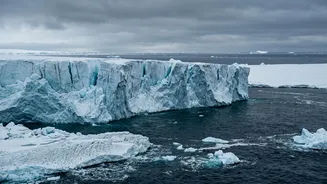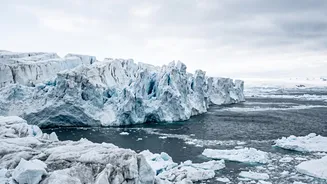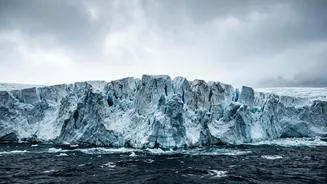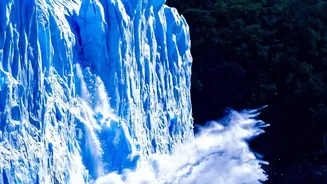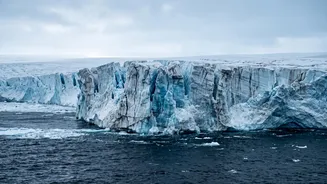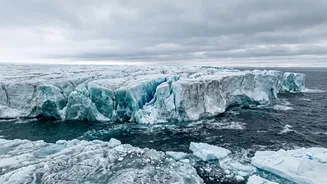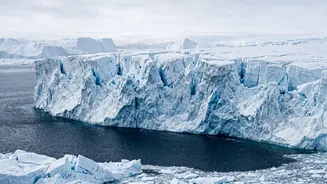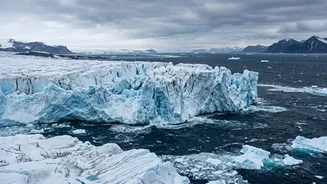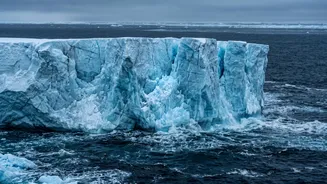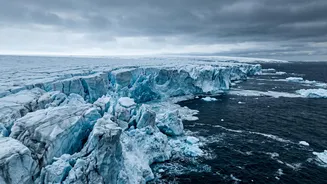




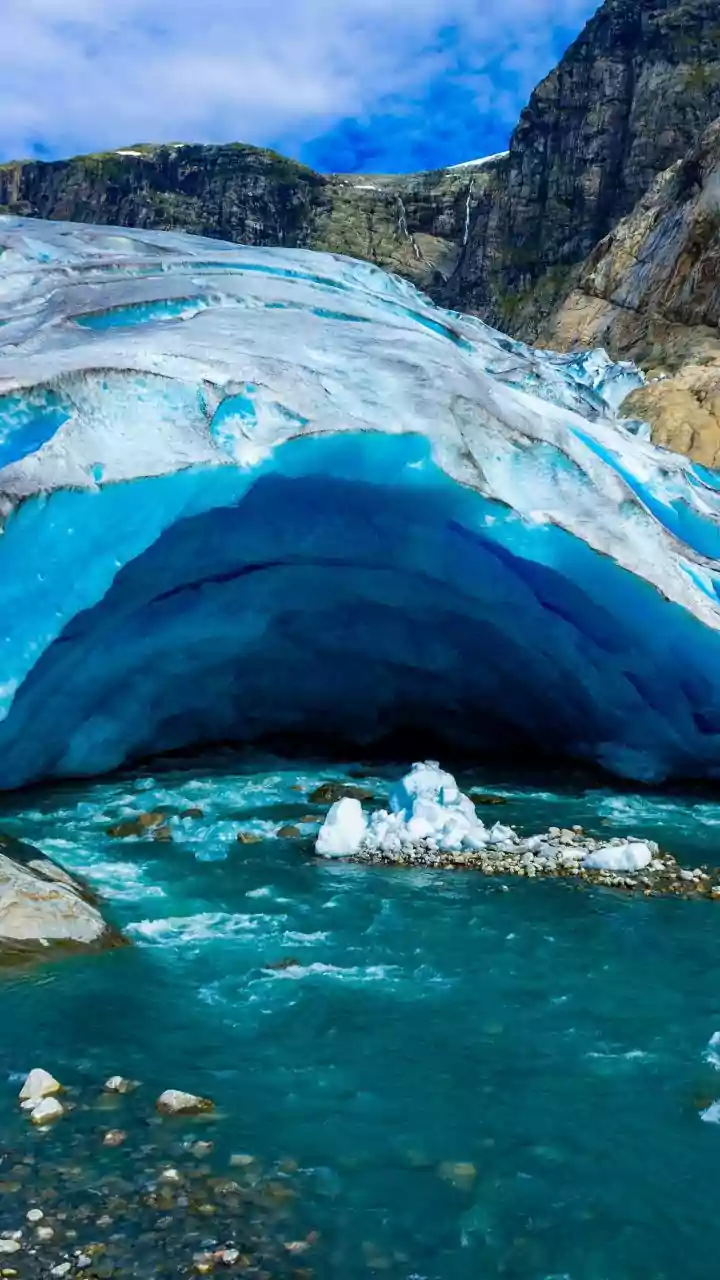
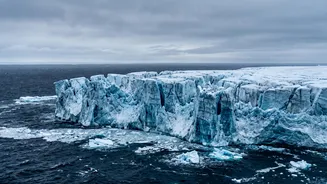
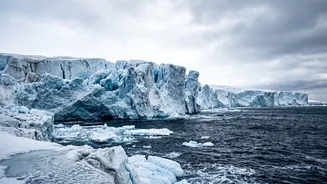
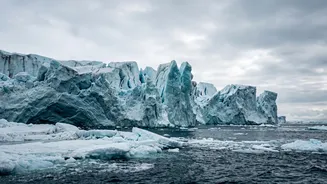
Antarctica’s Thwaites Glacier, ominously nicknamed the ‘Doomsday Glacier’, is one of the most critical factors in future sea-level rise. Now, new research has doubled its potential contribution, revealing a far more aggressive melt than ever before.
The 'Doomsday Glacier' Explained
Roughly
the size of Great Britain, the Thwaites Glacier is the widest on Earth. It currently contributes about 4% of the world's annual sea-level rise. But its real significance lies in its role as a natural cork. It holds back a vast section of the West Antarctic Ice Sheet, which contains enough ice to raise global sea levels by a catastrophic 10 feet if it were to collapse entirely. For decades, scientists have monitored its rapid thinning and retreat with growing alarm, trying to accurately predict its future and the subsequent impact on global coastlines.
A New Look Beneath the Ice
A recent study published in Nature Communications has fundamentally changed our understanding of how Thwaites is melting. Previously, scientific models treated the 'grounding line'—the point where the glacier lifts off the seabed and starts to float—as a relatively narrow and stable boundary. However, new satellite data combined with advanced computer modelling by researchers at the University of California, Irvine, and NASA’s Jet Propulsion Laboratory reveals a different reality. Warm ocean water is not just nibbling at the edge; it's actively being pumped several kilometres inland under the glacier's base during tidal cycles. This creates a wide 'grounding zone' of vigorous melting that was previously unaccounted for, drastically weakening the glacier's connection to the seabed.
Recalculating the Risk
This new understanding has led to a startling revision of sea-level rise projections. The updated models, which better match real-world observations from the past three decades, now predict that Thwaites alone could contribute up to 30 millimeters (about 1.2 inches) to global sea levels by 2100. This is double the previous average estimate of 15 millimeters from earlier models. Crucially, this projection is based on a scenario with no additional climate warming beyond what has already occurred, isolating the effect of this newly understood melting process. This suggests that past forecasts may have significantly underestimated the speed and scale of the threat.
Losing Its Grip
The accelerated melting also increases the risk of the glacier losing its grip on key underwater stabilising points. The new simulations show a 60% probability that by 2100, Thwaites could detach from the Mouginot Ridge, a critical underwater feature that currently helps to hold it back. Some scenarios even suggest this unpinning could happen as early as the late 2030s. Losing this anchor would likely cause the glacier's retreat to speed up even more as it slides down the retrograde slope of the seafloor into deeper water, exposing more of its base to warm ocean currents.
Why This Matters for India
While a few dozen millimeters might not sound like much, it represents a significant increase in risk for coastal populations worldwide. For India, with its 7,500-kilometer coastline and densely populated low-lying areas, the implications are severe. Rising sea levels directly translate to more frequent and severe coastal flooding, accelerated erosion, and saltwater intrusion into freshwater sources and agricultural lands, particularly in vulnerable regions like the Sundarbans, Gujarat, and Tamil Nadu. Millions of lives and livelihoods in major cities such as Mumbai, Chennai, and Kolkata are at increased risk from events that are unfolding thousands of kilometres away in Antarctica.