

A Glimpse Into the Dawn of Seafaring
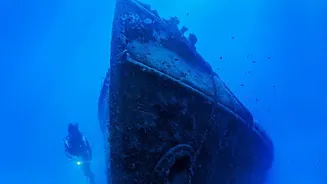
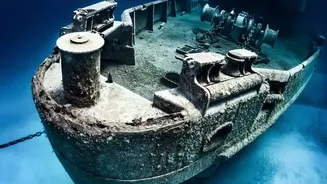
Deep beneath the turquoise waters off Kekova Island in Antalya, maritime archaeologists have located and begun to study what is now believed to be the world's oldest known shipwreck. The site, located about 30 metres underwater, has been dated to approximately
2600-2400 BCE. This extraordinary find places it squarely in the Early Bronze Age, a formative period when societies were first learning to harness the power of metal. Unlike more famous Late Bronze Age wrecks, finds from this early era are exceptionally rare. The discovery consists of a scattered field of over 30 ceramic amphorae (large storage jars) and three large stone anchors. While the wooden hull of the roughly 10-metre-long ship has long since disintegrated, the arrangement of the artifacts on the seabed provides a ghostly outline of its final resting place.
The World of 4,500 Years Ago
To understand the importance of this discovery, we must travel back in time to the third millennium BCE, around the same time the Great Pyramids of Giza were being built in Egypt. This was an age of transformation. Across the Aegean and Near East, small farming villages were evolving into fortified towns and early cities. The revolutionary technology of the time was bronze, an alloy of copper and tin that created harder, more durable tools and weapons. This innovation fuelled demand for raw materials, but copper and tin deposits were geographically scattered. The only way to connect the mines to the burgeoning population centers was through complex and often dangerous trade networks over sea. This sunken vessel was a crucial cog in that ancient machine, a testament to the bravery and ingenuity of some of the world's first long-distance sailors.
Unlocking Ancient Maritime Mysteries
The contents of the wreck offer invaluable clues about this nascent global economy. Early analysis of the pottery suggests connections to the Levant, a region encompassing modern-day Israel, Palestine, and Jordan. Clay analysis indicates the jars were likely made in the Jordan Valley and filled with commodities like olive oil or wine for export. The ship was probably sailing west, perhaps toward Crete or even Troy, when it sank. This 'missing piece' of the puzzle reveals that extensive trade networks were in place far earlier than previously thought, connecting the eastern Mediterranean with the Aegean. Every artifact recovered helps answer fundamental questions: Who were these traders? How did they navigate without modern instruments? And what does this tell us about the complex interactions between ancient cultures?
The Painstaking Work of Underwater Archaeology
Excavating a 4,500-year-old shipwreck is an incredibly delicate process. Teams of specialized divers, led by archaeologists from Akdeniz University, must meticulously map the site before moving a single object. Each artifact is catalogued and carefully lifted to the surface. Once on land, a new journey of conservation begins. Some of the recovered jars remarkably still contain visible residue of their ancient contents. One archaeologist who examined the residue said she 'could not believe how much was visible'. Scientific techniques like isotopic analysis will help trace the cargo back to its source and confirm what was being transported, providing a direct link to the commerce of a lost world.