
The Post-Monsoon Clarity
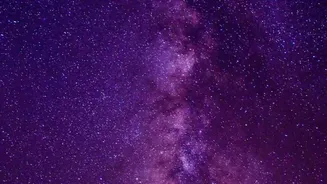
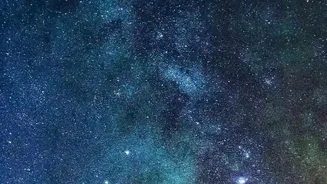
If you've ever felt the stars shine with a special intensity in September, you aren't imagining it. The primary reason is the end of the monsoon season across much of India. The heavy rains wash dust and pollutants from the atmosphere, and the subsequent
drop in humidity means there's less water vapor to scatter the starlight. This transition from the hazy, moisture-laden air of summer to the cooler, drier air of early autumn creates exceptionally transparent skies. The result is a sharper, higher-contrast view of the cosmos, making faint stars and distant objects appear more defined and brilliant.
An Evening With Dazzling Venus
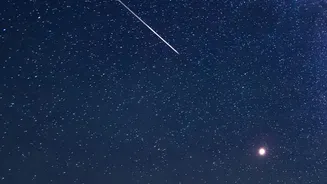
This September, the planet Venus commands attention in the evening sky. On September 18, it reaches its peak brightness for this viewing period, appearing as a stunningly bright, star-like point of light in the west shortly after sunset. To catch it, you'll want a clear, unobstructed view of the western horizon as twilight fades. Its brilliance is unmistakable, outshining everything else in that part of the sky. Throughout the month, it remains a beautiful target for evening observers.
A Parade of Planets
Venus isn't the only planet on display. September 2026 is a fantastic month for planet-spotting. Saturn will be visible for most of the night, offering a great opportunity for viewing. On September 26, the full Harvest Moon will rise with Saturn appearing nearby, creating a beautiful pairing in the night sky. Mars is visible as a reddish point of light in the early morning hours, rising a few hours before the sun. And for early risers, mighty Jupiter also makes an appearance in the pre-dawn sky.
The Autumn Constellations Arrive
September marks a celestial transition. While some summer constellations like Cygnus are still visible, the stars of autumn are beginning to take centre stage. Look for the Great Square of Pegasus, a large and easily identifiable asterism that serves as a signpost for the new season. From there, you can trace the stars of Andromeda. On a very dark, moonless night, you might even spot the faint, fuzzy patch of the Andromeda Galaxy, the most distant object visible to the naked eye. Also prominent is the W-shaped constellation of Cassiopeia.
The Harvest Moon and Equinox
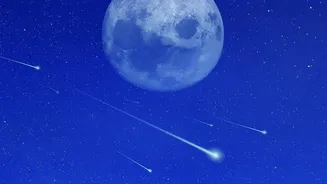
Two other key events mark the month. On September 22, the September Equinox occurs, officially signaling the start of autumn in the Northern Hemisphere. Then, on September 26, the full Harvest Moon will illuminate the night. This is the name given to the full moon closest to the autumn equinox. It rises around sunset and often appears with a golden-orange glow as its light filters through more of Earth's atmosphere. Its proximity to Saturn this year makes it an especially noteworthy event.
Tips for the Best Viewing
To make the most of September's sky, a little preparation goes a long way. The most important step is to get away from city lights. Even a short drive to a rural area with less light pollution can dramatically increase what you can see. Allow your eyes about 15-20 minutes to fully adapt to the darkness; avoid looking at your phone during this time. While many of this month's highlights are visible with the naked eye, a simple pair of binoculars can reveal stunning details, such as the craters on the Moon or even some of Jupiter's moons.