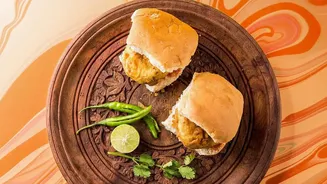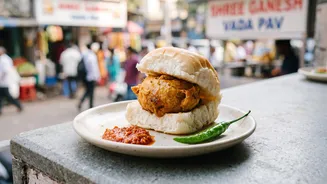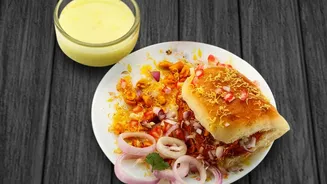





In the energetic morning rush of Mumbai, one humble street food reigns supreme as the city's breakfast of choice. It’s the Vada Pav, a dish that's far more than a simple snack; it's a cultural icon and the fuel that powers millions.
The Heart of the Matter: The Batata Vada
At the core of this
beloved dish is the batata vada, a masterclass in texture and flavour. 'Batata' simply means potato in Marathi, but the vada is anything but simple. It begins with boiled and coarsely mashed potatoes, which are then infused with a vibrant mix of spices. A tempering of mustard seeds, curry leaves, asafoetida, and a paste of ginger, garlic, and green chillies is folded into the potatoes, creating a filling that is aromatic and savoury with a gentle kick. This seasoned potato mixture is shaped into spheres, dipped into a thick batter made from gram flour (besan), and deep-fried until it achieves a perfect golden-brown crispness. The result is a delightful contrast: a crunchy, savoury shell giving way to a soft, fluffy, and flavourful potato interior. This fritter is the star of the show, delivering a satisfying and hearty bite every time.
The Perfect Vessel: The Ladi Pav
The vada would be incomplete without its partner, the ladi pav. This isn't just any bread roll; it's a specific type of bread with a history as rich as its taste. Introduced to India by the Portuguese, whose word 'pão' gave the bread its name, the pav was perfected in Mumbai. 'Ladi' refers to a row or line, which is how these buns are baked—snuggled together in a tray. This method ensures they have soft, tear-away sides instead of a uniform crust, making them incredibly pillowy and slightly chewy. The ladi pav's texture is its superpower; it's soft enough to yield to the vada's crispy coating but sturdy enough to absorb the accompanying chutneys without disintegrating. Its slightly sweet flavour provides the perfect counterbalance to the spicy potato filling, creating a harmonious and balanced experience.
A Symphony of Flavour: The Chutneys
While the vada and pav form the foundation, the chutneys are what elevate the dish from a simple snack to a complex flavour explosion. A classic vada pav is rarely served plain. It is almost always accompanied by at least one, and often several, chutneys. The most iconic is the dry garlic chutney (lasun chutney), a coarse, fiery powder made from garlic, desiccated coconut, and red chilli powder. This is generously sprinkled inside the pav, adding a punch of heat and pungent flavour. Often joining the garlic chutney is a fresh, vibrant green chutney made from coriander, mint, green chillies, and lemon juice. Some vendors also add a sweet and tangy tamarind chutney to cut through the spice. These sauces seep into the soft pav, adding moisture and layers of complexity that make each bite a new discovery.
More Than a Snack, A Breakfast Ritual
Though available all day, the vada pav holds a special place in Mumbai's breakfast culture. Its invention in the 1960s, credited to Ashok Vaidya outside Dadar station, was aimed at providing a quick and affordable meal for the city's mill workers. It needed to be cheap, filling, and easy to eat on the go, especially in crowded local trains. This carbohydrate-rich combination of potato and bread provided instant energy for a long day's work. That legacy continues today. For students, office-goers, and labourers alike, the vada pav remains the quintessential grab-and-go breakfast. It’s an accessible, democratic food that transcends social classes, uniting the city in a shared daily ritual.