






The Invisible World of Household Dust
That layer of grey fluff on your surfaces is more complex than you might think. Household dust is a cocktail of particles from both inside and outside your home. A large portion of it consists of dead skin cells shed by humans and pets. In fact, this
is the primary food source for microscopic dust mites. The rest is a mix of fabric fibres from clothes and furniture, pollen brought in from outdoors, soil particles, and pet dander. In many homes, dust also contains bacteria, mould spores, and the waste from insects and dust mites, which are potent allergens.
Why Fabric Is a Perfect Dust Trap
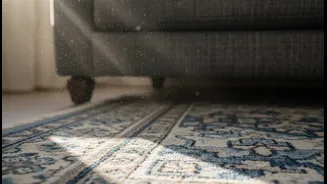
Unlike smooth, hard surfaces like wood or glass where dust settles on top and can be easily wiped away, soft furnishings act like a filter. The porous, woven nature of fabrics like cotton, wool, and synthetic blends provides countless microscopic nooks and crannies for dust particles to settle into. Heavy drapes, high-pile carpets, and plush upholstery are particularly effective at trapping and holding onto dust. Every time you sit on a sofa or walk across a rug, these trapped particles can be pushed deeper into the fibres or get released back into the air you breathe.
The Health Effects of Hidden Dust
For most people, a little dust is just an unsightly nuisance. However, for millions who suffer from allergies and asthma, it can be a significant health trigger. Dust mites and their waste products are among the most common indoor allergens, causing symptoms like sneezing, runny noses, itchy eyes, and coughing. In sensitive individuals, exposure can lead to more severe reactions, including wheezing, shortness of breath, and asthma attacks. Since we spend so much time in close contact with our beds, sofas, and carpets, reducing the allergen load in these items is crucial for maintaining good indoor air quality.
Your Action Plan for Cleaner Furnishings
Managing dust in soft furnishings requires a consistent routine. Start by vacuuming upholstery, curtains, and rugs at least once a week using an attachment tool to get into crevices. A vacuum with a HEPA filter is highly effective at trapping small allergen particles instead of recirculating them. For items like pillows and blankets, weekly washing in hot water is recommended to kill dust mites. Curtains should also be laundered or professionally cleaned every three to six months. Don't forget about mattresses; using 'mite-proof' covers can trap allergens and make cleaning much easier.
When to Call in the Professionals
While regular home care makes a huge difference, periodic deep cleaning is essential for removing the embedded dirt and oils that vacuums can't reach. A general guideline is to have your upholstery professionally cleaned every 12 to 24 months. However, homes with children, pets, or individuals with allergies may benefit from a more frequent schedule, such as every 6 to 12 months. Professional services use specialised equipment and solutions to extract deep-seated grime, which not only improves the appearance of your furniture but also extends its life and contributes to a healthier living space.