



A Trio of Bright Planets
September offers a wonderful opportunity to spot several of our planetary neighbours. Venus will be a stunningly bright object in the western sky just after sunset, especially at the beginning of the month. It will be at its most luminous this month,
making it unmissable even in city skies. For early risers, the pre-dawn eastern sky is dominated by the very bright, white light of Jupiter. It's the king of the morning sky this month. Joining Jupiter is the reddish glow of Mars, also visible in the east before sunrise. While fainter than Jupiter, its distinct colour makes it a rewarding sight. Yellowish Saturn is also visible for most of the night, rising in the east shortly after sunset. Although its famous rings require a telescope, its steady golden light is a beautiful sight for the naked eye.
The Harvest Moon Rises
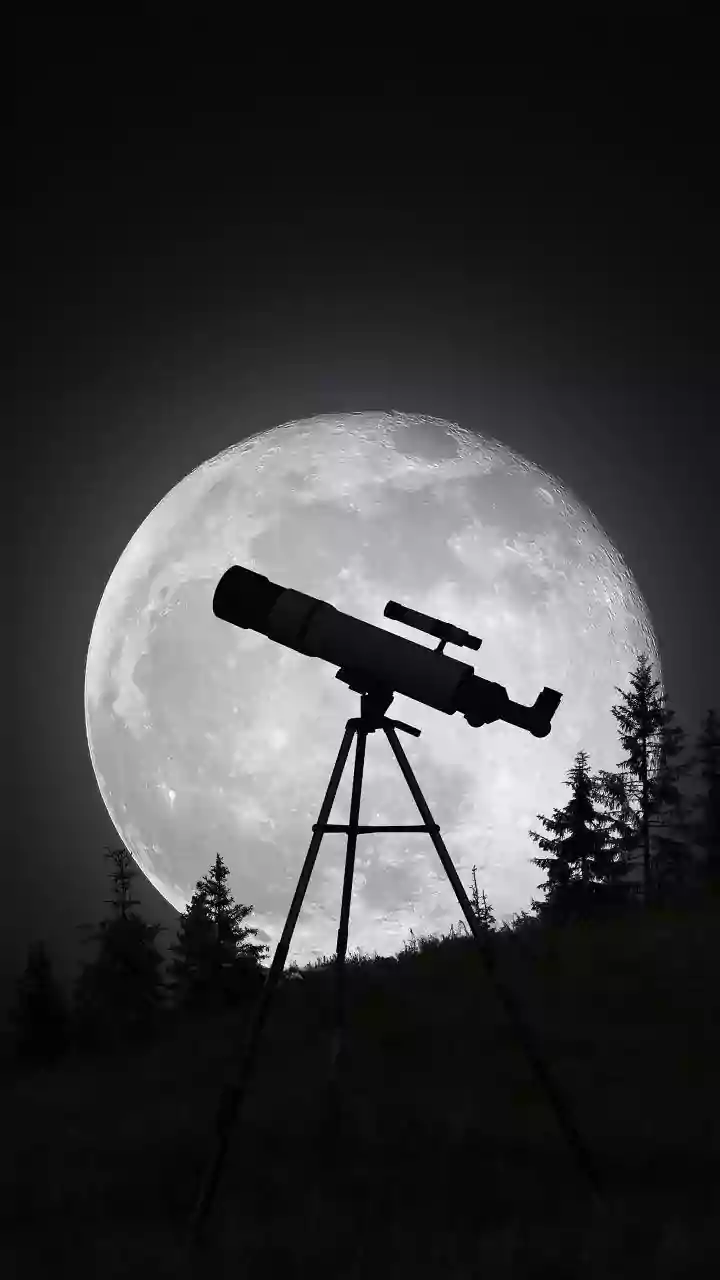
The full moon of September is famously known as the Harvest Moon. This year, it reaches its peak illumination on Saturday, September 26. The name comes from a time before electric lights, when farmers would use the bright moonlight of the full moon closest to the autumn equinox to work later into the evening and bring in their crops. For several nights around the 26th, the moon will appear full to the naked eye. Look for it to rise in the east around sunset, taking on a beautiful golden-orange hue as its light filters through the atmosphere. This full moon is also called the Corn Moon in some traditions.
The Summer Triangle and Autumn Stars
While summer is ending, one of its most famous celestial landmarks, the Summer Triangle, remains prominent in the evening sky. This large asterism is made of three bright stars—Vega, Deneb, and Altair—which are the brightest stars in the constellations Lyra, Cygnus, and Aquila, respectively. Cygnus, the Swan, is particularly easy to spot as its main stars form a pattern known as the Northern Cross. As the month progresses, constellations associated with autumn become easier to see. Look for the Great Square of Pegasus rising in the east. This large square of four stars is part of the constellation representing the mythical winged horse and is a key signpost for the autumn sky. Other constellations like Cassiopeia, shaped like a 'W', and Andromeda are also well-placed for viewing.
A Dance of the Moon and Planets
September features several close approaches, or conjunctions, between the Moon and bright planets, creating lovely photo opportunities. In the pre-dawn hours of September 6, a crescent Moon will appear near Mars in the eastern sky. Just two days later, on the morning of September 8, the thin crescent Moon will pass very close to the much brighter Jupiter, making for a striking pair. Later in the month, on September 14, the waxing crescent Moon will have a close encounter with brilliant Venus in the evening sky just after sunset, offering a beautiful pairing low on the western horizon.
Marking the Change of Seasons
September also brings an important astronomical milestone: the autumnal equinox. In 2026, this event occurs on September 22 or 23, depending on your time zone. For India, it falls early on September 23. The equinox marks the moment the Sun crosses the celestial equator, and for the Northern Hemisphere, it signals the official start of autumn. On and around the equinox, day and night are of nearly equal length all across the globe. While this isn't a visual event you can watch in the sky, it's a significant marker of the changing seasons, bringing cooler nights that are perfect for stargazing.