


The Inescapable Threat
Japan sits on the Pacific Ring of Fire, making it one of the most seismically active countries in the world. The concern is not about minor tremors, which are a part of daily life, but about a catastrophic, large-scale earthquake striking the capital
directly. Government scientists estimate there is a roughly 70% probability of a magnitude-7 or greater earthquake hitting the Tokyo metropolitan area within the next 30 years. Such an event could instantly cripple the nation's entire administrative function, as the Prime Minister's office, central ministries, parliament, and the Bank of Japan are all packed into this single, vulnerable zone. This hyper-concentration of power is a vulnerability that policymakers have decided is too great to ignore.
A 'Vice-Capital' for Survival
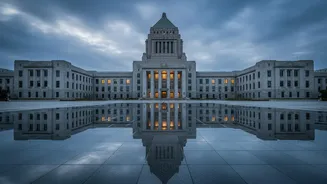
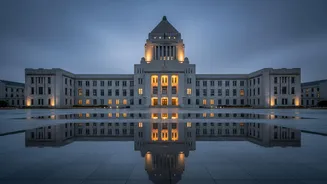
In response to this threat, Japan's parliament, the Diet, recently enacted legislation to establish a framework for a secondary or "vice-capital." This is not about permanently relocating the capital, a debate that has occurred in the past for different reasons like overcrowding. Instead, the goal is to ensure the continuity of government. The plan calls for designating one or more regions that can temporarily take over essential political, administrative, and legislative functions if Tokyo is incapacitated by a natural disaster or another major emergency. This ensures that even if the capital's infrastructure collapses, a command structure will remain to manage the crisis and govern the nation.
The Search for a Plan B
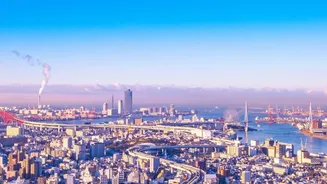
The law itself does not name a specific backup city, setting off a contest among various regions. To qualify, a candidate city must have a lower probability of being damaged by the same disaster that hits Tokyo and possess sufficient infrastructure to take on governmental roles. Osaka is widely seen as the frontrunner, a push heavily supported by the Japan Innovation Party (Ishin), which has long championed the idea and is a key coalition partner in the current government. However, other regions are also making their case. The governor of Aichi Prefecture and the mayor of Nagoya have announced their joint intention to become the vice-capital. Fukuoka and Hokkaido have also been mentioned as potential candidates.
More Than Just Buildings
The strategy goes beyond simply choosing a location. It involves significant investment in government facilities, secure transport links, and robust communication networks in the designated backup areas. Tax incentives and regulatory reforms are also part of the package to encourage private companies to move some functions, helping to decentralise the economy away from its over-concentration in Tokyo. Critics, however, question the immense cost and suggest a more streamlined, digital-first approach would be sufficient. They argue that modern cloud computing and remote work protocols could provide the necessary redundancy without building costly new physical infrastructure. Proponents counter that in a true catastrophe where power grids and networks fail, having a physical place for leadership to convene is essential for survival.
A Race Against Time
The push for a backup capital is driven by a stark timeline. The Nankai Trough, a massive undersea fault line, has historically produced devastating earthquakes every 100 to 150 years, and the last major event was in 1946. The government's own projections for a Nankai Trough megaquake are grim, with potential death tolls in the hundreds of thousands. While the new law is a significant step, the government must now formulate a basic policy within a year to clarify which functions will be duplicated and how roles will be divided between Tokyo and the backup capital during both normal times and emergencies. This move is less about prestige and more about survival, a pragmatic recognition that in a contest with nature, it is always wise to have a backup plan.