

What the 2027 Trial Run Entails
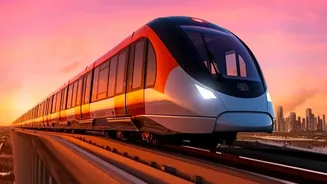
The 2027 trial run isn't just a test; it's a significant demonstration of progress on this complex project. According to Union Railway Minister Ashwini Vaishnaw, the first tests are expected to take place between May and June 2027. These runs will not
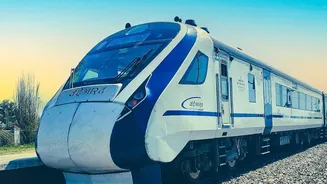
cover the entire 508-kilometre corridor but will focus on the most advanced section in Gujarat. The initial phase will likely be the Surat-Bilimora stretch, with the Surat-Vapi section also nearing completion. Officials have suggested that following a successful testing period of two to four months, the first commercial services could be launched on this segment. The train will be an indigenous model, developed under the Atmanirbhar Bharat vision, with the first body frame already completed and undergoing structural tests.
Gauging the Progress So Far
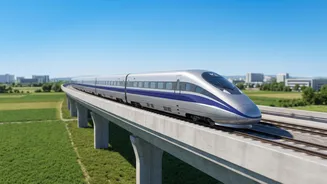
The project is a tale of two states, with construction in Gujarat significantly ahead of Maharashtra. As of mid-2026, the National High Speed Rail Corporation Limited (NHSRCL) reported substantial progress on the Gujarat side, with hundreds of kilometres of elevated viaducts and piers already erected. Work on stations like Surat, Vapi, Bilimora, and Bharuch is also in advanced stages. In contrast, progress in Maharashtra has been slower due to earlier challenges with land acquisition and political hurdles. However, land acquisition is now complete across the entire corridor, and work has commenced on crucial sections, including the 21-km underground tunnel near Mumbai, which features a 7-km undersea portion.
The Shinkansen Edge
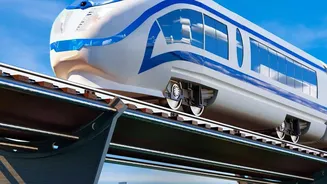
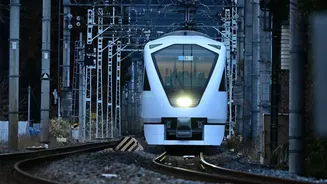
India's bullet train is being built in collaboration with Japan, utilising its world-renowned Shinkansen technology. This system is famous for its impeccable safety record, punctuality, and efficiency. The trains, based on the E5 Shinkansen series, are designed to operate at 320 km/h, slashing the travel time between Mumbai and Ahmedabad from over six hours to just around two hours for limited-stop services. The technology transfer from Japan includes not only the rolling stock but also advanced safety systems and track technology, like the J-Slab ballastless track which is being used in India for the first time. This partnership is seen as crucial for avoiding the cost overruns and technical pitfalls that can plague such mega-projects.
Overcoming Major Hurdles
The journey to 2027 has not been without its challenges. The project has faced significant delays and cost escalations from its initial estimates. Land acquisition proved to be a major obstacle, particularly in Maharashtra, requiring extensive negotiations and compensation packages. The COVID-19 pandemic also slowed down work and affected the collaboration between Indian and Japanese teams. Furthermore, the project's complexity is immense, involving the construction of 28 steel bridges, numerous river crossings—including over major rivers like the Narmada and Tapti—and the country's first undersea rail tunnel. The final cost of the project remains open and will only be clear once all civil and systems work is complete.
The Bigger Picture: A Blueprint for the Future
The Mumbai-Ahmedabad corridor is more than just a single route; it is envisioned as a blueprint for a nationwide high-speed rail network. The standards, construction methods, and operational systems being developed for this line are intended to be replicated for future corridors, which would streamline execution and reduce costs. The successful launch will not only revolutionise travel between two of India's key economic hubs but also serve as a powerful symbol of the country's engineering capabilities and commitment to modern infrastructure. Beyond the immediate travel benefits, the project is expected to spur regional development, create jobs, and offer a greener mode of transport.