




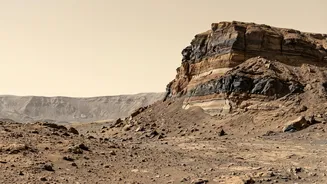
An Interplanetary Treasure Hunt
The mission at the heart of this ambitious timeline is the Mars Sample Return (MSR) campaign, a joint endeavor with the European Space Agency (ESA). Its goal is nothing short of revolutionary: to collect rock and soil samples gathered by the Perseverance
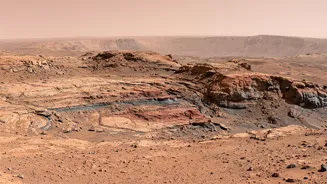
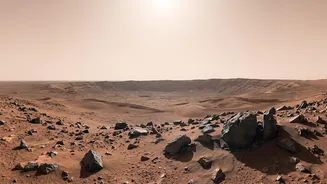
rover and bring them back for analysis in labs on Earth. Since 2021, Perseverance has been drilling into the Martian surface in Jezero Crater—an ancient lakebed thought to be a prime spot for finding signs of past life—and sealing core samples in titanium tubes. These samples are the treasure. Studying them with advanced instruments too large and complex to send to Mars could unlock secrets about the planet's history, its potential for life, and its geological evolution.
A Mission in Need of a Reset
While the scientific prize is immense, the mission's path has been rocky. An independent review board report in 2023 delivered a stark assessment, finding that the MSR program was established with an unrealistic budget and schedule from the outset. The board concluded there was a near-zero probability of meeting the original 2028 launch date due to technical challenges and soaring costs, which were estimated to balloon from an original $4.4 billion to as much as $11 billion. This critical report forced NASA to pause, delay official confirmation of the mission's cost and schedule, and re-evaluate its entire approach to this complex, multi-stage operation.
Why the 2033 Target?
The new 2033 target for the samples' arrival on Earth is a direct result of this reassessment. Getting to and from Mars isn't like a daily commute; it depends on the orbital alignment of Earth and Mars, which creates favorable, fuel-efficient launch windows roughly every 26 months. Acknowledging that the 2028 launch was impossible, the next feasible windows pushed the timeline into the 2030s. The 2033 date reflects a more realistic schedule for developing the unprecedented technology required, including launching a rocket from the surface of another planet for the first time—the Mars Ascent Vehicle (MAV).
The All-Important Confirmation Review
Before any of this can happen, the mission must pass its confirmation review. This is a standard but crucial milestone in every major NASA project. During this review, the agency evaluates the complete mission plan—including its technical design, schedule, and, most importantly, its budget—to determine if it is credible and achievable. It's the final go/no-go decision point before moving from design and formulation into the expensive fabrication and implementation phase. Given the independent board's scathing report, this review will be under intense scrutiny. NASA must now present a revised, more robust plan that addresses the concerns about cost overruns and technical readiness to get the official green light.
The Engineering Challenge of a Lifetime
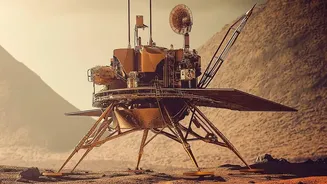
The complexity of the mission cannot be overstated. It involves multiple spacecraft and a series of robotic handoffs with no room for error. A Sample Retrieval Lander must touch down near Perseverance, collect the sample tubes, and load them onto the Mars Ascent Vehicle. That vehicle must then successfully launch into Mars orbit, where it will rendezvous with an ESA-provided Earth Return Orbiter. This orbiter will capture the sample container, ensure it's safely sealed to prevent any contamination of Earth's biosphere, and fly it back, releasing a small entry vehicle to land in a designated zone. Each step involves technology that has never been used before, making it one of the most challenging robotic missions ever conceived.