




What Are Ghost Particles?
Scientists call them neutrinos, but 'ghost particles' is a fitting nickname. They have almost no mass, no electric charge, and they rarely interact with any other matter. This quality allows them to travel across billions of light-years in a straight
line, carrying secrets from the most violent corners of the universe. Unlike light, which can be blocked by dust, or charged particles, which are bent by magnetic fields, neutrinos point directly back to their source. This makes them perfect cosmic messengers, but it also makes them incredibly difficult to catch. To spot one, you need a very, very big trap.
The Billion-Dollar Ghost Trap
Enter the IceCube Neutrino Observatory, one of the most audacious science experiments on the planet. Located at the South Pole, it consists of over 5,000 light sensors buried within a cubic kilometre of pristine Antarctic ice. This massive, frozen block acts as a detector. On the rare occasion a high-energy neutrino smashes into an atom in the ice, it creates a faint flash of blue light that the sensors pick up. This allows scientists to determine the particle's energy and its direction of arrival. It's a massive investment in the business of fundamental discovery, built to answer one of the biggest questions in astrophysics.
A Cosmic Cold Case
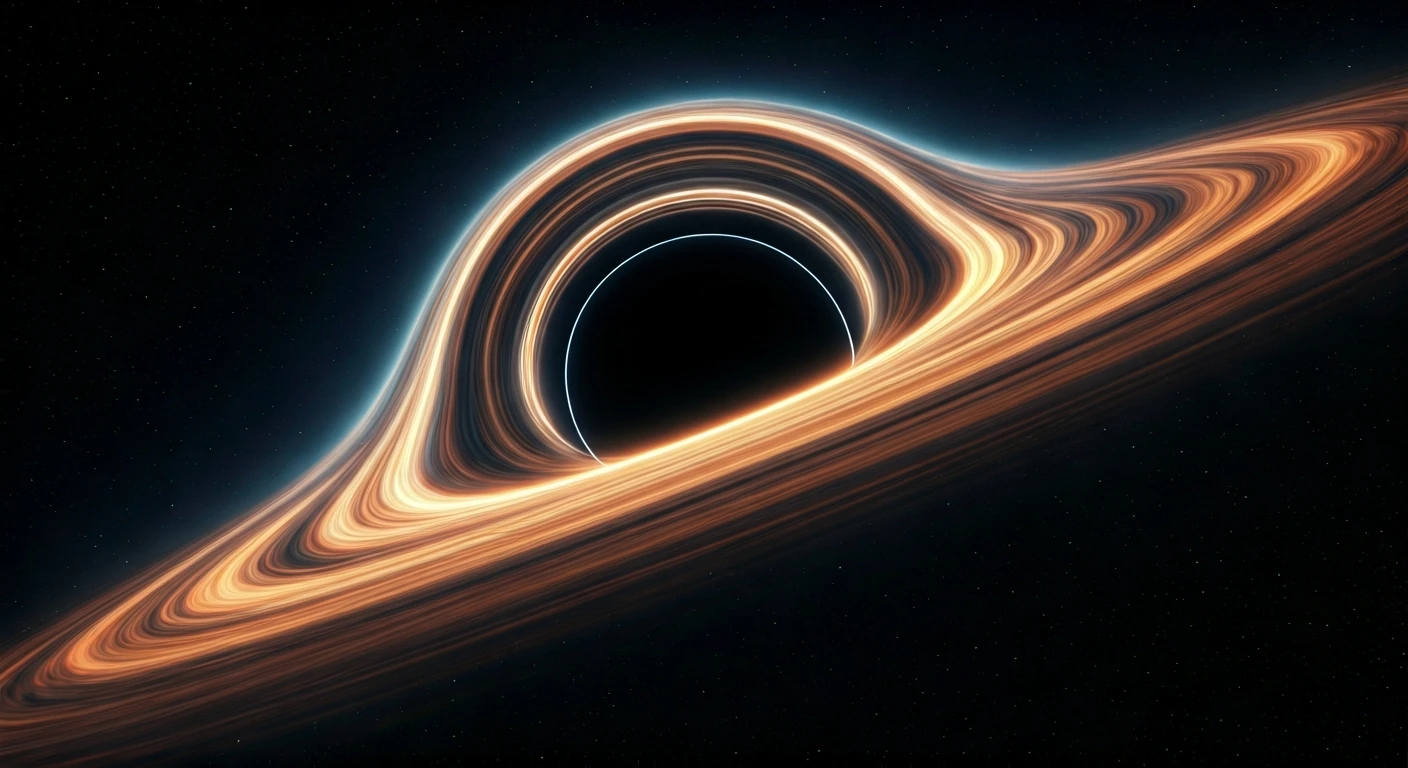
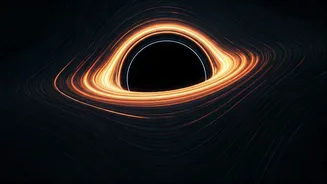
For years, IceCube has been detecting high-energy neutrinos coming from deep space, but their exact origin has been a persistent puzzle. Scientists suspected they were born in the most extreme environments imaginable: exploding stars, gamma-ray bursts, or the swirling chaos around supermassive black holes. In 2018, they managed to trace one such neutrino back to a type of active galaxy called a blazar, which has a jet of energy and matter aimed directly at Earth. But these known sources couldn't account for all the ghost particles IceCube was seeing, suggesting a major piece of the puzzle was missing.
An Unlikely Suspect Emerges
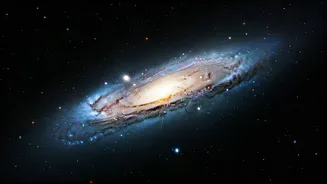
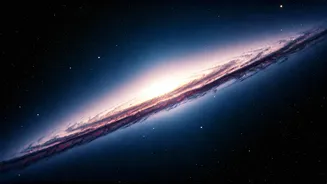
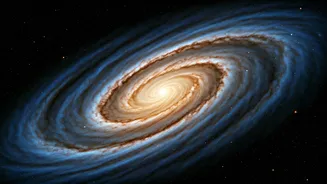
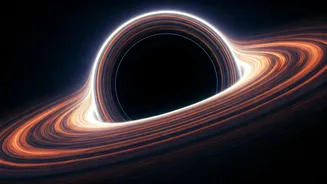
The latest twist in the story points to a different kind of culprit: a relatively nearby galaxy called NGC 1068. Located about 47 million light-years away in the constellation Cetus, NGC 1068 is a type of active galaxy known as a Seyfert galaxy. Like a blazar, it has a voracious supermassive black hole at its core, but unlike a blazar, its energetic centre is hidden from our view by a thick shroud of cosmic dust and gas. While this dust blocks high-energy light like gamma rays from escaping, it can't stop the ghostly neutrinos. IceCube detected a stream of about 80 neutrinos coming from this galaxy, providing the first strong evidence that these dusty, active galaxies are cosmic particle factories.
A New Window on the Universe
This discovery is significant because it suggests a whole new class of objects are responsible for creating these energetic particles. For years, astronomers were looking for sources that were bright in gamma rays, but NGC 1068 is faint in that type of light, precisely because the dust smothers it. The finding implies that many of the universe's neutrinos may be coming from these obscured galactic cores that were previously overlooked. This doesn't just solve one part of the neutrino mystery; it opens up a new way to study the extreme physics happening deep inside the most active and hidden regions of the cosmos.