

What is an 'Evening Elongation'?
In simple terms, an elongation is the apparent separation between the Sun and a planet as we see it from Earth. For planets that orbit closer to the Sun than we do, like Venus and Mercury, this angle is key. On August 15, 2026, Venus will reach its 'greatest
eastern elongation'. This means it will appear at its farthest point from the Sun in our evening sky. Think of Venus on an invisible leash tied to the Sun; greatest elongation is when that leash is stretched to its maximum length. This allows the planet to linger in the sky long after the Sun has dipped below the horizon, making it wonderfully easy to see.
Why This Makes Planet Spotting Easy
The beauty of a greatest elongation is its simplicity for us sky-watchers. Because Venus is at its widest separation from the Sun’s glare, it stands out with remarkable clarity in the twilight. On this day, it will be the brightest object in the evening sky, besides the Moon, shining at a brilliant magnitude of -4.4. This intense brightness means you don't need a pristine, dark sky far from city lights to enjoy the view. Even from a city balcony or a local park, Venus will be an unmissable, steady beacon of light. You won’t need any special equipment either—this celestial show is perfectly designed for the naked eye.
Your Simple Guide to Seeing Venus
Spotting Venus on and around August 15 is incredibly straightforward. Just after sunset, find a spot with a clear view of the western horizon. Look towards the area where the sun just set, and you will see a brilliant, unwavering point of light. That’s your target. Unlike stars, which twinkle, planets tend to shine with a more constant glow. For those in India, Venus will be visible low in the western sky. The event occurs at 06:00 UTC on August 15th, which corresponds to 11:30 AM IST, but the viewing opportunity is in the evening of that day. On August 16, a thin crescent Moon will also appear near Venus, making for an exceptionally picturesque pairing.
What Else to Look For
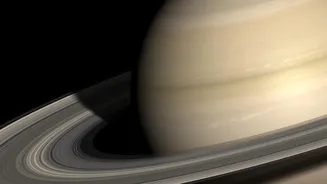
While Venus will be the undisputed star of the evening show, August 2026 is a fantastic month for stargazing in general. Early risers can catch a spectacular conjunction of Jupiter and Mercury in the pre-dawn eastern sky around the same date, August 15. The famous Perseid meteor shower also peaks around August 12-13, with dark, moonless skies promising a great display of shooting stars. Later in the month, Saturn will be visible rising in the east as the evening progresses. While Venus is a great starting point, let it be your gateway to exploring the other wonders the night sky has to offer.
A 'Star' with Two Faces
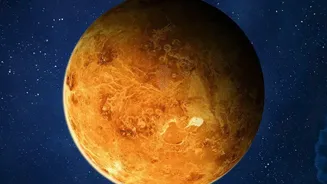
For centuries, Venus has captivated observers. Because its orbit keeps it close to the Sun from our perspective, it never appears high in the sky at midnight. Instead, we only see it as a brilliant 'evening star' after sunset during its eastern elongations or as a 'morning star' before sunrise during its western elongations. Its stunning brightness is due to its thick, highly reflective cloud layer, which bounces a huge amount of sunlight back into space. If you have a small telescope, this is a great time to look at Venus; around its greatest elongation, it appears as a tiny, half-lit moon.