






An Expanded Bloc, A Broader Agenda
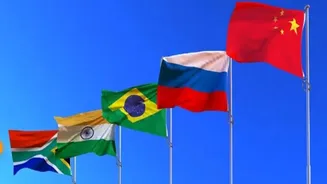
What began as a forum for Brazil, Russia, India, and China (later joined by South Africa) has transformed into a much larger entity. The recent inclusion of Egypt, Ethiopia, Iran, Saudi Arabia, the United Arab Emirates, and Indonesia has significantly
boosted the bloc's demographic and economic weight. Together, the expanded BRICS now represents nearly half the world's population and accounts for over a third of global GDP in purchasing power parity terms, surpassing the G7. This expansion is central to the 'new context'. It brings major energy producers like Saudi Arabia and the UAE into the fold, alongside strategically located nations like Egypt and Ethiopia, creating new corridors for trade and investment. The group’s agenda has moved beyond dialogue, with a clear focus on building tangible economic frameworks and asserting the collective influence of the Global South on the world stage.
The Push for Alternative Trade Mechanisms
A key pillar of the BRICS economic strategy is reducing dependency on the US dollar for international trade. This push, often termed 'de-dollarization', is less about creating a single common currency—a move widely seen as unrealistic for now—and more about creating practical alternatives. The focus is on encouraging trade settlement in national currencies, such as the Rupee-Rouble mechanism between India and Russia, and developing new payment systems. This drive has gained urgency following Western sanctions on Russia, which highlighted the risks of relying on a single financial architecture. While the rhetoric can be strong, officials, particularly from India, have framed the goal as increasing efficiency and reducing transaction costs, rather than launching an ideological campaign against the dollar. The dollar’s dominance in global trade invoicing and reserves remains strong, but the development of alternative payment infrastructures like China's CIPS system signals a gradual, long-term shift.
Building Institutions for Investment
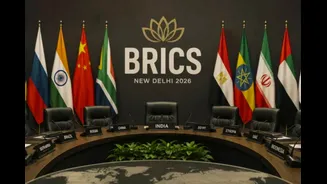
The most concrete symbol of the BRICS investment push is the New Development Bank (NDB). Established in 2015, the NDB's mandate is to mobilize resources for infrastructure and sustainable development projects within member countries and other emerging economies. To date, the bank has approved nearly $43 billion in financing for around 140 projects spanning clean energy, transport infrastructure, water sanitation, and digital infrastructure. Under India's 2026 chairship, further initiatives have been launched to foster economic integration. These include a 'Global Value Chains Action Plan' and a proposed portal to support Medium, Small, and Micro Enterprises (MSMEs) by helping them access trade finance and international markets. These institutional efforts are designed to create a self-sufficient ecosystem that can fund its own development and enhance intra-bloc commercial ties.
India's Strategic Balancing Act
For India, the evolving BRICS presents both a significant opportunity and a complex challenge. New Delhi views the bloc not as an anti-Western alliance, but as a vital platform to champion its vision of a 'multipolar' world and amplify the voice of developing nations. The goal is to gain greater bargaining power within the existing global order, pushing for reforms at institutions like the UN Security Council, IMF, and World Bank. The expanded membership allows India to build new coalitions and deepen ties with key partners in the Middle East and Africa. However, it also requires a delicate balancing act. India must manage its strategic partnership with the United States and other Western nations while navigating the complexities of a group where China is the dominant economic power. India’s approach is one of 'multi-alignment', using the BRICS platform to pursue its own national interests, from energy security to digital transformation, without getting entangled in binary geopolitical contests.