
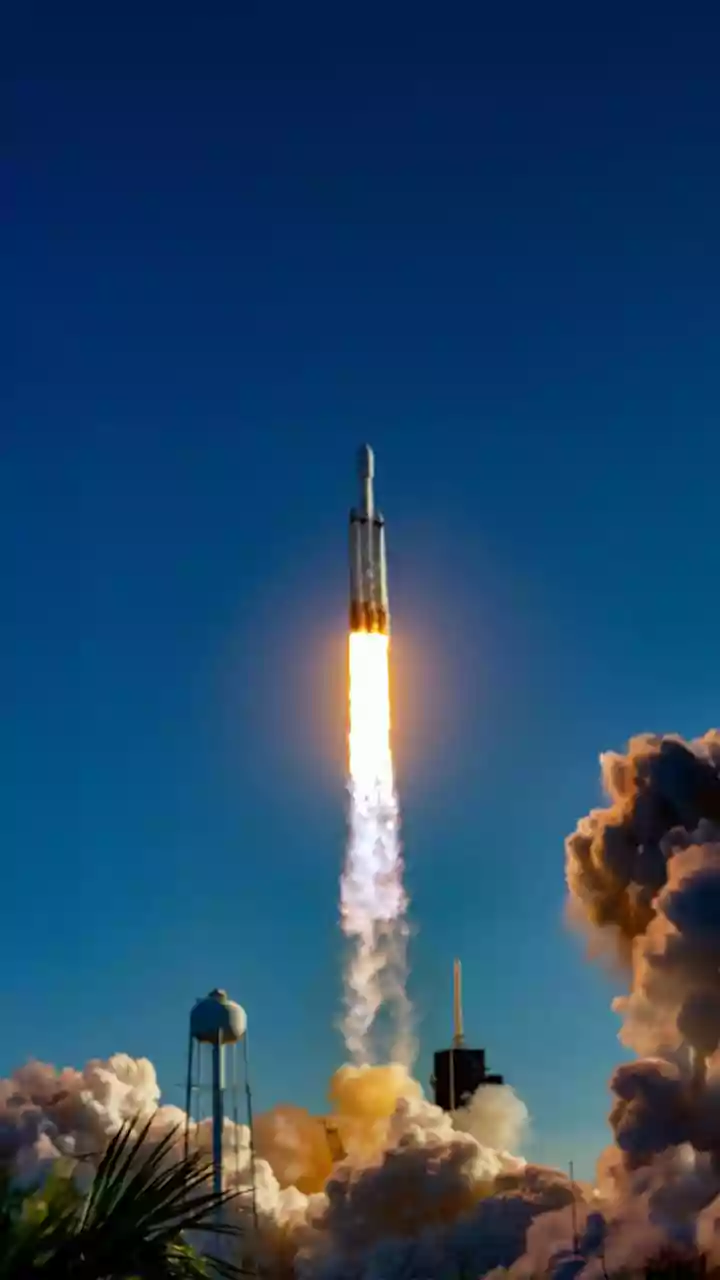






The Holy Grail of Modern Rocketry
In the world of spaceflight, reusability is the undisputed game-changer. For decades, rockets were single-use machines, with hugely expensive components discarded after just a few minutes of flight. It was akin to throwing away an entire aircraft after one trip.
Companies like SpaceX fundamentally altered this economic equation by successfully landing and reflying their Falcon 9 boosters, drastically cutting launch costs and increasing flight frequency. Now, reusability is seen as a defining competitive advantage for the next generation of launch providers. For Agnikul, achieving this would be a monumental step, placing it in a select group of global companies and potentially reducing its own launch costs by a significant margin.
Agnibaan's Unique Engineering Challenge
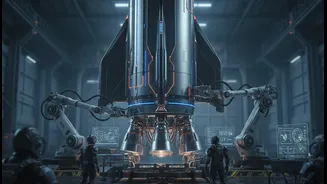
Agnikul's plan for its upcoming Mission 02 involves its two-stage Agnibaan rocket. After the first stage separates, it will attempt a controlled descent for an ocean recovery. This is a new and incredibly complex sequence. The booster must not only survive the fiery plunge back through the atmosphere but also guide itself to a precise location. This requires a suite of new technologies not needed for a simple launch: sophisticated guidance and navigation systems for the descent, control surfaces or thrusters to steer the stage, and the ability to reignite an engine for a final braking manoeuvre before splashdown. All this extra hardware adds weight, which in turn reduces the rocket's primary payload capacity—a critical trade-off for a vehicle designed to launch small satellites.
More Than Just a Catch
The complexity doesn't end with a successful splashdown. Ocean recovery means the booster must be retrieved from the sea, protected from corrosive saltwater, and transported back for inspection and refurbishment. This entire process, from descent to reuse, introduces dozens of potential failure points. Agnikul is building on the success of its Agnibaan SOrTeD (SubOrbital Technological Demonstrator) mission in May 2024. That flight validated the performance of its unique, single-piece 3D-printed Agnilet engine and provided crucial flight data. However, a suborbital flight is vastly different from an orbital launch and recovery, which requires higher velocities, more extreme atmospheric re-entry conditions, and far greater precision.
A Stepping Stone for Indian Ambitions
Agnikul's push towards reusability aligns with India's broader national space strategy. The Indian Space Research Organisation (ISRO) has its own Reusable Launch Vehicle Technology Demonstration (RLV-TD) program, which has been methodically testing a winged spaceplane concept called 'Pushpak' through a series of hypersonic flight and autonomous landing experiments. The recent successes in ISRO's landing experiments, combined with Agnikul's private-sector ambition, create a powerful dual-pronged approach. While ISRO focuses on a larger, winged reusable system, Agnikul is tackling propulsive vertical landing for a smaller booster. This synergy between the national agency and a private startup fosters a robust ecosystem, accelerating the development of critical technologies for India's future in space.
Beyond the Booster
Interestingly, Agnikul's plans for Mission 02 extend beyond just the first stage. The company is also developing a 'convertible upper stage' designed to function as an in-orbit platform after deploying its satellite payload, rather than becoming space junk. The company holds patents for this architecture, which could allow the spent stage to host experiments or perform other tasks. This dual focus—recovering the first stage and extending the life of the second—shows a holistic approach to maximizing the value of every single launch. The recent addition of former ISRO chairman S. Somanath to Agnikul's board as an observer further underscores the seriousness and technical credibility of these ambitious plans.