








The IMF's Cautious Nod
In its latest World Economic Outlook update for July 2026, the IMF projected that India's economy will grow by 6.4% in the 2026-27 fiscal year. While this is a marginal downgrade from its April forecast, the report strongly positions India as a standout
performer, especially when global growth is expected to slow to just 3.0%. The fund cited robust private consumption and a booming services sector as the primary drivers of this resilience. More encouragingly, the IMF upgraded its forecast for the following fiscal year, 2027-28, to 6.7%, suggesting confidence in India’s medium-term prospects once current global pressures ease.
Domestic Strength in a World of Chaos
The key to India's economic outperformance lies in its domestic demand. Unlike many export-dependent nations, India's large and young population creates a vast internal market that is less susceptible to global trade shocks. According to the IMF, strong private spending and sustained activity in the services sector have allowed the country to weather a difficult international environment. This internal strength provides a crucial buffer, allowing the economy to expand at a rate more than double that of major economies like China and the United States. This resilience is a key reason why international bodies remain bullish on India, even as they raise alarms about the rest of the world.
The Gathering Storm: Global Risks
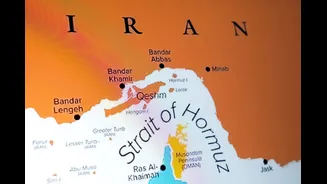
The IMF's endorsement does not come without serious caveats. The report, titled "Global Economy in Crosscurrents of War and Technology," highlights two major sources of uncertainty. Firstly, geopolitical conflicts, particularly the war in the Middle East, have led to elevated energy prices. This directly impacts India, a major energy importer, and was cited as a primary reason for the slight downgrade in the near-term forecast. Secondly, escalating trade tensions and protectionist policies globally threaten to weaken external demand, which could impact India's exports. While domestic demand provides a cushion, a significant global slowdown would inevitably create headwinds.
The Road Ahead: Balancing Growth and Stability
For policymakers in New Delhi, the IMF's report is both a validation and a warning. The strong growth figures underscore the success of ongoing reforms and the strength of India’s internal markets. However, the external risks are real and require careful management. The primary challenge will be to control inflation, which is being stoked by higher global energy prices, without stifling growth. The government's continued focus on infrastructure development and capital expenditure is intended to sustain momentum. At the same time, navigating the complex geopolitical landscape and ensuring stable energy supplies will be crucial to safeguarding the economy from the external shocks highlighted by the IMF. The forecast suggests that if India can successfully navigate these challenges, its economic engine is poised to accelerate even further in the coming years.