
The Power of Three Materials
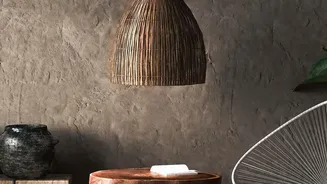
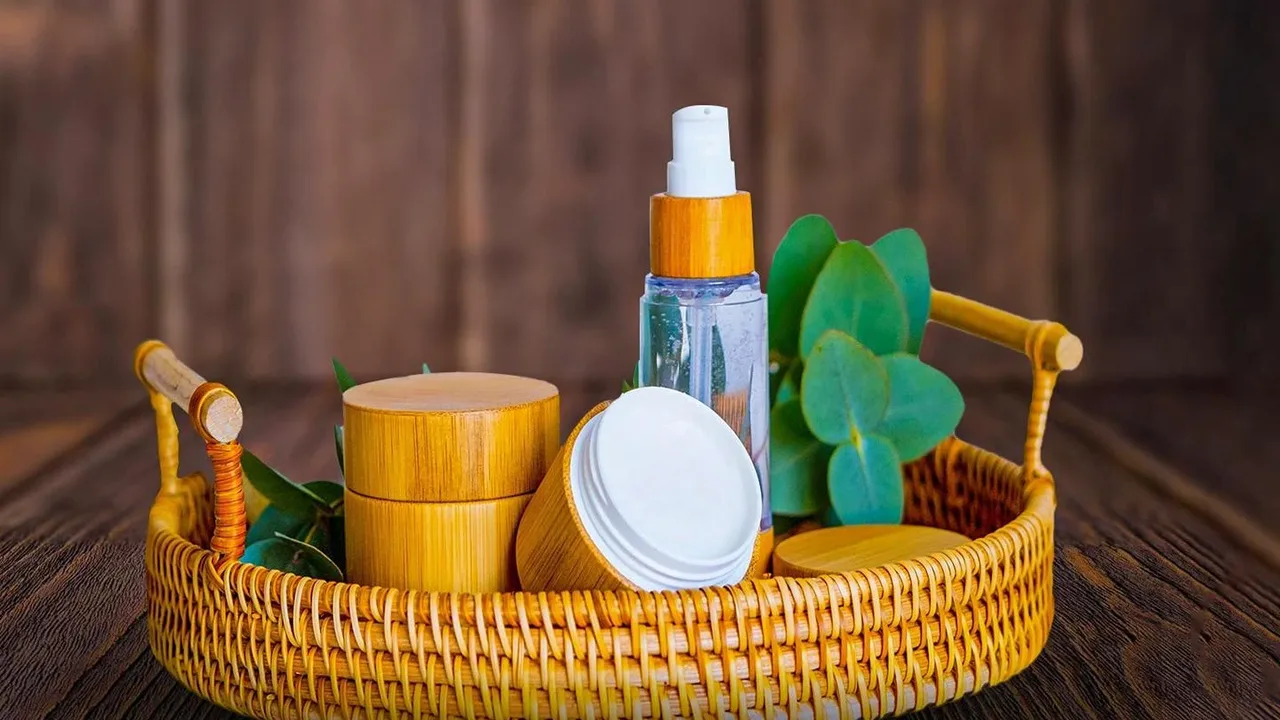
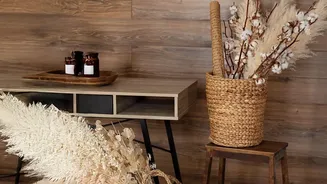
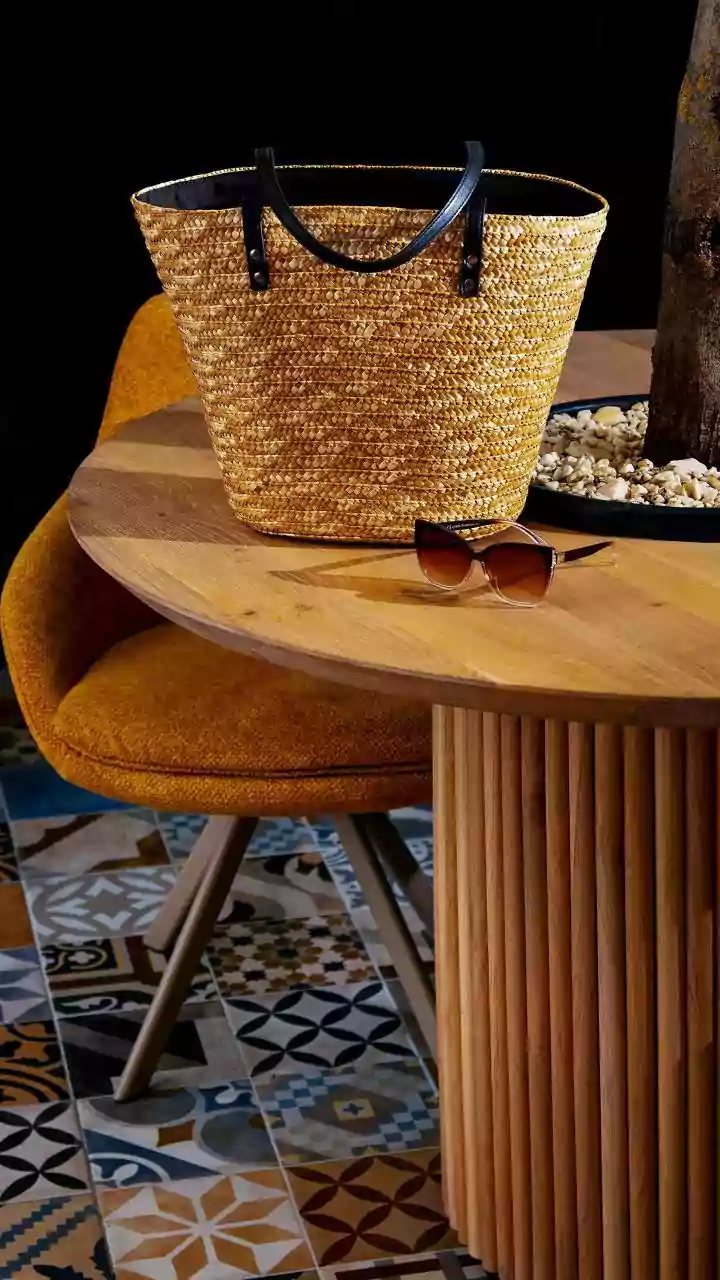
To achieve a rich, layered look, focusing on a trio of complementary materials provides balance without overwhelming the senses. Wood, ceramics, and woven baskets are a classic combination that works in almost any setting. Wood offers a grounding, natural
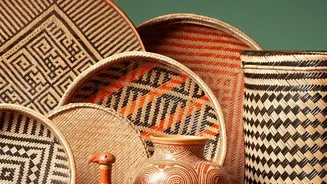
warmth with its grains and tones. Ceramics introduce a cooler, smoother element, providing a sleek contrast and often a pop of colour or a sculptural form. Woven items like baskets bring an organic, rustic feel that prevents the overall look from becoming too rigid or polished. Together, they create a harmonious blend of hard, soft, smooth, and rough surfaces.
Establish Your Foundation
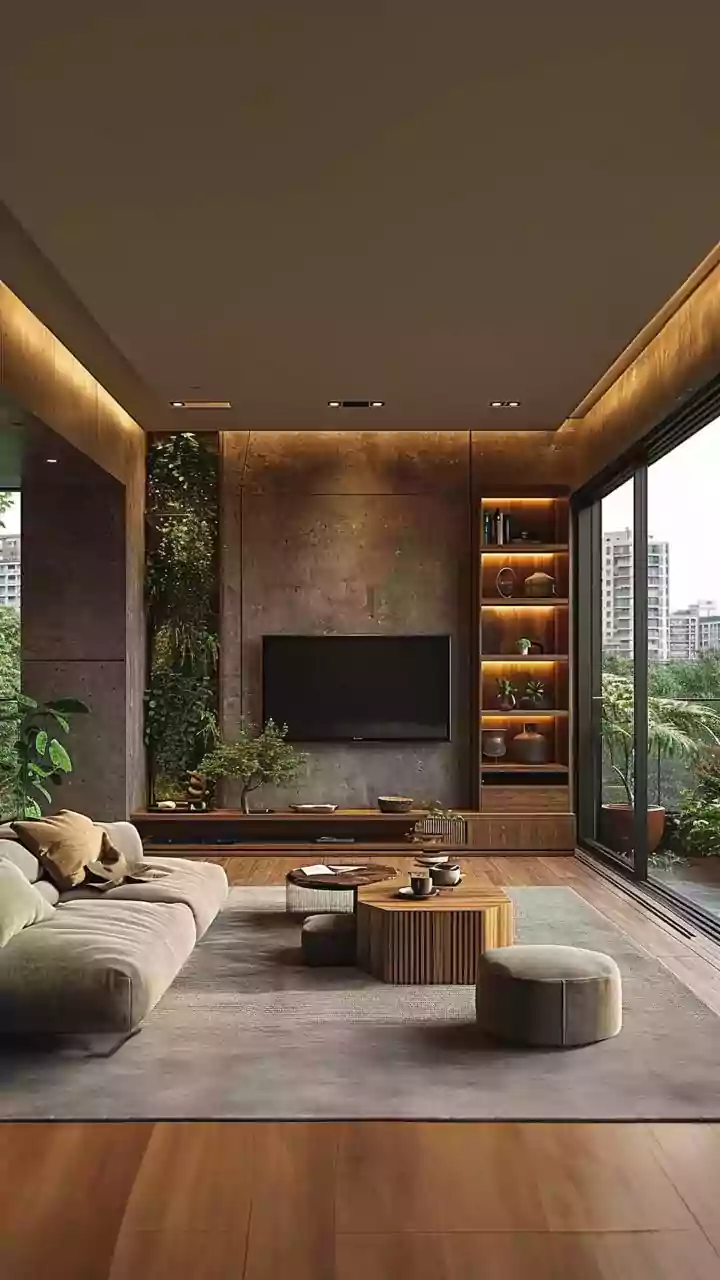
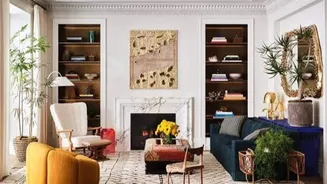
Every well-designed room starts with a strong foundation. Begin by identifying the largest surfaces and pieces in your space. This could be wooden flooring, a large timber dining table, or a significant cabinet. This dominant wooden element will serve as the anchor for your textural palette. Its warmth and visual weight will ground the room, allowing the other textures to play off it. If you don't have large wooden furniture, a jute or sisal rug can serve a similar purpose, establishing a natural, textured base to build upon.
Layering with Ceramics
Once your wooden base is established, it's time to introduce the cool, smooth contrast of ceramics. The beauty of ceramic pieces is their versatility. They can be functional, like a table lamp or a set of planters, or purely decorative, like a collection of vases on a shelf. Place a glossy ceramic vase on a rough-hewn wooden console table to create a point of contrast. Group ceramic objects of different heights and shapes on a bookshelf to create a stylish vignette. The key is to use them as accents that break up the larger surfaces of wood and woven materials, adding a touch of polish and refinement.
Introducing Woven Baskets for Softness and Function
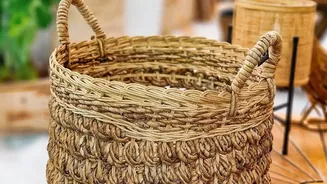
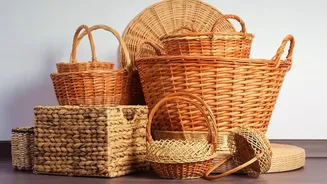
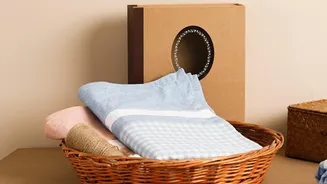
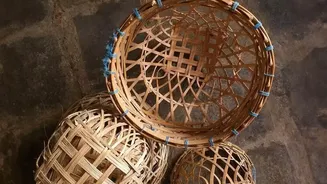
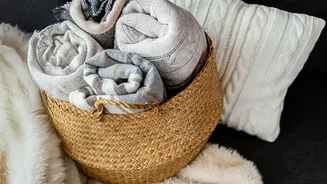
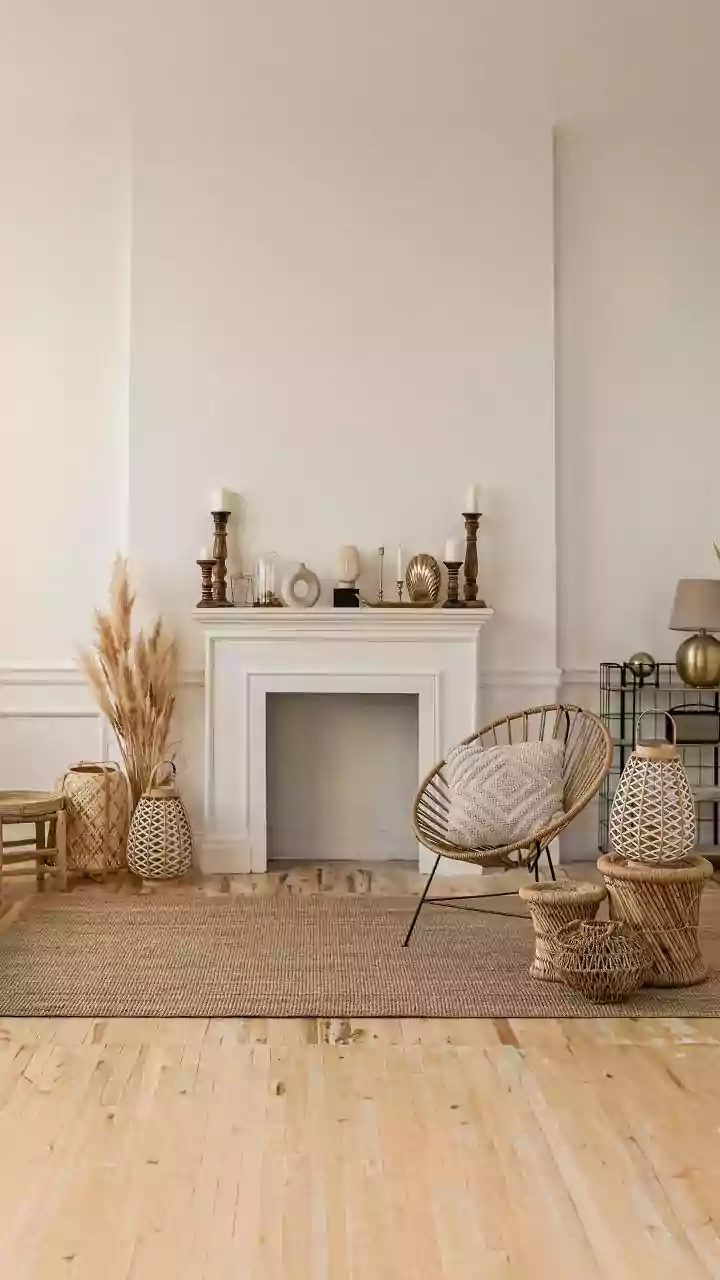
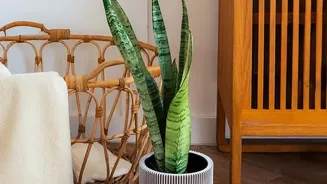
Woven baskets are the perfect final layer, adding both texture and practicality. Their primary role is to soften the hard surfaces of wood and ceramic. Place a large woven basket next to a sofa to hold blankets or cushions, which immediately adds a sense of comfort and lived-in warmth. Use smaller baskets on shelves or an entryway table for stylish, clutter-free storage. Baskets are brilliant for breaking up visual monotony; a round basket can soften a room full of square furniture, and their natural, fibrous texture provides a relaxed feel that balances the other, more structured elements.
Achieving Balance with Scale and Colour
To ensure your mix of textures feels intentional and not chaotic, pay attention to scale and colour. Vary the size of your items—contrast a large wooden dining table with small ceramic bowls and a medium-sized woven planter. This creates visual interest and a sense of hierarchy. Furthermore, a unifying colour palette can tie everything together. You don't need to match colours exactly. Instead, work within a family of tones. Natural wood tones, earthy ceramic glazes in greens, blues, or creams, and the neutral hues of woven fibres naturally complement each other, creating a cohesive and serene atmosphere.