




Introducing LunaNet: The Moon's Internet
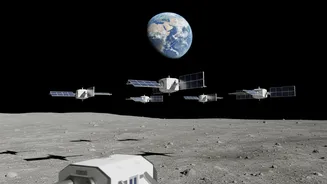
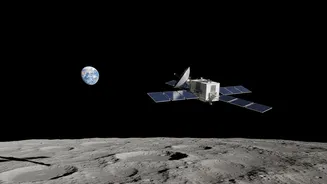
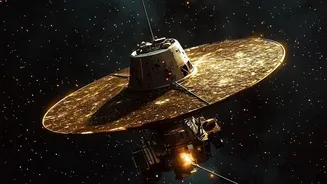
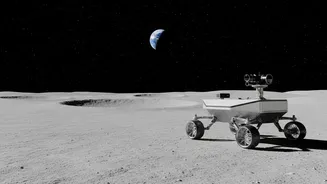
The grand vision is called LunaNet. Think of it as a framework for an “internet on the Moon,” designed to provide seamless communication and precise navigation services to any spacecraft or astronaut on or around the lunar surface. Unlike the Apollo missions,
which relied on carefully scheduled, point-to-point communication with Earth, LunaNet aims to create a flexible, interconnected network. This is a crucial piece of infrastructure, being developed in collaboration with international partners like the European Space Agency (ESA) and commercial companies, laying the digital roads for a permanent human presence. NASA’s specific contribution is the Lunar Communications Relay and Navigation Systems (LCRNS) project, which is focused on making this network a reality for its Artemis program.
Why Can't We Just Use Earth's GPS?
It’s a fair question. While Earth's Global Navigation Satellite Systems (GNSS), like the familiar GPS, are powerful, they were designed to blanket our planet with signals. On the Moon, 384,000 kilometres away, astronauts would be well outside this primary coverage zone. However, engineers have discovered they can use the faint signals that “spill” past the edge of the Earth from GPS satellites on the far side of the planet. Specialised, highly sensitive receivers are needed to make sense of these weak signals. But for robust, 24/7 coverage, especially in challenging areas like the lunar South Pole or the far side of the Moon where Earth is hidden from view, a dedicated local system is essential. This network will eliminate blackouts and provide the reliable link needed for complex operations.
How the Lunar Network Will Work
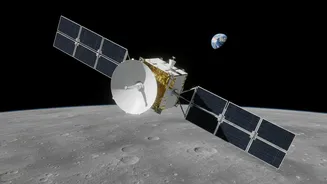
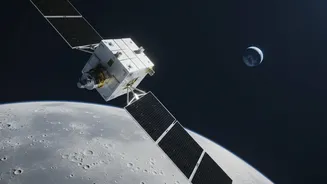
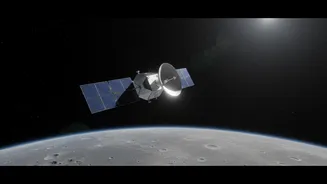
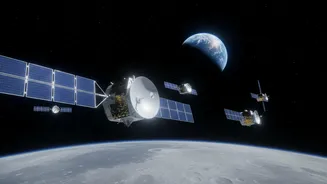
The solution is a constellation of satellites in lunar orbit that act as communication and navigation relays. NASA has partnered with commercial firms like Houston-based Intuitive Machines to build and deploy these satellites. Their first relay satellite, Altus-1, is set to be a key initial node in this network. In a major recent step, NASA delivered a crucial piece of technology called NavCube3-mini to be integrated into Altus-1. This shoebox-sized device is a powerful navigation receiver capable of using those faint GNSS signals from Earth, giving the satellite an autonomous way to know its exact position. These orbital relays will bounce data between astronauts, rovers, and landers on the surface and mission control back on Earth, ensuring everyone stays connected.
Paving the Way for Artemis
This GPS-like capability isn't just a technical curiosity; it’s a fundamental requirement for the success of NASA's Artemis program. The goal of Artemis is not just to plant a flag, but to establish a long-term, sustainable human presence on the Moon, including a base camp at the lunar South Pole. Astronauts will need to navigate rovers across unmapped terrain, landers will require precise guidance to safe landing zones, and scientists will operate experiments that require a constant data link. The LCRNS project provides the backbone for all these activities, making missions safer and more efficient. With astronauts planned to land on the Moon in 2028, this network is being built just in time to support them.
Implications for India and the World
While NASA is leading the charge with its commercial partners, LunaNet is designed from the ground up to be an international and interoperable system. Just like the internet on Earth, its value increases as more users and providers join. This open architecture means that future missions from space agencies around the world, including India’s ISRO, could potentially tap into this network. As India continues to achieve remarkable feats in space with its Chandrayaan missions, the presence of a shared lunar infrastructure could accelerate and support more ambitious future explorations. This collaborative model transforms lunar exploration from a race between nations into a collective human endeavour, building a shared foundation for science and commerce on our nearest celestial neighbour.