


A Disaster's Dangerous Aftermath
On August 26, 2026, a catastrophic event, believed to be a glacial collapse, sent an avalanche of ice, rock, and water tearing through Nepal's northern districts. The deluge along the Bhote Koshi River and its tributaries caused immense destruction, sweeping
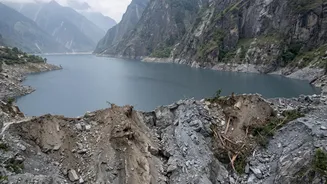
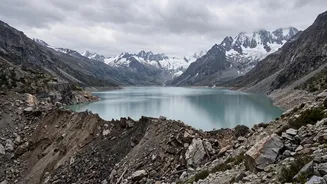
away homes, bridges, and hydropower projects, with hundreds of lives lost and many more missing. As rescue efforts continue, a secondary crisis has emerged. The same debris that caused the initial devastation has now formed a natural dam, blocking the river's flow near the Nepal-China border. This has created a rapidly expanding lake, holding back millions of cubic meters of water, and putting downstream communities in both Nepal and India on high alert for a potential breach.
Understanding the Looming Threat: Landslide Dams
These naturally formed blockages are notoriously unstable. Unlike engineered dams made of reinforced concrete, a landslide or debris dam is a loose conglomeration of soil, rock, and mud. They can fail suddenly and without much warning. The immense pressure from the accumulating water can erode the dam from within, or the dam can be overtopped, leading to a rapid and catastrophic failure. The result is a Glacial Lake Outburst Flood (GLOF), a phenomenon where a massive volume of water is released in a short period, creating a flash flood far more powerful than a normal monsoon flood. The Himalayas, with their young, fragile geology and the accelerating impacts of climate change on glaciers, are a global hotspot for these high-risk events.
Echoes of Past Tragedies for India
For communities in North Bihar and parts of Uttar Pradesh, the threat of floods originating in Nepal is a painful and recurring reality. Many of North India's major rivers, including the Kosi and Gandak, begin in the high Himalayas of Nepal. The 2008 Kosi embankment breach remains a stark reminder of the potential for cross-border devastation. That event displaced millions and caused widespread destruction in Bihar. Any major breach of the newly formed lake on the Bhote Koshi, which feeds into the Kosi system, could send a torrent of water downstream. This raises grave concerns for the densely populated plains of India that lie in the river's path. Authorities are keenly aware that a disaster in Nepal doesn't stay within its borders.
A Cross-Border Race Against Time
Authorities in both Nepal and China are in a race against the rising water. Chinese officials have been monitoring the lake's growth, warning that it is at high risk of breaching. Information is being shared across the border, and Nepal's disaster management agencies have issued urgent warnings for communities along the Bhote Koshi and Trishuli river systems to move to higher ground. For India, this has triggered its own alert systems. The Central Water Commission's flood control rooms, particularly in Patna and Lucknow, are using data from Nepal to formulate forecasts. This event underscores the critical need for robust, real-time, cross-border cooperation on disaster management, a topic of ongoing discussion between India and Nepal. Joint committees on rivers like the Kosi and Gandak exist precisely for this reason, but this crisis is a live test of their effectiveness.