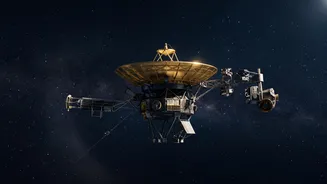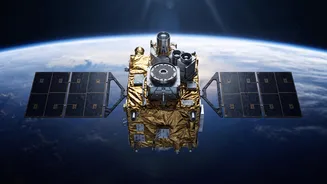


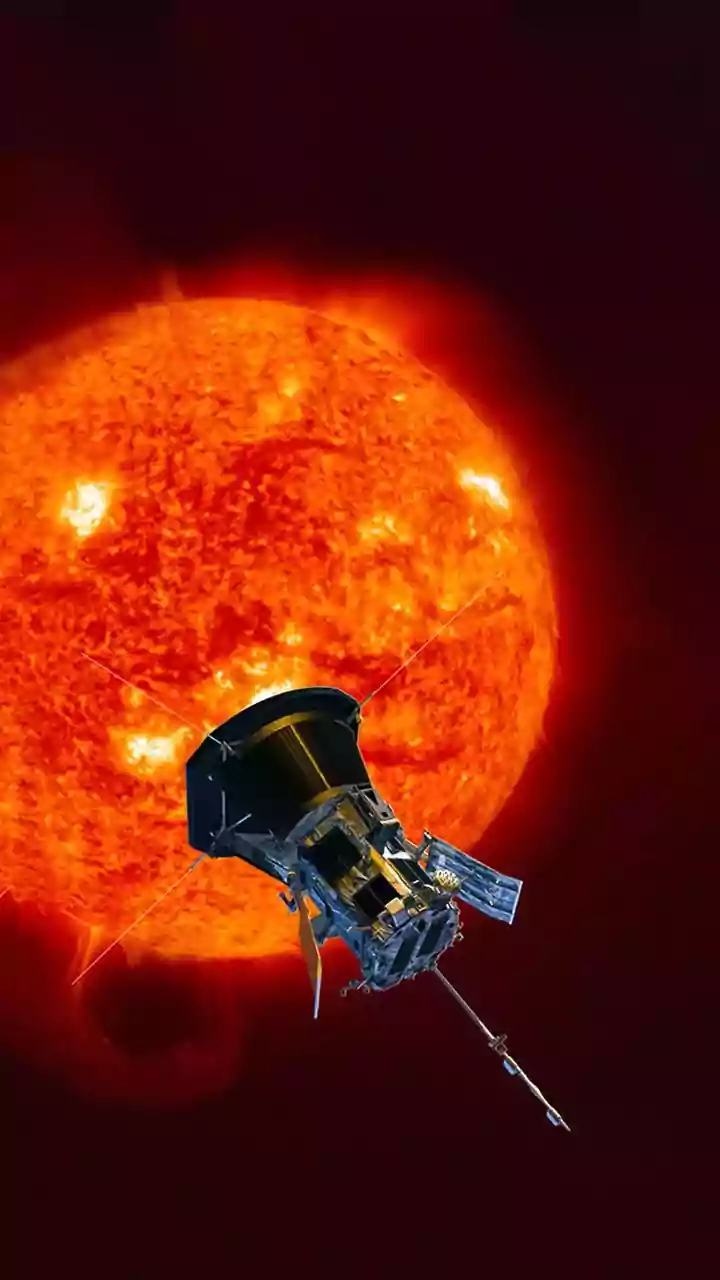



After 22 years of service, one of NASA’s most agile cosmic detectives has taken its final bow. The Neil Gehrels Swift Observatory, a prolific hunter of violent stellar explosions, ended its mission with a fiery re-entry into Earth’s atmosphere.
A Final, Fiery Descent
On the
morning of November 4, 2026, the 1,450-kilogram observatory plunged into the atmosphere over the North Sumatra region of Indonesia. The U.S. Space Force confirmed the re-entry, marking a definitive end to a mission that far outlived its initial two-year plan. The descent was uncontrolled, a result of the spacecraft's orbit gradually decaying due to atmospheric drag, which had been intensified by recent solar activity. NASA and its partners at Penn State sent the final commands to the spacecraft on October 20, preparing it for its eventual demise after a daring but unsuccessful commercial rescue mission failed to reach it earlier in the year. While most of the structure was expected to burn up, the event concluded a remarkable chapter in space observation.
A Swift Start in 2004
The story began on November 20, 2004, when the Swift Gamma-Ray Burst Explorer launched from Cape Canaveral, Florida. Its name was not an acronym but a direct reference to its primary feature: the ability to 'swiftly' reorient itself in minutes to catch fleeting cosmic events that would otherwise disappear before larger telescopes could focus on them. This rapid-response capability was revolutionary. The mission was a partnership between NASA, the United Kingdom, and Italy, and it was designed with three co-aligned telescopes—a Burst Alert Telescope (BAT), an X-ray Telescope (XRT), and an Ultraviolet/Optical Telescope (UVOT)—to provide a multi-wavelength view of its targets. In 2018, the mission was renamed the Neil Gehrels Swift Observatory to honor its late principal investigator, who was a key architect of its success.
Hunting the Universe's Biggest Bangs
Swift’s primary job was to solve the mystery of gamma-ray bursts (GRBs). These are the most powerful explosions in the universe, believed to be the birth cries of black holes or the result of colliding neutron stars. Before Swift, GRBs were elusive flashes that were gone before astronomers could pinpoint their origin. Swift changed everything. Its BAT would scan the sky, detect a burst, and within 90 seconds, the entire spacecraft would pivot to aim its more sensitive X-ray and optical telescopes at the source. This allowed scientists, for the first time, to study the afterglow of these events in detail, providing crucial data on their distance, composition, and the environments in which they occurred. Over its lifetime, Swift detected more than 2,000 GRBs, including one from 13.14 billion light years away, giving humanity a glimpse into the very early universe.
More Than Just a Burst Hunter
While GRBs were its main focus, Swift’s versatility made it an indispensable tool for all kinds of astronomy. It evolved into a general purpose observatory, receiving thousands of requests from scientists to observe a wide range of cosmic phenomena. The observatory studied over 1,400 supernovae, sometimes catching the explosion at the very moment it happened. It monitored stars being torn apart by black holes, observed flares from active galaxies, and even turned its gaze to comets and asteroids within our own solar system. This incredible flexibility led to Swift's data being used in approximately 7,000 scientific papers, a testament to its profound and wide ranging impact on astrophysics.
An Inevitable Farewell
Despite its longevity, Swift's end was inevitable. The spacecraft lacked an onboard propulsion system to boost its orbit. Increased solar activity beginning in 2024 caused Earth's upper atmosphere to expand, increasing the drag on the satellite and pulling it downward faster. Recognizing the impending orbital decay, NASA approved a novel rescue attempt in 2025. A commercial spacecraft named LINK was designed to capture Swift and push it into a higher, more stable orbit. However, the rescue vehicle suffered a technical failure after its launch in July 2026 and was unable to complete its mission, sealing Swift's fate. With its orbit continuing to drop, the mission team was forced to cease science operations in late October 2026 as the atmospheric drag became too great for the spacecraft to maintain a stable gaze.