






Meet Griffin, The 'Human Interaction Model'
San Francisco-based AI company Tavus recently unveiled a new system named Griffin, which it calls the first 'Human Interaction Model'. Unlike previous AI avatars that often feel clunky and delayed, Griffin is built for real-time, face-to-face conversation.
The key innovation is its 'full-duplex' nature: it can see, hear, interpret, and generate a video response all at the same time. Think about a natural human conversation. You might nod while someone is talking, laugh at a joke before they've finished the sentence, or seamlessly handle an interruption. Tavus claims Griffin is designed to replicate these subtle, dynamic cues that make interactions feel authentic. This is a significant architectural shift from older systems that would listen, process, and then respond in a linear, far less natural sequence.
The Test That Made Headlines
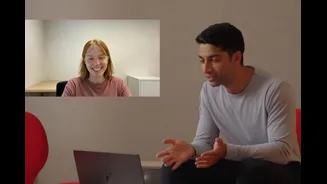
The headline figure comes from a study conducted by Tavus itself. The company recruited 54 participants through an external platform and told them they would be having a short video call with another participant to make small talk. The conversations lasted just one minute. After the call, they were asked a simple question: was their conversation partner a real person or an AI? The results were striking. Twenty-six of the 54 participants, or 48%, believed Griffin was a human. To put that number into perspective, Tavus's own previous generation of AI fooled only 2.4% of people in a similar test. It marks a dramatic leap in the believability of AI-generated video avatars, moving them from a niche curiosity to something that can, at least in brief encounters, pass for human.
Beyond Subjective Feelings
While the 48% figure is compelling, Tavus also points to more objective benchmarks to support its claims of a breakthrough. The company submitted Griffin to NVIDIA's VideoFDB, a benchmark designed to evaluate how well conversational AI systems perform in face-to-face interactions. On the 'generation' track, which assesses the quality and naturalness of the AI's conversational behaviour, Griffin scored an impressive 3.83 out of 5. For context, the score for a real human reference in the same test was 3.92. This shows that Griffin's ability to produce convincing conversational cues holds up under technical scrutiny, scoring far higher than the next-best published system, which sat at 2.80. It suggests the 'humanness' of the interaction isn't just an illusion but a measurable quality.
A Dose of Healthy Scepticism
Before we declare the dawn of indistinguishable AI, some important context is needed. The study was conducted by Tavus, the very company that created Griffin, not by a neutral third party. Furthermore, the interactions were extremely short—just one minute. It's plausible that an AI could maintain a facade for 60 seconds, but cracks might begin to show in a longer, more complex conversation. The participants were also primed to believe they were talking to a human, which may have influenced their perception. Experts note that while the leap from 2% to 48% is significant, these results need independent verification and further testing to truly understand Griffin's capabilities and limitations. It’s a remarkable milestone, but not quite a definitive passing of the video Turing Test in all scenarios.
The Promise and the Peril
Technology this powerful is rarely a simple story of good or bad. On one hand, Tavus envisions its technology being used for positive applications like AI tutors that can adapt to a student's visual cues or digital companions that provide more natural interaction for the elderly. The potential for accessible expertise and support is enormous. On the other hand, the concerns are immediate and obvious. The same technology that can power a helpful AI tutor could also be used for sophisticated scams, creating fake video interviews, or spreading disinformation. The public reaction has been a mix of awe and anxiety. Recognizing this, Tavus has stated that safety and disclosure features are a priority and has limited access to Griffin-Lite to a group of trusted testers for now, with no public launch date set.