







The Shift Towards Conscious Celebration
For years, the vibrant decorations central to Ganesh Chaturthi often involved non-biodegradable materials like thermocol and plastic. These items contribute to pollution, clogging waterways and harming ecosystems long after the festivities end. In response,
a powerful movement towards sustainability has taken hold across India. Families and communities are embracing eco-friendly alternatives that are not only kinder to the planet but also add a unique, rustic elegance to the celebration. This shift is about more than just avoiding plastic; it's about reconnecting with the festival's deeper meaning and honouring the earth from which Lord Ganesha is traditionally born.
Jute: Earthy, Versatile, and Elegant
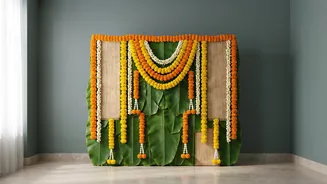
Jute, with its rustic charm and incredible versatility, is a star player in eco-friendly decor. This natural fibre can be used to create stunning backdrops for the Ganpati mandap, replacing shiny, artificial sheets. Imagine a simple burlap fabric draped behind the idol, perhaps hand-painted with traditional motifs. Jute ropes can be twisted into beautiful torans (door hangings), wrapped around pillars, or used to create small decorative items. Artisans are even crafting Ganesha wall hangings entirely from jute fibre. You can also use jute to wrap pots for plants or create small baskets for holding flowers and prasad, adding a cohesive and earthy feel to your entire setup.
Cotton: The Beauty of Simplicity
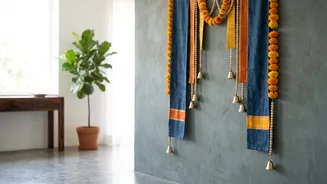
The use of fabric is one of the simplest yet most effective ways to create a beautiful, eco-friendly mandap. Old sarees and colourful dupattas can be repurposed to create vibrant, flowing backdrops. Khadi and handloom cotton fabrics, in particular, lend a sense of grace and tradition. Beyond just backdrops, cotton can be used creatively in many ways. Cotton threads can be used to string fresh flowers into garlands, and small fabric scraps can be fashioned into bunting or other small hanging decorations. For lighting, you can wrap coloured cotton paper around bulbs to create a warm, diffused glow, saving both money and energy.
Bamboo: Strong, Natural, and Structural
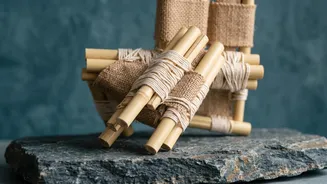
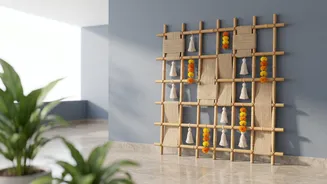
Bamboo brings a natural, serene, and structural element to Ganpati decorations. It is increasingly being used to construct the entire frame of the mandap, replacing thermocol or plastic structures. These bamboo frames, paired with leaves or cloth, create an elegant and simple shelter for the idol. Beyond the main structure, bamboo can be used in many decorative ways. Thin bamboo sticks can be woven into intricate patterns for a backdrop, used as frames for hanging decorations, or even used to craft the idol itself. Small bamboo baskets are perfect for holding offerings, and bamboo flutes or other small handcrafted items can add a traditional touch to the overall decor.
Bringing It All Together
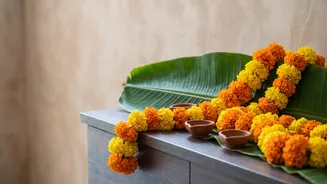
The beauty of using these natural materials lies in how well they complement each other. A mandap framed with bamboo can be draped with cotton sarees and feature a jute backdrop. The key is to think about texture and natural harmony. Enhance the setup with other eco-friendly elements like fresh flowers, mango and banana leaves, brass diyas instead of harsh electric lights, and rangoli made from rice flour and flower petals. Choosing a clay or 'shadu mitti' idol is the centerpiece of a truly green celebration, ensuring the entire cycle, from creation to immersion, is in harmony with nature.