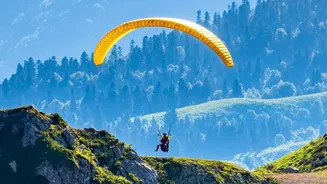
The Invisible Engines of Flight
Paragliders have no engines; they rely on invisible currents of rising air to stay aloft and gain altitude. The most important of these are thermals. Thermals are columns of warm air that rise from the ground after it has been heated by the sun. In the Alps,
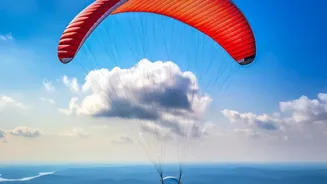
the strong sun of late spring and summer beats down on mountain slopes, fields, and rocky outcrops, creating powerful and reliable thermal 'bubbles'. Pilots circle within these updrafts to climb higher, sometimes for thousands of metres, extending their flights from a simple glide to a magnificent cross-country journey. The presence of small, puffy cumulus clouds with flat bases is often a tell-tale sign of these excellent thermal conditions.
Predictable Winds and Stable Air
Beyond thermals, Alpine flying is dominated by a complex system of valley winds. During the day, as the sun heats the high slopes, air rises, drawing cooler air up from the main valleys to replace it. This creates a predictable upslope 'valley breeze'. In spring and summer, these systems are generally well-established and reliable, providing smooth, buoyant lift along ridges. This contrasts sharply with the more turbulent and unpredictable conditions found in other seasons. General weather patterns, known as meteorological winds, are also typically lighter and more stable during this period, which is crucial for safety in the high mountains where strong winds can be dangerous.
The Peak Summer Season: June to August
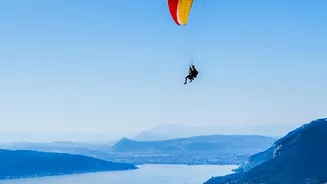
Summer is the classic and most popular time for Alpine paragliding. The days are long, the temperatures are warm, and the sun's energy creates strong, high-reaching thermals that can lift pilots to the cloudbase, often well above 3,000 metres. This period offers the most consistent conditions for long-distance 'cross-country' flights. The atmosphere is buzzing in popular hubs like Interlaken in Switzerland or Annecy in France, with clear skies and lush green landscapes below. While midday can sometimes be intensely turbulent, the long evenings often provide 'magic lift'—smooth, gentle air perfect for serene sunset flights.
Spring's Powerful Promise: April and May
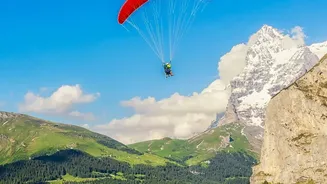
For many experienced pilots, spring is the most exciting season. The temperature difference between the still-cool upper atmosphere and the rapidly warming ground creates powerful, punchy thermals. While the weather can be more changeable than in summer, a good spring day offers some of the highest and longest flights of the year. The scenery is arguably at its most dramatic, with snow-capped peaks providing a stunning contrast to the vibrant green valleys awakening below. Flights in spring often require more skill to manage the strong, sharp-edged thermals, but the reward is an unparalleled flying experience.
The Risks of Off-Season Flying
While flying is technically possible year-round, autumn and winter present significant challenges and risks. Autumn can bring beautiful colours and calm air, but also rapidly approaching weather fronts and instability. In winter, the days are short and the sun is too weak to create strong thermals, meaning most flights are simple top-to-bottom glides. Snow cover also prevents the ground from heating up, further limiting lift. The biggest danger in the off-season is unpredictable weather. Mountain conditions can change in minutes, and being caught by strong winds, fog, or a sudden storm far from a safe landing zone is a serious hazard that pilots actively avoid.
Why Local Knowledge is Everything
Regardless of the season, the key to a safe and enjoyable flight is understanding the local microclimate. Alpine weather is notoriously complex, with each valley generating its own unique wind patterns. This is why even experienced pilots rely heavily on local schools and guides. These professionals have an intimate knowledge of the area, read the subtle signs in the sky, and make the critical go/no-go decisions based on real-time conditions. For tandem passengers and visiting pilots alike, trusting this local expertise is the most important part of planning an Alpine paragliding adventure.