



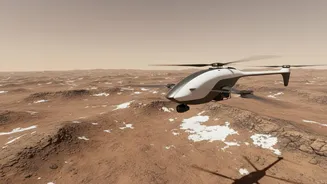
A New Generation of Martian Aviators
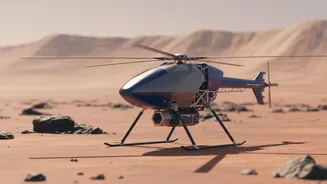
Scheduled for a late 2028 launch, the SkyFall mission is the direct successor to the trailblazing Ingenuity helicopter, which proved powered flight in the thin Martian atmosphere was possible. But where Ingenuity was a technology demonstration, SkyFall is a full-fledged
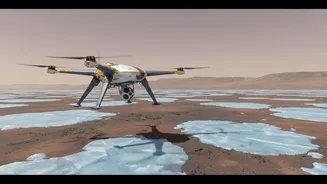
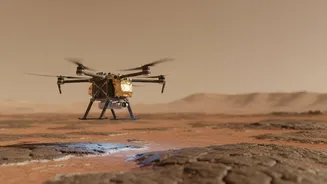
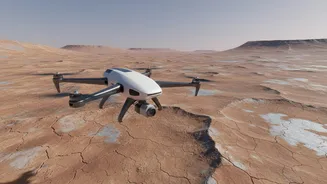
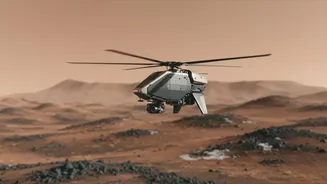
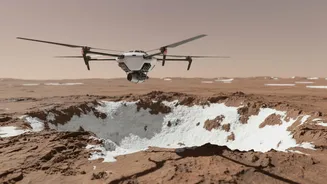
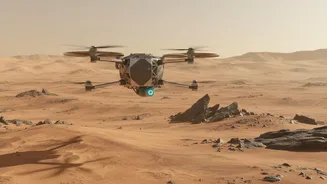
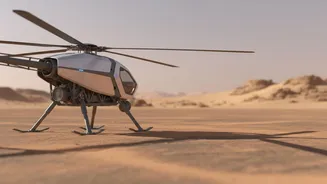
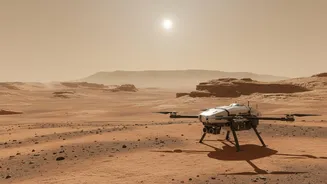
scientific endeavor. The mission, managed by NASA's Jet Propulsion Laboratory, will send a team of three advanced helicopters to the Red Planet. These aerial scouts are larger and more capable than their predecessor, each equipped with a suite of sophisticated instruments designed to create the most detailed maps of potential human landing sites ever conceived. Their primary goal is to hunt for subsurface water ice, a resource that could unlock the future of human exploration.
The Science of Seeing Underground
SkyFall's most innovative tool is a ground-penetrating radar (GPR) that hangs below each helicopter like a flexible, high-tech cape. This design is crucial, as the antenna must be durable enough to bend during landing and spring back into shape for flight. While orbiters can spot deep ice deposits, they struggle to see the first few feet below the surface, which is exactly where astronauts would need to access it. By flying low and slow, the SkyFall helicopters can use their radar to distinguish between dry soil and hidden ice, mapping its depth and extent with unprecedented clarity. This provides a form of 'ground truth' that orbiters simply cannot match, creating a detailed resource map for future explorers.
Creating a Complete Landing Zone Profile
While finding ice is the main event, the SkyFall helicopters are multi-talented. In addition to their radar, each carries a payload of four key instruments. High-resolution 13-megapixel cameras will capture images to generate centimeter-scale 3D terrain maps, identifying small hazards and certifying safe landing zones. Near-infrared cameras will analyze the composition of the Martian surface dust and rock, while advanced sensors will measure air temperature, wind speed at different altitudes, and even surface radiation levels. Together, this data will provide a holistic view of candidate landing sites, assessing them not just for resources but for overall safety and scientific potential.
Water Ice: The Ultimate Martian Resource
The focus on water ice isn't just for scientific curiosity; it's about logistics and survival. The ability to use resources found on-site, a concept known as in-situ resource utilization (ISRU), is considered essential for making human missions to Mars sustainable and affordable. Launching every gallon of water needed from Earth would be prohibitively expensive and complex. Accessible water ice on Mars could be harvested and processed to provide drinking water for astronauts, oxygen to breathe, and even a key ingredient for manufacturing rocket propellant for the journey home. Finding these deposits in the relatively temperate mid-latitudes, away from the frigid poles, is the key to establishing a long-term human presence.
A Daring Mid-Air Deployment
The mission's name, SkyFall, is a direct reference to its audacious arrival plan. Instead of relying on a traditional, heavy, and complex lander, the mission will use an innovative mid-air deployment. During its descent through the Martian atmosphere, a protective aeroshell will release the three helicopters. From there, they will fly away under their own power and land individually on the surface. This maneuver dramatically reduces the cost and risk associated with landing on Mars, showcasing a more agile and efficient approach to deploying assets. The entire payload is slated to arrive at Mars aboard the Space Reactor-1 Freedom, a new spacecraft demonstrating nuclear electric propulsion.