




The Land Conundrum
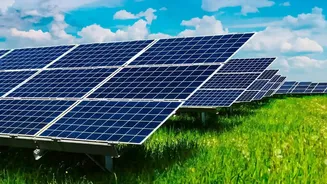
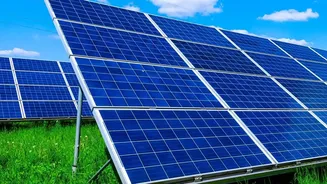
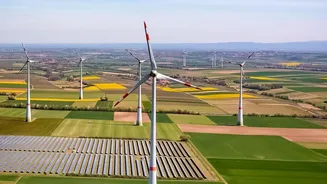
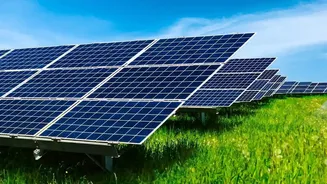
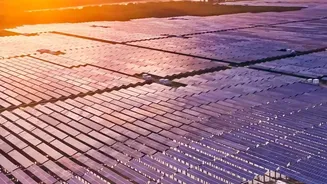
To meet its renewable energy targets, India needs vast amounts of land. A typical utility-scale solar farm requires about five acres per megawatt (MW) of installed capacity. With agricultural land supporting a majority of the population and forests being
ecologically vital, simply clearing space for massive solar parks creates intense competition for resources. This conflict between food security, conservation, and energy production has become a critical barrier. Without a new approach, the very land that sustains India could limit its clean energy future.
A Shift in Perspective
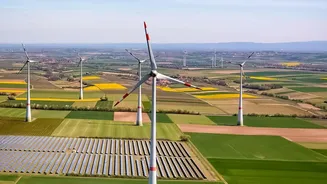
Instead of viewing land as a finite resource to be fought over, a new strategy is reframing the problem. The core idea is to stop seeing surfaces as having a single purpose. This conceptual 'scheme' involves a portfolio of innovations designed for dual land use, where energy generation can coexist with agriculture, water management, and infrastructure. Government initiatives like the PM-KUSUM (Pradhan Mantri Kisan Urja Suraksha evam Utthan Mahabhiyan) scheme are helping to drive this change by encouraging farmers to deploy solar technology on their land, turning a potential conflict into a source of additional income and energy independence.
Solar Farming Gets Literal
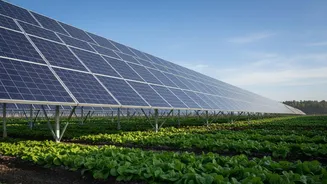
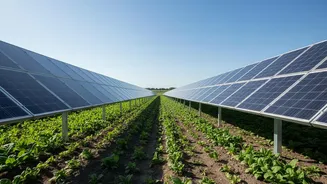
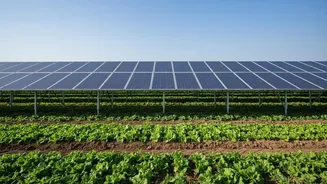
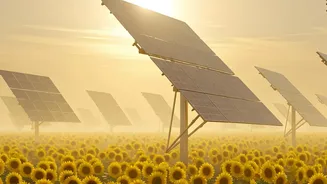
The most prominent example of this new approach is agrivoltaics, the practice of installing solar panels on raised structures above active farmland. This allows sunlight to be shared: part for crops, part for electricity. Early studies and pilot projects across India have shown remarkable benefits. The shade from panels can protect certain crops from extreme heat, reduce water evaporation by up to 30%, and in some cases, even increase crop yields. For farmers, it creates two revenue streams from the same plot of land: one from selling crops and another from selling excess electricity to the grid. Schemes like PM-KUSUM explicitly permit this stilted installation, providing subsidies that make it financially viable for farmers to adopt.
Blue is the New Green
The design challenge extends beyond fields to water bodies. India's extensive network of reservoirs, lakes, and canals presents another untapped surface for solar deployment. Floating solar photovoltaics (FSPV) involve mounting panels on floating platforms. These installations not only save precious land but also offer unique advantages: the cooling effect of the water can enhance panel efficiency, and the shade provided by the panels reduces water evaporation and inhibits algae growth. Recognizing this, the government recently approved the Pradhan Mantri Surya Sarovar Yojana (PM-SSY), a scheme to deploy 5,000 MW of floating solar capacity. Similarly, pioneering canal-top projects, first seen in Gujarat, cover irrigation canals with solar panels, generating power while saving millions of litres of water annually.
Designing the Future
While promising, these innovative designs come with their own hurdles. Agrivoltaics and floating solar projects have higher initial installation costs compared to traditional ground-mounted systems. They also present unique engineering challenges, from designing structures that don't impede farm machinery to ensuring floating platforms can withstand weather. However, the long-term benefits are compelling. By integrating solar generation into existing landscapes, India can dramatically expand its renewable capacity without sacrificing agricultural land or natural habitats. The focus is shifting from simply finding space to smartly designing solutions that make the most of the space we already have.