





A New Record in Solar Power
In the world of solar technology, efficiency is everything. It's the measure of how much sunlight hitting a panel gets converted into usable electricity. For years, scientists have been working to push this number higher, and now, multiple research teams
have broken a significant barrier. Recent certified tests have confirmed that a new type of solar cell, known as a perovskite-on-silicon tandem cell, has reached efficiencies of over 30 percent. One Chinese research team recently announced a certified efficiency of 33%. This isn't just an incremental improvement; it's a psychological and technical leap that signals the technology is maturing rapidly. While even higher efficiencies have been achieved with exotic materials, this milestone is notable because it uses relatively low-cost materials, a key factor for eventual mass production.
What Are Tandem Solar Cells?
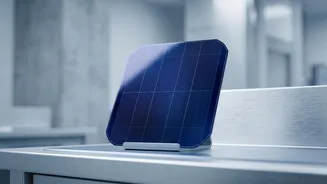
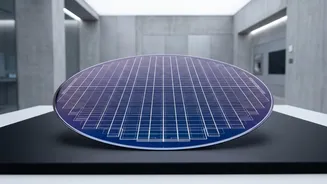
Think of a standard solar panel as a single net designed to catch one type of fish. It does a good job, but fish of other sizes swim right through. Today's most common solar panels use a single layer of silicon, which is excellent at capturing infrared light but less effective with higher-energy blue light from the solar spectrum. This physical limitation, known as the Shockley-Queisser limit, caps the theoretical efficiency of single-junction silicon cells at around 29%, with commercial panels typically operating closer to 22-24%. Tandem solar cells solve this problem by stacking two different types of solar cells in layers. The top layer, often made of a crystalline material called perovskite, is designed to capture the high-energy blue light. The lower-energy light passes through to the bottom silicon layer, which captures it. By using two 'nets' optimized for different parts of the sun's light spectrum, the tandem cell can harvest significantly more energy overall.
Why 30 Percent Is a Magic Number
Surpassing the 30% efficiency mark is more than just a new record. For decades, the theoretical limit of silicon has been a looming ceiling for the solar industry. Breaking 30% with a tandem design proves that there is a viable path to much higher performance without abandoning the well-established and cost-effective silicon manufacturing base. Higher efficiency means more power can be generated from the same amount of space. This is crucial for residential rooftops where space is limited and for large-scale solar farms where it can reduce the amount of land, racking, and labor needed, ultimately lowering the cost of electricity. Researchers have called the 30% figure a "psychological barrier," and overcoming it is expected to spur further investment and research into making these advanced cells a commercial reality.
From the Lab to Your Rooftop
While these lab results are incredibly exciting, you won't be installing a 33% efficient tandem panel on your roof next week. The headline's mention of "lab-to-scale" points to the next major hurdle: commercialization. Researchers achieved these records on small, square-centimeter-sized cells under controlled laboratory conditions. Scaling this up to large, durable panels that can withstand decades of heat, cold, and moisture is a significant engineering challenge. Perovskite materials, in particular, have historically faced challenges with stability and degradation when exposed to the elements. Companies like Oxford PV are already running pilot production lines, but the timeline from a lab record to mainstream commercial availability has historically been five to ten years. The industry needs to solve issues related to manufacturing yield, cost-effective production processes, and proving long-term reliability to secure financing for large projects.