






The Danger Above: Glacial Lake Outbursts
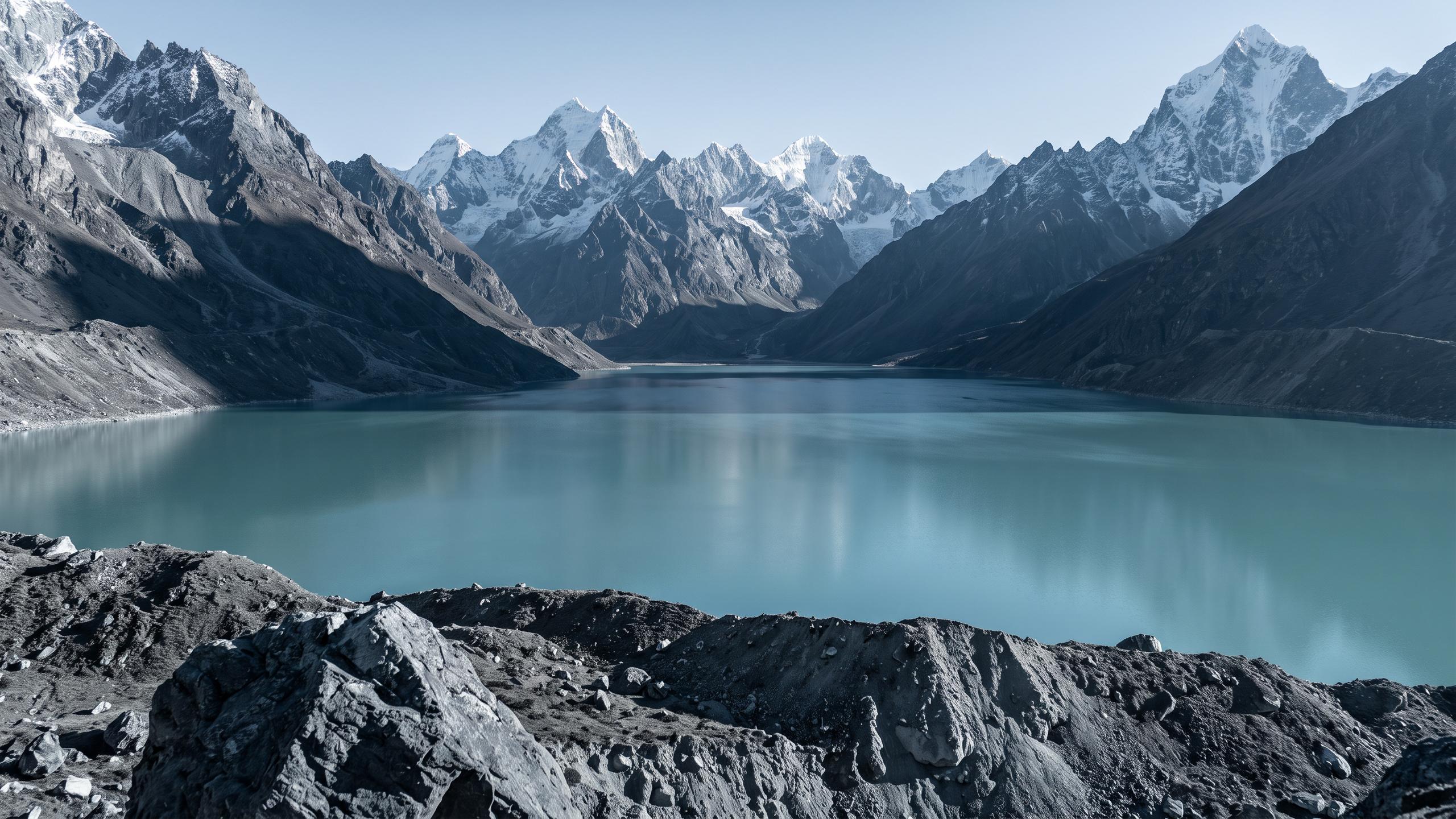
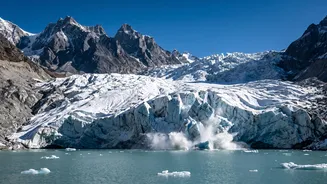
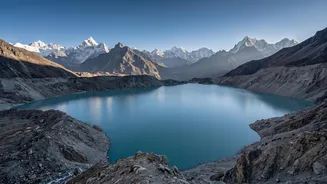
High in the Himalayas, often called the 'Third Pole', rising temperatures are causing glaciers to melt at an alarming rate. This meltwater collects to form vast lakes, often held back only by unstable natural dams of loose rock and debris known as moraines.
A Glacial Lake Outburst Flood, or GLOF, occurs when these fragile dams fail. This can be triggered by an avalanche, an earthquake, or simply the immense pressure of the water itself. The result is a sudden, catastrophic release of millions of cubic metres of water, ice, and rock, creating a flash flood with unimaginable destructive power. Recent events in Nepal and Sikkim have shown just how deadly these events can be, washing away entire villages and critical infrastructure in minutes.
A River's Fury: From Mountain to Plain
A disaster that begins in the remote mountains of Nepal does not stay there. A dense network of transboundary rivers acts as a superhighway for floodwaters. Major river systems like the Koshi, Gandak (called Narayani in Nepal), and Ghaghara (Karnali) originate in the high Himalayas and flow down through Nepal before fanning out across the vast, flat Gangetic plains of India. The steep terrain of Nepal gives a GLOF surge incredible speed and force. While the initial wave of boulders and debris may lessen over the distance, the sheer volume of water travels hundreds of kilometres downstream, causing river levels in India to rise dramatically.
The 'Sorrow of Bihar' and Beyond
When this surge of water reaches the densely populated plains of Bihar, Uttar Pradesh, and West Bengal, the consequences can be devastating. Rivers that are already swollen during monsoon season can easily breach their banks. The Koshi river, notorious for its destructive floods, is known as the 'Sorrow of Bihar' for this very reason. It carries a massive amount of sediment from the Himalayas, which raises the riverbed over time and makes flooding more likely. A GLOF event can exacerbate this, inundating vast swathes of agricultural land, destroying crops, homes, and infrastructure, and threatening millions of lives. The 2008 Bihar flood, caused by a breach in the Kosi embankment, affected over two million people and serves as a stark reminder of this vulnerability.
Climate Change: The Great Accelerator
This is not merely a freak occurrence of nature; it is a direct consequence of a warming planet. Scientists have confirmed that climate change is accelerating glacier melt, making GLOF events more frequent and severe. Studies show that Himalayan glaciers have been losing ice at a dramatically increased rate since the year 2000, leading to the formation and expansion of hundreds of new, potentially dangerous glacial lakes. What was once a rare phenomenon is becoming a recurring and predictable threat, turning mountain ecosystems into ticking time bombs for the millions living downstream.
A Shared Risk Demands Shared Action
Because the danger originates in Nepal but the impact is felt acutely in India, managing this transboundary threat is incredibly complex. The destruction of a hydropower dam in Nepal can send a flood pulse towards Bihar, highlighting the interconnectedness of the region. Effective solutions cannot be confined to one side of the border. Experts stress the urgent need for robust, cross-border early warning systems that can provide downstream communities in India with precious time to evacuate. This involves real-time data sharing on river flows and lake stability between Nepal and India, moving beyond fragmented agreements to a more integrated, basin-wide approach to disaster management.