


The Architects of a New Model
The idea comes from two heavyweights in the space science community: Jim Green and Ed Belbruno. Jim Green is the former Chief Scientist for NASA, a role where he oversaw some of the agency's most ambitious missions. Ed Belbruno is a mathematician at Yeshiva
University and a research collaborator at Princeton University, renowned for his pioneering work in celestial mechanics and low-energy space travel. In fact, Belbruno famously rescued a Japanese lunar mission in 1991 by devising a new, fuel-saving trajectory using his novel understanding of gravitational pathways. When two minds like these team up to challenge a fundamental concept, the scientific community pays close attention.
Redrawing the Solar System's Map
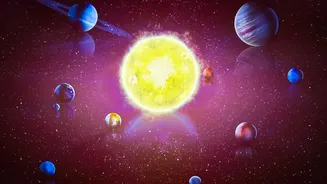
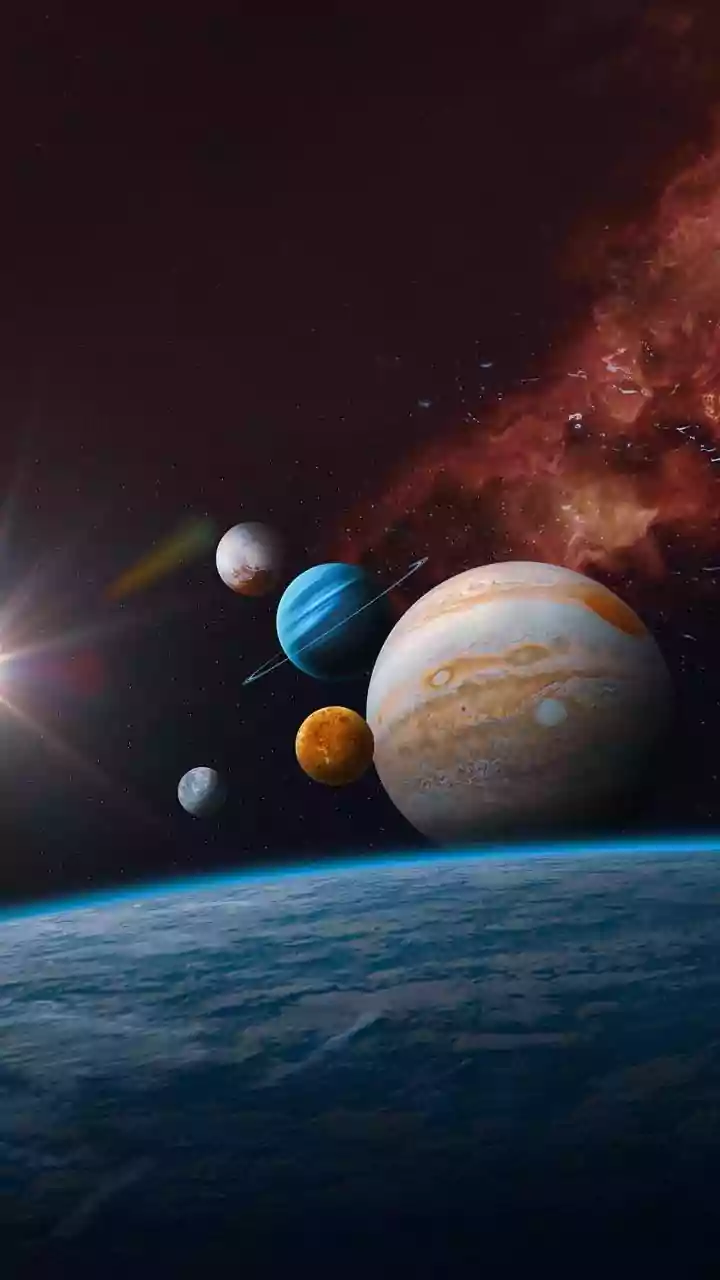
For decades, the 'edge' of our solar system has been defined in two main ways. First is the heliopause, the boundary where the Sun's solar wind—a constant stream of charged particles—is stopped by the pressure of interstellar space. This bubble, called the heliosphere, extends roughly 120 astronomical units (AU), or 120 times the distance from the Earth to the Sun. Beyond that lies the Oort Cloud, a theoretical, enormous sphere of icy comets thought to extend up to 100,000 AU, or about 1.6 light-years away. But Green and Belbruno's proposal, published in ROOM - The Space Journal of Asgardia, suggests the Sun's gravitational influence extends much, much further. They argue that the true boundary is where objects are no longer gravitationally bound to the Sun, a distance they calculate could be nearly 3.8 light-years away. That would make our solar system more than twice as large as previously imagined, reaching about halfway to the next nearest star, Proxima Centauri.
A Cosmic Fishing Net
Their theory is based on a concept Belbruno has spent his career developing: weak stability boundaries and ballistic capture. Imagine a zone far out in space where the Sun's gravity and the gentle pull of the entire Milky Way galaxy are in a delicate balance. Green and Belbruno propose that as interstellar objects—like rogue planets or comets from other stars—drift through this zone at low speeds, they can be gently 'captured' by the Sun's gravity. They don't fall into a neat orbit like Jupiter, but become weakly tethered to our solar system. This process would create a massive, previously unknown shell of captured objects far beyond the Oort Cloud, acting like a cosmic fishing net. This provides a new mechanism to explain how our solar system might have acquired objects that formed around other stars.
Why a Bigger Solar System Matters
This radical rethinking has profound implications. For one, this vast, unexplored region could be the perfect hiding place for the elusive 'Planet Nine', a hypothetical large planet thought to exist in the outer solar system. If it was captured from another star system, its strange orbit would make much more sense. It also means that our solar system could be populated by countless 'exoplanets'—plañets that originated from other stars—that are now technically part of our own cosmic family. These objects would be incredibly difficult to detect, but they would represent a treasure trove for understanding planetary formation across the galaxy. Furthermore, Green and Belbruno note that the gravitational 'portals' they describe could be used for interstellar travel, suggesting that if advanced extraterrestrial civilizations exist, they might use similar locations near other stars as observation posts.