




First, What Is Core Stability?
Before we can compare workouts, it's crucial to understand what “core stability” truly means. It’s more than just having a six-pack. Core strength is the ability of your muscles to generate force, like when you do a crunch. Core stability, however, is the ability to resist
unwanted movement and maintain control of your spine and pelvis while the rest of your body is in motion. Think of it as the deep, internal support system that keeps you steady, protects your spine, and allows for efficient energy transfer during any activity, from carrying groceries to sprinting. It involves deep muscles that you don't see in the mirror, like the transverse abdominis and pelvic floor, working in coordination.
The Pilates Approach: Control and Precision
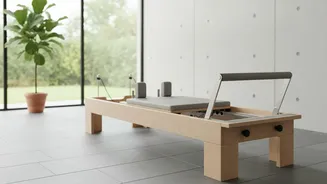
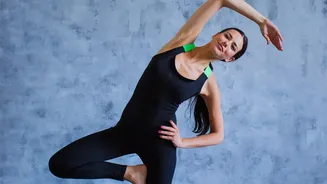
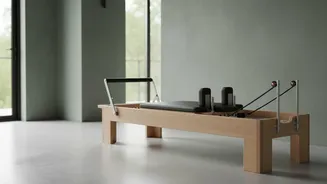
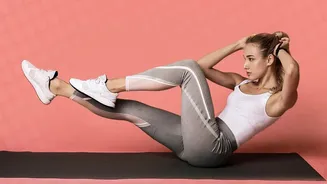
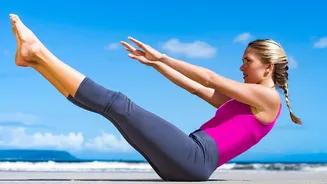
Pilates is renowned for its focus on the 'powerhouse,' a term that refers to the deep muscles of the core. The entire method is built around principles of control, concentration, and precise movement originating from a stable center. A typical Pilates session involves slow, deliberate exercises that challenge your ability to hold your pelvis and spine still while moving your limbs. This approach is exceptionally good at targeting the deep stabilizing muscles that are often neglected in traditional strength workouts. By emphasizing breathwork and mindful muscle engagement, Pilates trains your core to maintain stability under continuous, controlled tension, improving posture, balance, and fine-tuned muscle control.
The Circuit Training Method: Dynamic and Reactive
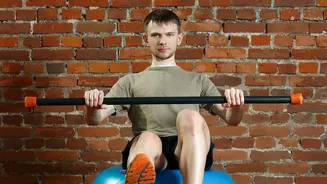
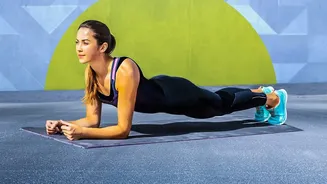
Circuit training involves performing a series of different exercises in quick succession with minimal rest in between. While not always designed with the core as the primary focus, a well-structured circuit inherently demands significant core engagement. As you move from a squat to a push-up to a kettlebell swing, your core has to work dynamically to stabilize your body through different planes of motion, under load, and during transitions. This type of training teaches your core to be reactive, firing quickly to brace your spine against powerful, multi-joint movements. It builds a core that can handle the unpredictable demands of sports and daily life, improving both strength and cardiovascular endurance simultaneously.
The Expert Verdict: Which Is Better?
So, which one builds stronger core stability? The consensus among fitness experts is that it depends entirely on your goals. Pilates is superior for developing deep, intrinsic core control, proprioception (your sense of where your body is in space), and postural endurance. It's fantastic for building a foundational base of stability, improving mind-muscle connection, and is often recommended for injury rehabilitation. Circuit training excels at building a powerful, functional core that can stabilize the body during explosive, high-intensity activities. It challenges the core in a more dynamic, real-world context, preparing it to handle heavy loads and rapid changes in direction. In essence, Pilates builds stability from the inside out through precision and endurance. Circuit training builds stability by forcing the core to react to external, dynamic forces. One study comparing Pilates to weight circuit training found that while both improved body composition, the Pilates group saw greater improvements in pelvic alignment and balance.