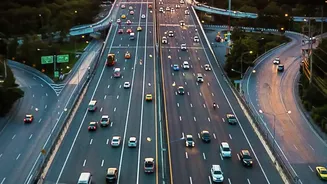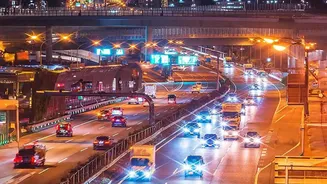










What Exactly Is This Project?
The project is called the Intelligent Traffic Management System (ITMS). At its core, it's a high-tech overhaul designed to make Delhi's traffic system smarter, safer, and more efficient. The Cabinet Committee on Economic Affairs, chaired by the Prime
Minister, approved the hefty budget for this initiative, which will be implemented by the Delhi Police. The plan is to move away from the current system, where most of Delhi's 1,500-plus traffic signals operate on fixed timers, regardless of the actual traffic on the ground. This technology-driven project will cover 42 of Delhi's most congested traffic corridors, aiming to manage the city's network of over 70 lakh active vehicles more intelligently.
How Will The 'AI' Actually Manage Traffic?
The 'AI' in the project refers to a network of systems working together. The star of the show is the Adaptive Traffic Control System (ATCS), which will be installed at nearly 1,100 locations. Using real-time data from cameras and sensors, these smart signals will automatically adjust their timings based on the traffic volume at any given moment. This means no more waiting at a red light on an empty road at 2 AM. The system will also coordinate signals along entire corridors to create 'green waves,' allowing for smoother traffic flow and fewer stops. A central command and control centre will monitor the entire network, allowing for quick operational responses to incidents like accidents or breakdowns.
Smarter Enforcement and Safer Roads
A major component of the ITMS is automated enforcement. The system will use AI-powered cameras at over 1,000 locations to automatically detect a wide range of traffic violations. This includes common offences like jumping red lights, speeding, and stop-line violations, as well as not wearing helmets or seat belts, using a mobile phone while driving, and wrong-way driving. The AI analytics will also help identify stolen or blacklisted vehicles and track repeat offenders, contributing to overall public safety. The goal is to make enforcement more effective and predictable, encouraging better driving behaviour across the city.
Priority for Emergency Vehicles
One of the most significant benefits for citizens will be the creation of priority green corridors for emergency vehicles. Ambulances and fire tenders will be equipped with sensors. As they approach an intersection, the system will detect them and automatically turn the signals green, allowing them to pass through congested areas with minimal delay. This automated process can dramatically reduce emergency response times, which can be the difference between life and death. The system will be able to detect an approaching emergency vehicle from a distance of several hundred metres and clear the path ahead.
The Road Ahead: Timeline and What to Expect
This ambitious project will not be completed overnight. It is scheduled to be rolled out in three phases over 24 months. The first phase will focus on five key corridors and is expected to be commissioned within the first year. The Delhi Police will implement the project with technical support from the Centre for Development of Advanced Computing (C-DAC). For commuters, the changes will become gradually visible. Digital variable message signs will provide real-time updates on congestion, diversions, and even parking availability. This information might also be shared with navigation apps, making travel planning more accurate and dynamic for everyone.