




Meet Pandora, The Atmosphere Detective
In late August 2026, NASA's Pandora mission officially began its science operations, marking a new chapter in the study of worlds beyond our solar system. Pandora is a SmallSat, a compact and cost-effective spacecraft launched as part of the agency's
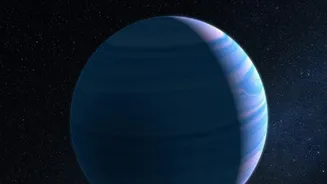
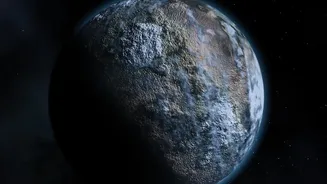
Astrophysics Pioneers program. Its primary objective is not just to find new planets, but to scrutinize the atmospheres of at least 20 known exoplanets. During its year-long primary mission, it will take a deep dive into the chemical makeup of these alien skies, looking for the tell-tale signs of clouds, hazes, and, most importantly, water vapour. Led by NASA's Goddard Space Flight Center, Pandora represents a focused effort to move from merely detecting exoplanets to truly understanding them.
The Challenge of Starlight
Finding water hundreds of light-years away is incredibly difficult, and not just because of the distance. The primary method involves analyzing starlight that passes through a planet's atmosphere during a 'transit'. As the light skims the planet, molecules in the atmosphere absorb certain wavelengths, leaving behind a chemical fingerprint. The problem is that stars are not stable, quiet backlights. They have their own dynamic surfaces, with dark 'starspots' and bright flares that can contaminate the light signal. This stellar 'noise' can mimic the very signatures scientists are looking for, making it difficult to be certain if a detected signal for water, for example, is truly from the planet or is just an artifact from its chaotic host star.
A Strategy to Untangle the Signals
This is the specific problem Pandora was built to solve. Its mission is to disentangle the planet's atmospheric signal from that of its star. To do this, it employs a unique strategy of long, simultaneous observations. Pandora will stare at each target system for a continuous 24-hour period, observing it ten different times over the course of its mission. Using its 18-inch telescope, it captures data in both visible and near-infrared light at the same time. This allows scientists to create a detailed map of the star's activity in visible light while simultaneously measuring the planet's atmospheric data in the infrared. By comparing the two datasets, they can confidently subtract the star's interference, leaving behind a much cleaner and more reliable fingerprint of the exoplanet's atmosphere.
Paving the Way for Future Giants
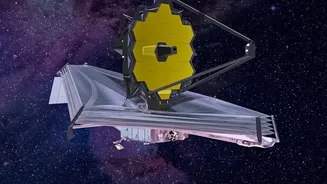
While Pandora is a small mission, its impact is expected to be enormous. It serves as a crucial pathfinder, refining the techniques that will be used by much larger and more powerful observatories. The insights gained will help scientists better interpret complex atmospheric data collected by the James Webb Space Telescope and the soon-to-launch Nancy Grace Roman Space Telescope. In fact, Pandora’s near-infrared detector is a spare part originally built for the Webb telescope. Furthermore, its findings will lay an essential foundation for NASA's next great flagship mission, the Habitable Worlds Observatory (HWO), which is being designed with the ultimate goal of directly imaging Earth-like planets and searching for biosignatures in the 2040s. Pandora's work ensures that when these future missions spot a potential sign of life, the science will be on solid ground.