


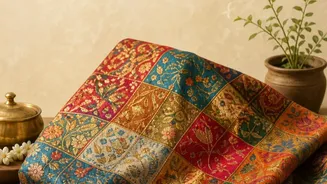

Start Small with Textiles
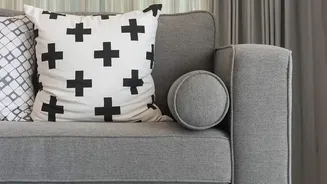
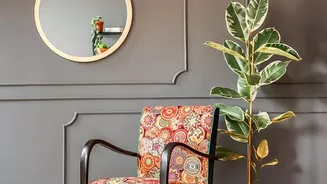
The easiest entry point into the world of vintage patterns is through textiles. You don't need to commit to a full wall of wallpaper to make an impact. Think about adding a set of throw pillows in a classic floral chintz, a plush rug with a bold Art Deco
geometric design, or even a single, beautifully upholstered armchair. These pieces act as accents, drawing the eye and introducing a new colour palette without overwhelming the space. Curtains, bedspreads, and tablecloths are other fantastic, low-commitment ways to experiment. Look for glazed cotton chintz, originally from India, for a classic floral feel. Many traditional Indian textiles, like those featuring Kutch embroidery or block prints, can serve as stunning wall tapestries or throws, adding handcrafted detail.
Embrace Art Deco Glamour
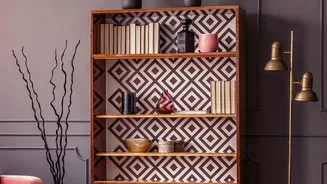
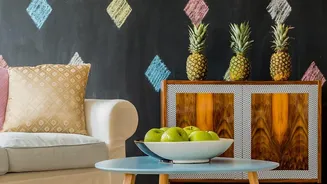
The Art Deco movement of the 1920s and 30s was all about glamour, sophistication, and bold, streamlined forms. This style is defined by its striking geometric patterns, such as sunbursts, chevrons, zigzags, and stepped forms. Incorporating these patterns can add a dose of drama and elegance. Look for wallpaper, cushions, or artwork featuring these iconic shapes. The Art Deco colour palette is rich and saturated, favouring deep jewel tones like emerald green and sapphire blue, often paired with black, white, and metallic accents like gold or chrome. A single statement piece, like a sunburst mirror or a rug with a strong geometric print, can anchor a room and give it a sophisticated, worldly feel.
Rediscover Classic Florals and Chintz
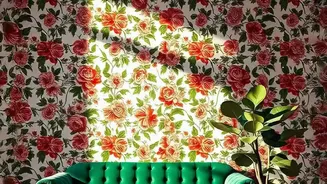
Often associated with quaint English country homes, floral patterns like chintz are making a major comeback in modern interiors. The key to making it feel fresh is to use it with a light hand and create contrast. Pair a bold floral fabric with modern, clean-lined furniture to avoid a dated look. For instance, a headboard upholstered in a colourful chintz can become the focal point of a bedroom when the rest of the decor is kept simple and clean. You can also try using floral patterns in unexpected ways, like on a lampshade or as a framed piece of vintage fabric. This approach adds a touch of warmth and personality that prevents a room from feeling too sterile or generic.
Tell a Story with Toile
Toile de Jouy, or simply 'toile', is a pattern that originated in 18th-century France. It typically features a repeated, single-colour pattern depicting a complex, romanticised scene of pastoral life, people, or nature. While traditionally used for wallpaper and curtains across an entire room, modern applications are more restrained and just as effective. Using toile on an accent wall, framed within panelling, or on the upholstery of a statement chair can add a sense of soft, dreamy storytelling to a space. It pairs beautifully with both traditional furniture and contemporary pieces, creating a compelling contrast that feels both timeless and personal.
Master the Art of Mixing
Don't be afraid to mix and match different vintage patterns. The trick to success lies in maintaining balance. A good rule of thumb is to vary the scale of the prints; for example, pair a large, bold floral with a small, subtle geometric or stripe. Another key is to stick to a cohesive colour palette. Choose one or two main colours and then use a few accent shades that appear across the different patterns. This creates a sense of harmony and intentionality, making the combination feel curated rather than chaotic. By layering an old print with modern pieces, you create a dynamic tension that makes a room feel collected over time, not decorated in a day.