





A New Eye on the Cosmos
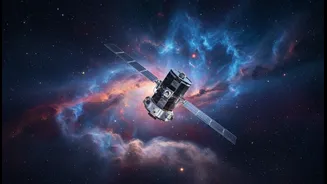
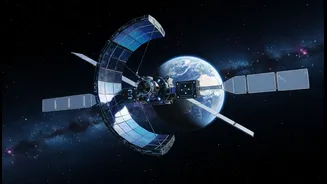
The Habitable Worlds Observatory, or HWO, is NASA's next flagship astrophysics mission, following in the footsteps of giants like the Hubble and James Webb Space Telescopes. Recommended by the National Academies, this ambitious project is the first space
observatory being designed specifically with the primary goal of searching for signs of life on planets orbiting other stars. While its predecessors have given us breathtaking images of the distant universe and hinted at the existence of thousands of exoplanets, HWO is being engineered to take the crucial next step: to look for worlds that are not just distant specks of light, but potentially living places. The plan is to launch this cutting-edge telescope in the 2040s, providing a generational leap in our cosmic perspective.
Hunting for Atmospheric Clues
So how will HWO actually look for life? It won't be searching for little green men. Instead, it will hunt for biosignatures—chemical clues in a planet's atmosphere that could indicate biological activity. The observatory's main objective is to directly image at least 25 planets that resemble Earth and then use spectroscopy to analyse the light passing through their atmospheres. This process will allow scientists to detect the presence of gases like oxygen, methane, and water vapour. On Earth, the abundance of oxygen is a direct result of life. Finding a similar mix on a distant, rocky planet in its star's habitable zone—the region where liquid water could exist—would be powerful evidence that something similar might be happening there.
More Powerful Than Webb
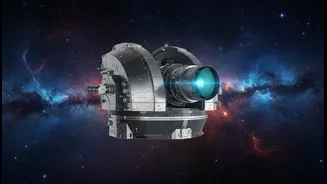
The James Webb Space Telescope (JWST) has already revolutionized astronomy, but it wasn't built for this specific task. HWO will be. Its key advantage will be an advanced coronagraph, a sophisticated instrument designed to block the overwhelming glare of a star. Imagine trying to spot a firefly next to a powerful searchlight; that's the challenge of seeing a planet next to its star. The HWO's coronagraph needs to be powerful enough to suppress starlight by a factor of 10 billion. This requires the telescope to be over 100 times more stable than even the JWST. This incredible stability will allow HWO to create a 'dark hole' around the star, revealing the faint light of the planet next to it so its atmosphere can be studied in detail.
The Long Road to Launch
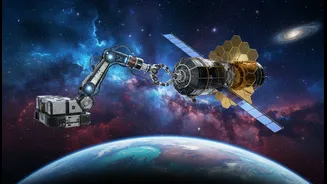
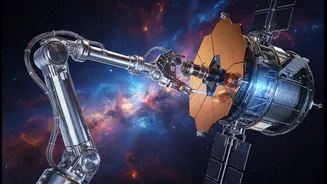
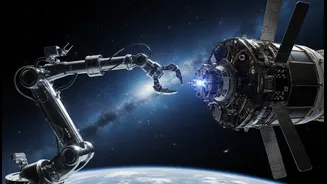
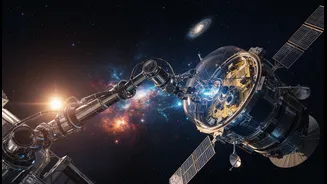
A mission of this complexity is a marathon, not a sprint. With a projected launch in the early 2040s and an estimated cost of over $11 billion, HWO is still in the early planning stages. NASA is currently funding studies to mature the key technologies needed for the mission. Learning from the past, HWO is also being designed to be serviceable and upgradeable, likely by robotic missions. Unlike Webb, which is too far away to be repaired by astronauts, HWO could potentially have its instruments swapped out or repaired, extending its scientific life for decades. The observatory will be positioned at a gravitationally stable point about 1.5 million kilometres from Earth, the same neighbourhood as the JWST, allowing for continuous observation of the cosmos.