
A Digital Traffic Jam
The short clip, reportedly filmed from a Tesla Model Y in Gurugram, became an instant internet sensation. On the car's large central touchscreen, a digital representation of the surrounding road is packed with an almost comical number of icons. Cars,
trucks, motorcycles, and pedestrians flicker in and out of view, clustering together in a chaotic ballet that perfectly mirrors the real-world scene outside. Online, the reactions were swift and humorous, with viewers joking that the car was getting a "desi reality check" and that even advanced AI couldn't handle the unpredictability of Indian streets. While the video is entertaining, it also raises a serious question: What are we actually seeing on that screen, and what does it say about the readiness of self-driving technology for a market like India?
A Window Into the Car's Brain
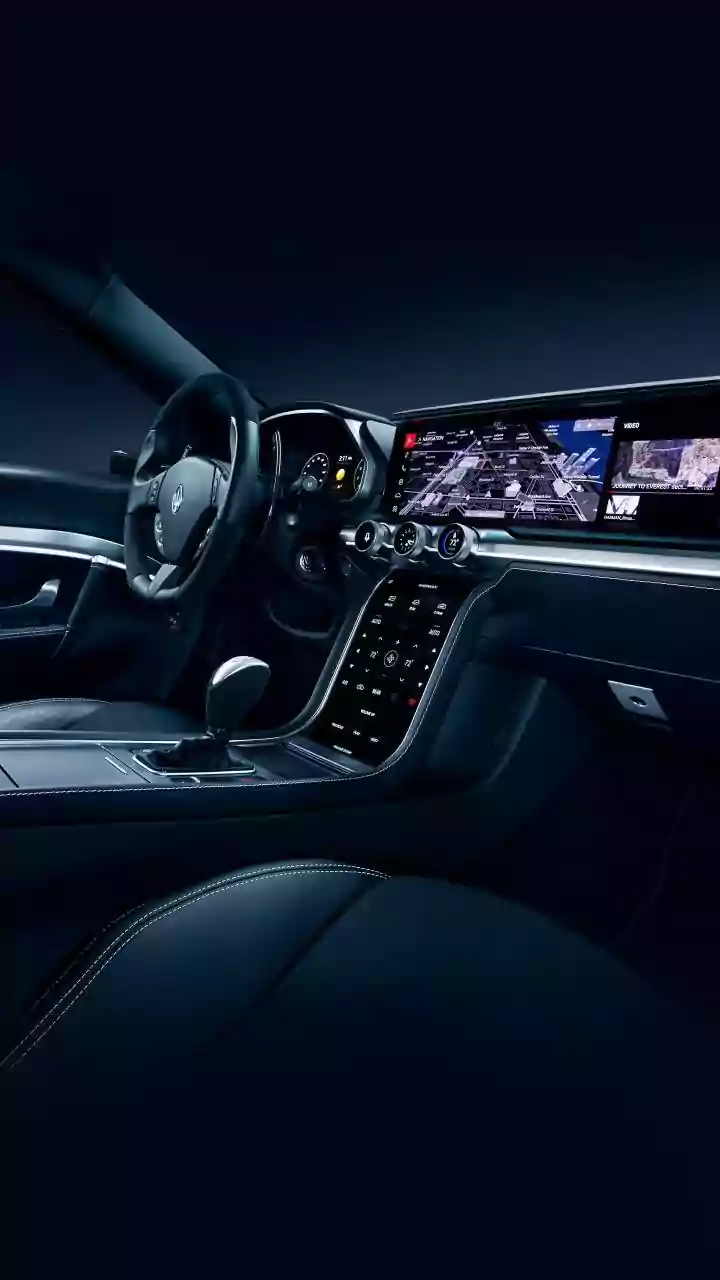
The screen at the center of the viral clip is Tesla’s driving visualization display. It isn't a simple video feed; it's a real-time, 3D-rendered world created by the car's artificial intelligence. Using a suite of cameras, the vehicle's onboard neural network identifies and tracks objects in its vicinity—from other cars and cyclists to traffic cones and pedestrians. The display is essentially a window into the car's perception, showing the driver what the system "sees" and is paying attention to at any given moment. The clarity and confidence with which it renders an object can indicate how well the system has identified it. When the display looks crowded, as it does in the Gurugram video, it means the car is detecting an immense amount of information simultaneously.
An AI Trained for Different Roads
The apparent confusion on the Tesla's screen isn't a system malfunction but a symptom of a much larger challenge: data. An AI is only as smart as the data it's trained on. Tesla's Full Self-Driving (FSD) software has learned to drive by analyzing billions of miles of road data, but the vast majority of that data comes from the relatively orderly and predictable traffic environments of North America and Europe. These roads have clear lane markings, disciplined drivers, and a limited set of familiar obstacles. Indian traffic is a different beast entirely. It’s a fluid, high-density environment characterized by a mix of vehicles sharing tight spaces, a general disregard for lane markings, and the frequent, unpredictable movement of pedestrians and animals. Vehicles like auto-rickshaws, which weave through traffic, present a unique challenge for an AI not extensively trained to anticipate their behavior.
The 'Edge Case' Becomes the Norm
In software development, an "edge case" is a rare problem that occurs only at extreme operating parameters. For Tesla’s AI, a stray pedestrian or an aggressive lane change might be a typical edge case. But on an Indian road, these events aren't the exception; they are the norm. The Gurugram clip perfectly illustrates this. The system isn't necessarily failing; it's working overtime, trying to classify and track dozens of objects that are all behaving in ways that defy its core programming. While FSD is not officially active in India due to regulatory and technological readiness issues, the visualization system is still running, providing a live look at how the car’s perception system is grappling with this new, complex environment. The frenetic display shows a system confronting a reality for which its existing training is not fully prepared.