





The Vision: An Artemis Base Camp
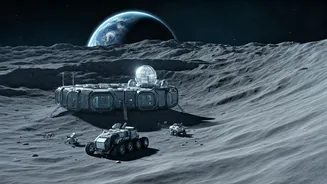
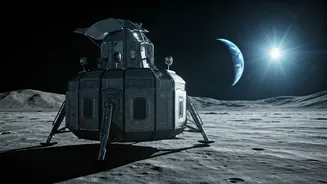
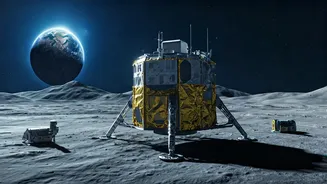
Before we can build a base, we need a blueprint. NASA calls this the Artemis Base Camp, a planned outpost at the Moon's south pole. This region is strategically important due to the likely presence of water ice in permanently shadowed craters. The base camp
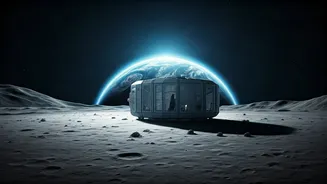
isn't a sprawling city, but a sustainable research station designed to support crews for up to two months at a time. The concept includes a foundational surface habitat, a lunar terrain vehicle for transport, and a habitable mobility platform—essentially a pressurized RV for long-range exploration. The ultimate goal is to create a sustained presence that serves as a scientific hub and a crucial stepping stone for future human missions to Mars.
Artemis IV and V: Laying the Foundation
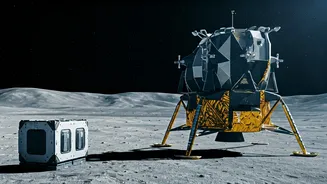
The year 2028 is a pivotal target in the Artemis timeline, featuring two key missions: Artemis IV and Artemis V. Artemis IV, scheduled for early 2028, is slated to be the first crewed lunar landing of the program, returning humans to the surface for the first time since 1972. This mission will see four astronauts travel to lunar orbit, with two descending to the surface to conduct experiments and scout the south pole region for about a week. Following closely, Artemis V, planned for late 2028, will be the second landing and is considered the point when construction of the Moon base truly begins. These missions mark the shift from short-term exploration to establishing a recurring human presence on the Moon, with landings planned almost annually thereafter.
The Essential Hardware
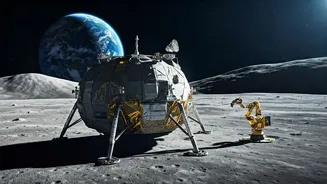
Building a base requires more than just astronauts; it needs the right equipment. A key piece of hardware set to be deployed around these missions is the Lunar Terrain Vehicle (LTV). Unlike the simple rovers of the Apollo era, the LTV is a sophisticated, unpressurized vehicle designed for the harsh conditions of the lunar south pole. It will allow astronauts to travel farther from their lander to conduct science and explore potential resources. Recently, NASA awarded contracts to companies like Astrolab and Lunar Outpost to develop these next-generation rovers. In addition to mobility, robotic missions will also play a crucial role. In late 2028, several commercial landers are scheduled to deliver science and technology payloads to the lunar surface, testing systems needed for future operations.
Living Off the Land
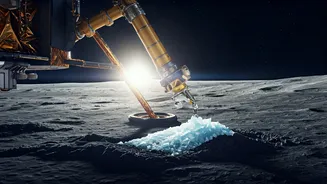
A truly sustainable base can't rely solely on supplies from Earth. This is where In-Situ Resource Utilization, or ISRU, comes in. ISRU is the practice of collecting and using local materials, and it's fundamental to the Artemis Base Camp's long-term success. On the Moon, the most valuable resource is water ice. Technologies are being developed to extract this water, which can then be used for drinking, growing food, and producing breathable oxygen. It can also be split into hydrogen and oxygen to create rocket propellant, potentially turning the Moon into a refueling station for missions deeper into the solar system. Missions around 2028 will include instruments and demonstrations aimed at mapping these resources and testing extraction technologies, which is essential before larger-scale ISRU operations can begin.
Challenges on the Lunar Horizon
The path to a permanent lunar base is paved with immense challenges. The Artemis program operates on ambitious timelines that are subject to change due to technical hurdles and budget uncertainties. Developing the complex hardware, from the powerful SLS rocket to the commercial human landing systems provided by companies like SpaceX and Blue Origin, is a monumental task. The missions themselves are intricate ballets of engineering, requiring flawless performance from multiple systems. Furthermore, the lunar environment itself is unforgiving, with extreme temperatures, abrasive dust, and high levels of radiation that all pose risks to astronauts and equipment. Overcoming these obstacles will require sustained investment, international cooperation, and continued innovation from both NASA and its commercial partners.