



Whispers of the P50
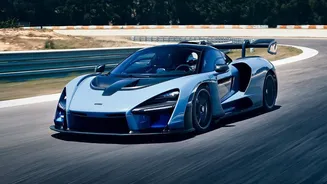
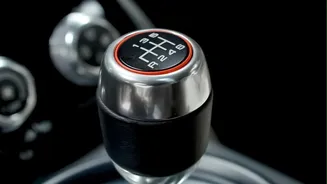
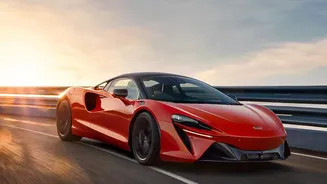
Recent reports, though unconfirmed by the automaker, speak of a project codenamed 'P50'. This isn't just another hypercar; the detail causing a stir among enthusiasts is its potential inclusion of a three-pedal manual transmission. If true, the P50 would
be the first McLaren road car to feature a manual gearbox since the iconic F1 concluded its production run in 1998. Since then, every modern McLaren has used lightning-fast, paddle-shifted dual-clutch transmissions, which are objectively quicker but lack the mechanical connection many drivers crave. Details are scarce, with speculation pointing to a potential reveal at Monterey Car Week in August. Forum discussions among brand loyalists hint at an ultra-exclusive, limited-production model, with a price tag expected to surpass even the current W1 flagship.
A Broader Industry Shift
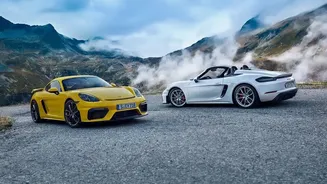
The McLaren rumor doesn't exist in a vacuum. It taps directly into a growing movement within the upper echelons of the automotive world: the manual revival. For years, the pursuit of lower lap times made automated transmissions the only logical choice. But now, the pendulum is swinging back towards driver engagement. Porsche has found immense success offering manual versions of its highly sought-after GT cars. More recently, Ferrari unveiled the 12Cilindri Manuale, which uses a sophisticated 'by-wire' system to simulate the feel of a traditional gated shifter. Niche manufacturers are also leading the charge. Gordon Murray Automotive, founded by the designer of the original McLaren F1, made a six-speed manual a core feature of its T.50 and T.33 supercars, explicitly prioritizing the driving experience over raw performance figures. Hennessey and Pagani have also committed to three-pedal options in their latest hypercars.
From Lap Times to Heart Rates
Why would a company obsessed with aerodynamic efficiency and track performance deliberately install a 'slower' component? The answer lies in a philosophical shift. As supercars have become almost unimaginably fast, the focus for some wealthy collectors has moved from objective metrics to subjective experience. The raw, unfiltered connection of a manual gearbox—the perfectly timed downshift, the mechanical feel of the lever slotting into a gate—offers a sense of control and satisfaction that even the most advanced automatic cannot replicate. Ferrari's development chief has noted that as performance peaks, the experience becomes the new frontier for innovation. For a select group of buyers, the visceral thrill of mastering the machine is worth more than a few tenths of a second on a racetrack. This trend suggests that the definition of 'performance' is expanding to include emotional feedback and driver involvement, not just speed.
An Engineering Challenge
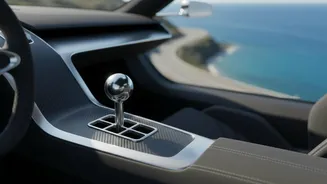
Creating a modern manual supercar isn't as simple as dusting off old blueprints. Today's engines produce immense levels of torque that would overwhelm older designs. A new manual gearbox must be engineered to be both incredibly robust and lightweight, without sacrificing the tactile feel that enthusiasts desire. It's a significant technical challenge. It also remains to be seen what form a potential McLaren manual would take. Would it be a traditional, mechanical H-pattern linkage, like that in a Gordon Murray Automotive T.50? Or would it be a more modern interpretation, like Ferrari's electronically controlled but physically engaging system? The latter offers a way to retain the extreme performance of the underlying dual-clutch transmission while adding the interactive layer of a clutch and shifter. Regardless of the path chosen, it represents a major investment in analogue driving pleasure.