






A Mission to Measure Hidden Heat
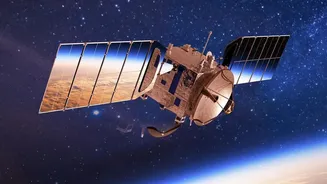
The breakthrough comes from a NASA mission called PREFIRE, which stands for the Polar Radiant Energy in the Far-InfraRed Experiment. Launched in 2024, the mission uses a pair of shoebox-sized satellites, or CubeSats, to measure a type of energy that has
been difficult to track until now. These tiny spacecraft are equipped with advanced spectrometers to measure far-infrared radiation. This is significant because this invisible energy accounts for nearly 60 percent of the heat that Earth loses to space. Before PREFIRE, we had no way of systematically measuring this massive portion of our planet's energy budget, leaving a major gap in climate models.
A Tale of Two Poles
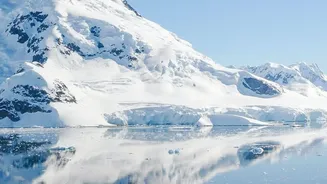
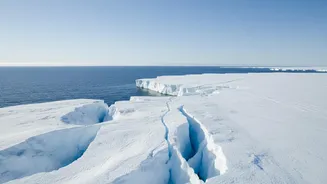
After completing two full years of observations, PREFIRE has revealed just how differently the Arctic and Antarctic behave. The data shows the two poles pulsing with the seasons, but their geography dictates a unique story for each. Because they are in opposite hemispheres, their seasons are reversed. In the Arctic, cold winters give way to relatively mild summers that can thaw sea ice and tundra. In contrast, Antarctica, the world's coldest continent, remains largely below freezing even during its summer. This difference in seasonal temperature swings is crucial. It dictates how much heat is released and when, affecting everything from ice formation to local weather.
Why This Heat Release Matters
The poles are a critical part of Earth's climate system. Excess heat absorbed in the tropics is transported toward the poles by ocean and atmospheric currents. The poles then radiate this heat back into space, helping to regulate global temperatures. The data from PREFIRE provides a direct look at this process, showing how factors like clouds and water vapor can trap heat or allow it to escape. Understanding these dynamics is essential for improving our climate and weather models. Better models lead to more accurate predictions about sea-level rise, changes in snow and ice cover, and shifts in global weather patterns that can affect communities worldwide.
Improving Climate Models and Predictions
For years, scientists have known that climate models often struggle to accurately represent the accelerated warming seen at the poles, a phenomenon known as Arctic amplification. The detailed measurements from PREFIRE are designed to fill this knowledge gap. By providing the first comprehensive look at far-infrared emissions, the mission gives modelers the specific data needed to refine their simulations. This helps them better understand the role of the greenhouse effect at the poles and how it is influenced by water vapor and clouds. This isn't just an academic exercise; more accurate models are vital for predicting the frequency of extreme weather events and understanding the long-term impacts of a warming planet on everything from agriculture to coastal infrastructure.