




Understanding Earth's Energy Bill
Our planet is constantly engaged in a delicate balancing act. It absorbs energy from the sun and radiates energy back into space as heat. For a stable climate, this energy budget needs to be in equilibrium. However, due to rising greenhouse gas concentrations,
Earth is trapping more heat than it releases. This phenomenon, known as Earth's energy imbalance, is the fundamental driver of global warming. Scientists have found this imbalance has roughly doubled in recent years, with most of the excess heat being stored in the oceans. This retained energy fuels rising temperatures, melts ice, and alters weather patterns worldwide.
The Challenge of the Poles
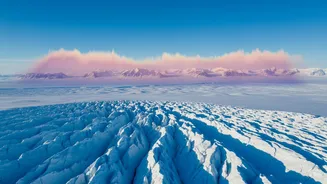
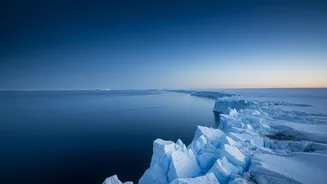
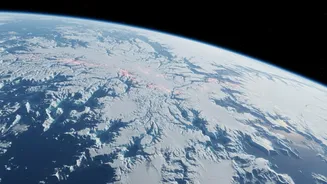
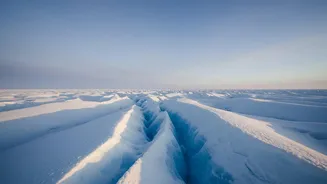
The Arctic and Antarctic play an outsized role in regulating global temperature. Their bright, icy surfaces reflect solar energy, while also radiating heat out to space. However, accurately measuring this energy exchange has been a long-standing challenge. A significant portion of this heat is released as far-infrared radiation, a type of energy that is invisible to the human eye and has been difficult for previous satellite systems to measure comprehensively. This created a major observational gap in our understanding of the polar energy budget, making it harder to refine climate models. Without this data, it's like trying to balance a chequebook with nearly 60% of the expenses missing.
PREFIRE's Breakthrough Observations
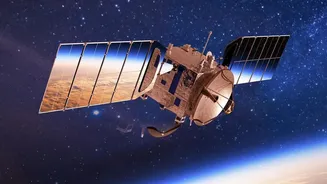
Enter NASA's PREFIRE mission, which stands for Polar Radiant Energy in the Far-InfraRed Experiment. Using a pair of shoebox-sized satellites, or CubeSats, launched in mid-2024, NASA has been gathering crucial data. As of August 2026, the mission has successfully completed two full years of observations, capturing two complete seasonal cycles at both the Arctic and Antarctic. These twin satellites are equipped with advanced spectrometers that can measure far-infrared wavelengths with ten times more sensitivity than any previous instrument. This has allowed scientists, for the first time, to continuously map the hidden heat radiating from the poles, filling that critical gap in Earth’s energy budget.
A Tale of Two Poles
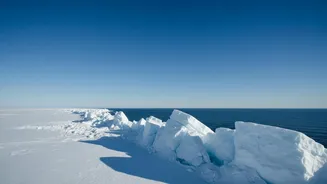
The new data reinforces that the Arctic and Antarctic are not responding to climate change in the same way. The Arctic, an ocean surrounded by land, is warming at a much faster rate than the rest of the planet. Its summer thaws can melt vast areas of sea ice and tundra. In contrast, Antarctica, a massive continent of ice surrounded by ocean, has historically shown more stability, though this is changing. Recent years have seen record lows in Antarctic sea ice. The geography of each pole dictates how it responds to and releases heat. The PREFIRE data provides a much clearer picture of these distinct seasonal patterns, helping scientists understand why one pole's ice is decreasing at a different rate than the other's.
Why Polar Changes Matter for India
What happens at the poles, over 7,000 kilometres away, does not stay at the poles. The health of the polar regions has a direct influence on global weather systems, including the Indian monsoon. Research has shown a strong link between melting Arctic sea ice and shifts in monsoon rainfall. Changes in the Arctic can alter atmospheric circulation, potentially affecting the timing, intensity, and location of rainfall across India. This has significant consequences for agriculture, water management, and flood risk. Furthermore, the melting of massive ice sheets in both Greenland and Antarctica is a primary contributor to global sea-level rise, posing a long-term threat to India's extensive coastline.