

A Classic Sweet Reimagined
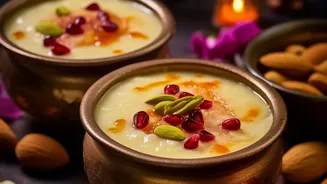
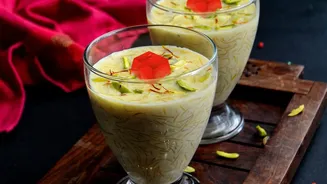
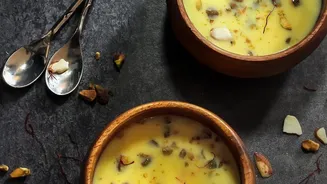
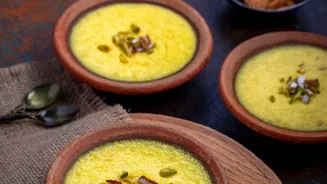
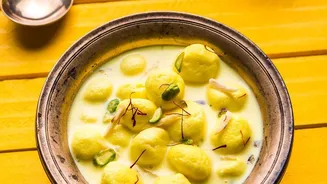
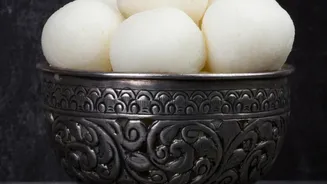
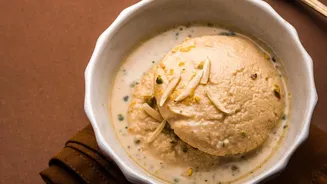
Rasmalai is a beloved dessert across India, known for its soft, spongy discs of chenna (fresh paneer) soaked in a fragrant, sweetened, and thickened milk (rabri). It's a delicate sweet that requires skill and patience, from curdling the milk just right
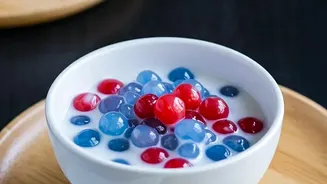
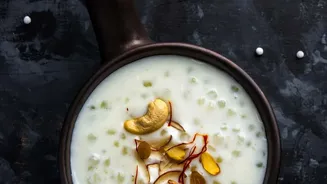
to kneading the chenna to achieve the perfect porous texture. But culinary creativity knows no bounds, and the latest fusion to capture the imagination of home cooks is Sabudana Rasmalai. This variation does away with the chenna-making process entirely. Instead, it uses sabudana, or tapioca pearls, to create the 'malai' component that swims in the sweet milk, a concept gaining traction as a unique fusion dessert.
The All-Important Texture Swap
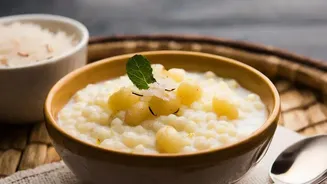
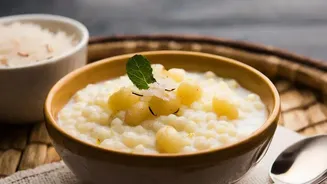
The most significant change in Sabudana Rasmalai is the texture. Traditional rasmalai is defined by its soft, almost melt-in-your-mouth quality, where the chenna discs absorb the rabri like a sponge. Sabudana offers a completely different experience. Tapioca pearls, after being soaked and cooked, provide a distinctly chewy and gelatinous bite. In this dessert, the sabudana isn't just loose pearls like in a kheer. Most recipes involve soaking the sabudana, cooking it down, and then forming it into small patties or balls, sometimes with the help of a binder like milk powder. These patties are then gently simmered in the sweetened milk. The result is a soft, slightly bouncy, and chewy disc that holds its shape, providing a textural contrast to the creamy liquid it's served in.
What It Means for Flavour and Preparation
While the rabri remains largely the same—thickened milk flavoured with saffron, cardamom, and nuts—the vessel for that flavour changes the experience. Chenna is relatively neutral, allowing it to become a perfect carrier for the sweet milk. Sabudana has its own subtle, starchy character. The flavour profile of the finished dish is often described as a perfect combination of traditional rasmalai and sabudana kheer. The most compelling argument for Sabudana Rasmalai, however, is its simplicity. Making chenna from scratch is an art. It can be time-consuming and prone to error; the chenna can become too hard or disintegrate if not handled correctly. Sabudana, on the other hand, is far more forgiving. Soaking and cooking tapioca pearls is a straightforward process, making this dessert significantly more accessible for novice cooks or anyone short on time.
A Fast-Friendly Innovation
Another reason for the growing interest in this fusion is its utility during religious fasts (vrat). Sabudana is a staple food for fasting periods like Navratri, as it is a pure starch that provides a quick energy boost. Traditional rasmalai is typically not consumed during fasts. By substituting chenna with sabudana, the dessert becomes a 'falahari' or fasting-friendly treat, offering a new, indulgent option for those observing religious customs. This practical adaptation allows a festive dessert to be enjoyed on occasions where it was previously off-limits, broadening its appeal.