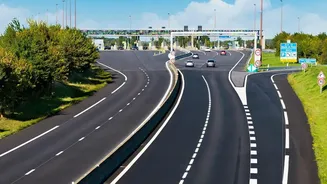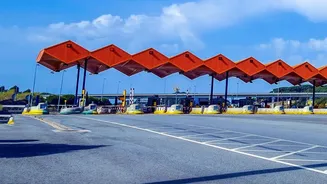







The Goal: A Barrier-Free Future
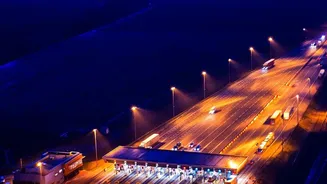
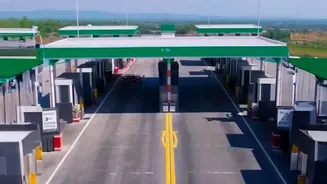
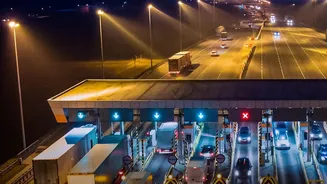
The government's vision is clear: eliminate physical toll plazas and the associated queues by the end of 2026. The plan is to replace them with a Global Navigation Satellite System (GNSS), which will automatically track a vehicle's journey on a highway
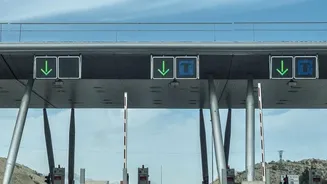
and deduct the toll for the exact distance travelled. This shift from the current FASTag system, which still requires slowing down at a gantry, to a completely barrier-free Multi-Lane Free Flow (MLFF) system promises to save time, reduce fuel consumption, and increase transparency. Pilot projects are already underway, demonstrating the technology's feasibility.
Public Plazas: On the Fast Track
For highways that are publicly funded and directly managed by the National Highways Authority of India (NHAI), the transition is expected to be relatively straightforward. These are typically projects built under the Engineering, Procurement, and Construction (EPC) model, where NHAI owns the asset and controls operations. Since NHAI is driving the technology shift, it can directly implement the new satellite-based and ANPR (Automatic Number Plate Recognition) systems on these stretches. The timeline for removing these physical booths aligns with the government's end-of-2026 national target, making them the pioneers of seamless tolling.
Private Concessions: The Contractual Speed Bump
The situation is more complex for the hundreds of toll plazas operated by private companies. Many of these operate under long-term contracts, such as the Build-Operate-Transfer (BOT) or the more recent Toll-Operate-Transfer (TOT) models. In these arrangements, a private entity pays a large upfront fee or finances the construction in exchange for the right to collect and keep toll revenue for a fixed period, often up to 30 years. Their contracts explicitly define the method of toll collection, including the physical infrastructure of a toll plaza. Changing these terms mid-contract is not a simple matter.
Why the Lag? It's About Contracts and Costs
The core reason for the different timelines lies in these binding concession agreements. A private operator has a contractual right to the physical toll collection infrastructure for the duration of their agreement. The government cannot unilaterally dismantle these plazas without renegotiating the contracts, which would likely involve significant financial compensation to the private firms for potential losses or changes in operations. While newer contracts, like those under the TOT model, do include provisions for upgrading to 'intelligent tolling systems', they also include clauses for settling any substantial variations in revenue with the authority. This process of renegotiation, valuation, and settlement for each individual concession is a time-consuming legal and financial process, which naturally pushes back the transition timeline for these routes.
What This Means for Your Highway Journey
For the average driver, this means the experience of highway travel will be inconsistent for the next few years. You might enjoy a seamless, barrier-free drive on a newly built, publicly funded expressway, only to encounter a traditional (though FASTag-enabled) toll plaza on an older, privately managed highway section on the very same route. Commuters will need to keep their FASTags active and funded, as the tag will remain central to the new system, even on barrier-free stretches. The nationwide transition will feel more like a patchwork of progress than a sudden, uniform change, with some corridors becoming 'plaza-free' much sooner than others.