



What is the Axiom-4 Mission?
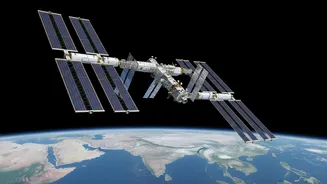
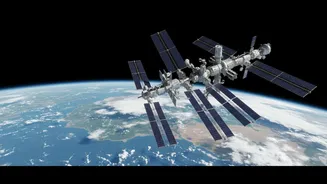
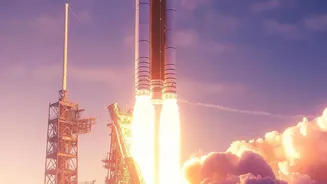
Axiom-4 is a commercial human spaceflight mission to the International Space Station (ISS) operated by the American company Axiom Space. Unlike government-led expeditions, these missions are chartered by private individuals, companies, and even national agencies
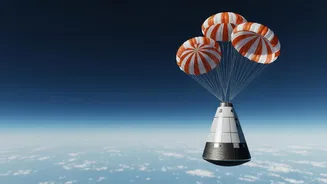
for short-duration stays on the orbiting laboratory. For about two weeks, the crew will live and work on the ISS, conducting a host of scientific experiments in a microgravity environment. The mission utilizes SpaceX's reusable Falcon 9 rocket and Dragon spacecraft, highlighting a new era of collaboration between national space agencies like NASA and a burgeoning private sector. For India, this mission is particularly significant as it includes one of its own astronauts, marking a return to human spaceflight for the nation after a gap of more than 40 years.
India's Astronaut in the Co-Pilot's Seat
Indian Air Force Group Captain Shubhanshu Shukla will serve as the pilot for the Ax-4 mission. His participation is not a solo endeavor but part of a strategic agreement between ISRO and NASA. Shukla is one of the four astronaut-candidates selected for India’s own Gaganyaan program, having already completed extensive training in Russia and Bengaluru. The Ax-4 mission provides him with crucial, hands-on experience in a real spaceflight environment before India launches its own crewed mission. Onboard the ISS, Shukla will be responsible for conducting a series of experiments designed by ISRO and other Indian scientific institutions, studying everything from the effects of microgravity on the human body to agricultural science.
Direct Lessons for the Gaganyaan Programme
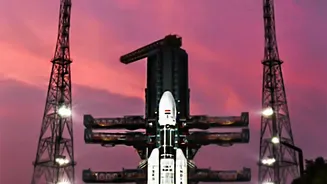
The Gaganyaan mission is ISRO's ambitious project to send a crew of Indian astronauts into Low Earth Orbit aboard an Indian spacecraft, which would make India the fourth country in the world to achieve this feat. As of 2026, ISRO is in the advanced stages of testing the mission's critical systems, including the human-rated launch vehicle (HLVM3) and the crew module. A series of uncrewed test flights are planned before the first human mission, which is targeted for 2027. The experience gained from Ax-4 is invaluable. It serves as a real-world test for crew operations, mission control coordination, and health monitoring. Understanding the practical challenges of human spaceflight through a commercial mission helps ISRO de-risk the Gaganyaan programme and refine its protocols for crew safety and mission success.
Expanding India's Commercial Space Menu
The Axiom-4 mission, being a private commercial venture, is a perfect illustration of the shifting dynamics in the global space industry. India is actively working to nurture its own private space ecosystem. Through policy reforms and the establishment of bodies like IN-SPACe, the government is encouraging startups to build everything from satellites to launch vehicles. The goal is to grow India’s share of the global space economy from 2% to a projected 8-10% by 2033. The Ax-4 flight demonstrates a new business model: rather than building every component from scratch, national programs can partner with commercial providers for training, transport, and research. This opens up a wider menu of possibilities, including space tourism, private research missions, and faster technology development, creating thousands of skilled jobs in the process.
A Stepping Stone to the 'Bharatiya Antariksh Station'
Beyond Gaganyaan, India has even grander ambitions. The nation has announced plans to build its own modular space station, the Bharatiya Antariksh Station (BAS), by 2035. This orbiting outpost will allow for long-duration astronaut stays of three to six months, providing a platform for scientific research. The first module for the station is planned for launch in 2028. Missions like Axiom-4 are crucial stepping stones toward this goal. The experience of living and working on the ISS, even for a short period, provides vital data on life support systems, crew psychology, and the logistics of sustaining human life in space—all of which are essential for designing and operating the future Bharatiya Antariksh Station.