




Why Walk in Reverse?
It might look unusual, but walking backward is a well-regarded exercise in physical therapy. The benefits are significant, especially for joint health. When you walk forward, your heel strikes the ground first, sending impact up through your knee. Retro-walking
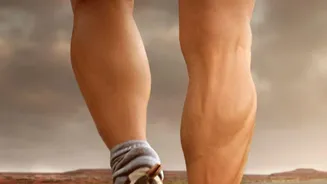
reverses this; you land on your toes and roll to your heel, which puts less pressure on the knee joint. This simple change can provide relief for people with knee pain from conditions like osteoarthritis. Beyond pain relief, backward walking strengthens muscles differently. It places greater emphasis on your quadriceps, the large muscles at the front of your thigh that provide crucial support for your knees. It also engages your glutes, hamstrings, and even muscles in your lower back that help with stability, potentially easing chronic back pain. Studies have also shown it can improve balance, flexibility, and even burn more calories than walking forward at the same pace.
The Real Dangers of Retro-Walking
The headline says it all: trying this in traffic or crowded areas is a terrible idea. Your field of vision is gone, making collisions with people, cars, or cyclists a near certainty. But the risks extend beyond busy streets. Uneven pavements, unexpected potholes, stray objects, and curbs become significant tripping hazards when you can't see them coming. A fall while moving backward can be more severe, as you are less able to brace yourself. Even in a seemingly clear area, frequently turning your head to check your path can throw off your balance and lead to a fall. For beginners, moving in an unfamiliar way can also cause muscle strain if your form is incorrect or you do too much too soon. The point of the exercise is to gain stability and strength, but doing it in an uncontrolled environment creates the exact opposite effect, introducing major risks of injury.
Your Guide to Safe Backward Strides
To get the benefits without the risks, your environment is key. The safest place to start is on a treadmill. You have handrails for support, a predictable flat surface, and you can control the speed precisely. Start at a very slow pace, around 2-3 km/h, holding the rails until you feel stable. Attaching the safety clip to your clothing is non-negotiable; it will stop the belt immediately if you stumble. If you don't have access to a treadmill, the next best option is a completely clear, flat, and open space. An empty running track, a clear hallway at home, or a deserted basketball court are good options. For outdoor sessions, it’s highly recommended to have a friend act as a spotter, walking forward while facing you to alert you to any obstacles. The goal is to create a controlled setting where your only focus is on your movement, not on avoiding unexpected dangers.
How to Start Your Retro-Walking Routine
Like any new exercise, the key is to start slow and listen to your body. Begin by incorporating just five to ten minutes of backward walking into your regular workout, perhaps as a warm-up. Focus on your form: stand up straight, keep your back straight, and engage your core to maintain balance. Take deliberate, controlled steps, landing on the ball of your foot and rolling through to the heel. Keep your steps shorter than you would when walking forward to maintain control. As you become more comfortable and your balance improves, you can gradually increase the duration and, if on a treadmill, the speed or incline. Don't try to go fast initially. The benefits come from the controlled motion and muscle engagement, not from speed. Consistency is more important than intensity when you're starting out.