







A Glimpse into a Golden Age
Located about 80 kilometres from Raipur, Sirpur, once known as 'Shripur' or the 'City of Wealth', was the capital of the Dakshina Kosala kingdom from the 5th to the 12th century. It flourished under rulers like the Panduvamshi kings, becoming a major
hub for trade, culture, and religion. The famous Chinese traveller Xuanzang (also known as Hiuen-Tsang) visited in 639 CE and wrote of a prosperous kingdom with benevolent rulers and a remarkable spiritual vibrancy, noting over 100 monasteries and just as many temples. The city's recent inclusion in UNESCO's Tentative List of World Heritage Sites underscores its global significance, marking a crucial step towards wider recognition.
The Masterpiece in Brick
The crown jewel of Sirpur is the 7th-century Lakshmana Temple, dedicated to Lord Vishnu. What makes it an architectural marvel is that it's one of India's finest and best-preserved temples built almost entirely of brick. Commissioned by Queen Vasata, the temple stands on a high stone platform, its tower covered in exquisite carvings of deities and scenes from daily life that have withstood the ravages of time. While many brick structures from that era have crumbled, the precision and artistry of the Lakshmana Temple offer a direct window into the advanced engineering and aesthetic sensibilities of the Panduvamshi dynasty. An on-site museum run by the Archaeological Survey of India houses a fascinating collection of statues and relics found in the area.
A Confluence of Faiths
What truly sets Sirpur apart is its history as a melting pot of India's great religions. Archaeological excavations have unearthed a rare and harmonious coexistence of Hindu, Buddhist, and Jain sites, all within the same ancient city. More than 22 Shiva temples, five Vishnu temples, 12 Buddhist viharas (monasteries), and three Jain viharas have been discovered, painting a picture of a tolerant and multicultural society. This peaceful confluence is rare, demonstrating that for centuries, Sirpur was a place where different spiritual paths not only crossed but thrived alongside one another.
The Lost Monasteries of Sirpur
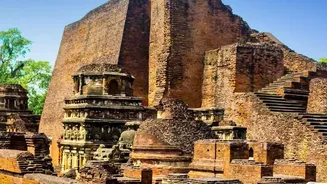
Xuanzang’s accounts of a thriving Buddhist centre were confirmed dramatically with the unearthing of numerous monasteries, some believed to be older than those at Nalanda. The Anand Prabhu Kuti Vihara and the Swastik Vihara are two of the most significant finds. These were not just simple residences but organised centres for meditation, study, and teaching. Excavations have revealed monolithic statues of Buddha and Avalokiteshvara, intricate door jambs, and assembly halls. The discovery of a vast number of bronze statues also suggests Sirpur was a major centre for bronze manufacturing, with its art possibly influencing regions as far as Ellora.
An Ongoing Discovery
A visit to Sirpur is a visit to a live archaeological site. Much of what is known about the city has only been uncovered since major excavations began in the early 2000s. Beyond temples and monasteries, archaeologists have found evidence of a sophisticated urban centre, including an ancient marketplace, a 6th-century bath house, and residential quarters. The sheer density of well-preserved structures makes Sirpur a unique destination. It's not just a collection of isolated monuments but the remains of an entire city, offering a holistic view of life over a thousand years ago.