


More Than Just Bad Breath
It’s easy to dismiss bad breath as a normal part of having a pet, but it’s often the first and most obvious sign of dental disease. By the time most dogs and cats reach three years of age, they already show signs of early-stage periodontal disease. This
begins when plaque, a sticky film of bacteria, coats the teeth. If not removed, it hardens into tartar, leading to gum inflammation (gingivitis), pain, and eventually, tooth loss. More alarmingly, bacteria from an infected mouth can enter the bloodstream and potentially damage vital organs like the heart, kidneys, and liver. This connection between oral health and systemic health is why veterinarians now view dental care as a critical component of your pet’s overall wellness.
The Role of a Professional Cleaning
A professional veterinary dental cleaning is a thorough, deep-cleaning procedure that simply cannot be replicated at home. It is performed under general anesthesia, which is crucial for both your pet's safety and the procedure's effectiveness. Anesthesia allows the veterinary team to perform a complete tooth-by-tooth examination, including taking dental X-rays to see the 60% of the tooth structure that lies hidden below the gumline. This is where serious problems like root decay, abscesses, and bone loss occur, often without any visible signs. During the cleaning, a vet or technician uses specialized hand and ultrasonic scalers to remove hardened plaque and tartar from above and below the gumline. Afterward, the teeth are polished to a smooth surface, which helps slow the future buildup of plaque. If advanced disease is found, extractions of painful, non-viable teeth may be necessary.
The Power of At-Home Care
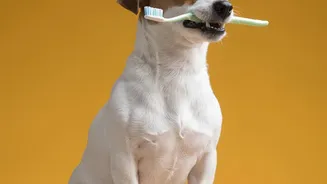
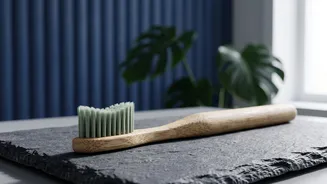
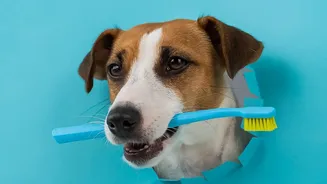
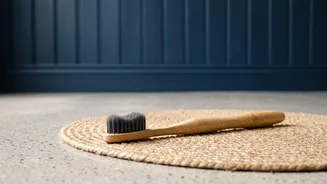
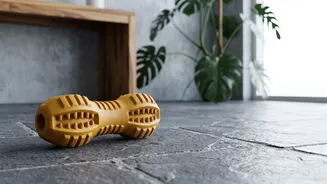
While a professional cleaning hits the reset button on your pet's oral health, its benefits will be short-lived without consistent follow-up at home. At-home care is the first line of defense, designed to manage plaque on a daily basis before it can mineralize into tartar. Brushing your pet’s teeth is considered the gold standard. If you can do it daily, or even three to four times a week, you can significantly slow the progression of dental disease. Always use a toothpaste formulated specifically for pets, as human toothpaste contains ingredients like xylitol that are toxic to them. For pets who resist brushing, other options can help. Specially formulated dental chews, treats, and kibble can mechanically scrape away some plaque. Water additives and oral rinses can also help reduce bacteria in the mouth, complementing your efforts.
A Partnership for Lifelong Health
The most effective strategy for managing your pet's dental health is combining professional cleanings with daily home maintenance. Think of it as a partnership. The annual or semi-annual professional cleaning does the heavy lifting—removing tartar, assessing for hidden disease, and treating any existing problems. It creates a clean slate. Your daily at-home care then maintains that clean slate for as long as possible. Home brushing disrupts the plaque that forms every day, while professional cleanings remove the stubborn tartar that inevitably accumulates over time, especially in hard-to-reach areas. Neglecting one side of the equation is less effective. Relying only on professional cleanings means your pet may endure painful inflammation in the months between visits. Relying only on home care means you'll never be able to remove tartar once it has formed, nor will you be able to identify disease lurking below the gums.