





What is Project Camellia?
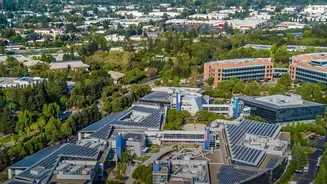
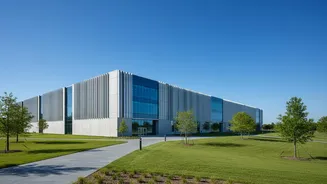
Project Camellia is the codename for OpenAI's new data center campus in Effingham County, Georgia. Announced on July 22, 2026, it represents the first major physical manifestation of the company's massive new infrastructure strategy. Instead of just leasing
cloud services, OpenAI is now taking the lead in designing and developing its own AI-focused infrastructure. The project will span 1,400 acres and involve an initial investment of at least $20 billion, with the total cost for the full build-out expected to exceed $30 billion. It's a move that signals a fundamental shift from being a consumer of cloud computing to a creator of the very foundations of AI power.
Decoding the $750 Billion Figure
The $750 billion number isn't for Project Camellia alone. It represents OpenAI's total projected spending on computing infrastructure through 2030. This figure, which was recently increased from an earlier estimate of $600 billion, covers a vast network of commitments, including massive cloud contracts with providers like Microsoft, Oracle, and Amazon Web Services. The breathtaking sum highlights the insatiable demand for computational power required to train and run next-generation AI models. It underscores a central truth of the current AI race: leadership is directly tied to the ability to secure and fund an unprecedented amount of digital infrastructure, years in advance of its use.
The AI Power Problem
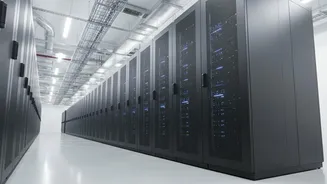
The driving force behind this colossal spending is the looming shortage of two critical resources: AI chips and electricity. For years, OpenAI CEO Sam Altman has expressed concerns that the global supply of advanced semiconductors won't keep pace with the demands of increasingly powerful AI. Building new chip fabrication plants, or fabs, is incredibly expensive, with a single modern facility costing upwards of $20 billion. Simultaneously, these AI factories require immense amounts of electricity. The Georgia campus alone has contracted for 3.2 gigawatts of power—enough to power a major city—which will be delivered in phases between 2028 and 2032. Project Camellia is OpenAI's attempt to solve both problems by directly influencing the development of power and data center capacity.
A High-Stakes Gamble
This massive push is not without its risks and controversies. Committing to hundreds of billions in spending when the company's losses are still substantial is a high-stakes bet on future growth and profitability. Furthermore, the environmental impact is a significant concern. Much of the new power capacity for the Georgia facility is expected to come from natural gas, which would more than double the utility provider's fossil fuel generation. OpenAI has made commitments to fund the grid infrastructure costs itself, preventing them from being passed on to residential customers, and will use a closed-loop water cooling system to minimize water consumption. However, the project's success hinges on raising enormous sums of capital and navigating complex logistical, regulatory, and energy challenges over the next decade.