






The Age of Answers Is Over
For generations, professional value was often tied to knowledge. Experts were the people who had the answers, whether they were doctors diagnosing an illness, engineers solving a technical problem, or lawyers citing precedent. However, the rise of powerful
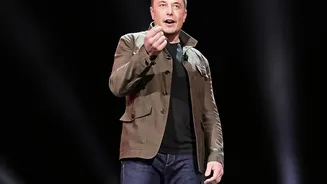
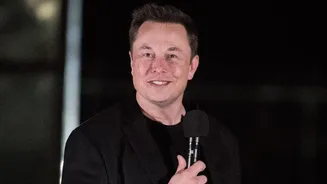
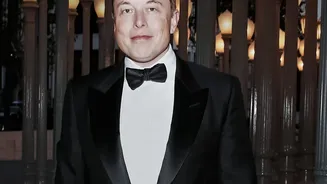
AI is challenging this model. With advanced systems capable of sifting through vast amounts of data to provide detailed answers in seconds, the role of the human expert is shifting. Elon Musk’s recent comments tap into this evolution, highlighting a future where our primary value comes not from remembering information, but from our ability to strategically seek it. In this new landscape, AI acts as a powerful engine for answers, but it still requires a human driver to give it direction. That direction comes in the form of a well-crafted question.
What Makes a Question 'Better'?
A 'better' question in the AI era is one that goes beyond simple fact-finding. It’s about curiosity, context, and critical thinking. Vague queries like “give me marketing ideas” will yield generic results from an AI. A better question provides context and defines the problem with precision: “Generate three marketing campaign concepts for a new plant-based protein bar targeting millennials in urban Indian markets, focusing on sustainability and convenience.” This type of query guides the AI, leveraging its power to explore a specific, well-defined strategic goal. It requires the user to understand the business problem, the target audience, and the desired outcome. This skill of framing a problem is uniquely human, blending domain knowledge with creative and strategic insight. Experts note that asking these kinds of insightful questions is the foundation of critical thinking and strategic decision-making.
Your New Role: AI's Chief Strategist
Musk’s perspective reframes the human-AI relationship from one of competition to one of collaboration. If AI handles the execution of tasks like writing code, analyzing data, or even generating designs, the human role elevates to that of a strategist or director. In a recent interview, Musk advised young people to pursue a broad education across arts, sciences, and engineering to gain the wide-ranging knowledge needed to know what to ask of AI and robots. This broad understanding allows a person to connect disparate ideas and identify novel problems for AI to solve. Someone who understands only technology might build a powerful tool, but someone who also understands psychology and economics can ask whether that tool is useful, needed, or commercially viable. This makes the ability to formulate a good question a form of leadership—directing immense computational power toward a worthwhile goal.
How to Cultivate Your Curiosity
Developing the skill of asking better questions is not a technical challenge; it’s a mental one. It begins with nurturing an innate sense of curiosity. One technique leaders use is the “Question Burst,” where teams spend a few minutes generating only questions about a problem without attempting to answer them. This process often helps reframe the challenge and uncover new paths forward. To improve your own questioning ability, practice being specific and providing context in your queries, whether to an AI or a colleague. Challenge assumptions by frequently asking “why?” and “what if?” Instead of settling for the first answer an AI provides, treat it as a starting point. Follow up with deeper, more probing questions that test the limits of the initial response and push toward a more nuanced understanding. This iterative dialogue is where true insight is generated.