







A Faster Commute During Rush Hour
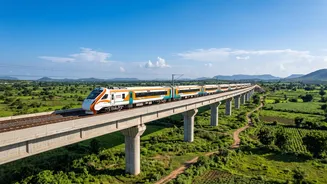
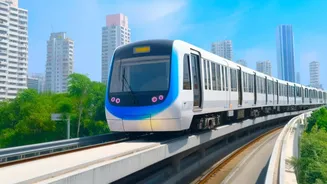
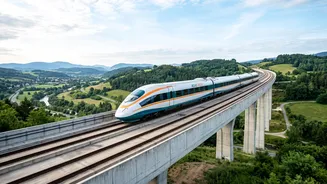
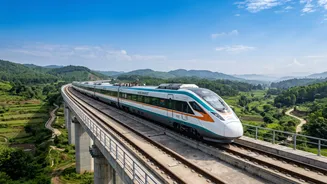
In a significant move to improve the daily travel experience for thousands of commuters, the NCRTC has introduced eight additional 'fast' train services on the bustling Delhi-Ghaziabad-Meerut corridor. These services are specifically designed to operate
during the busiest morning and evening peak hours, targeting office-goers and students who rely on the network for timely travel. Unlike the regular services that stop at all stations, these new trains are limited-stop, which significantly cuts down the overall journey time. According to officials, this initiative is a direct response to growing passenger demand and aims to make public transport a more attractive option.
New 'Fast Train' Timetable
These additional services are scheduled precisely when they are needed most. During the morning peak, two fast trains depart from both terminal stations — Sarai Kale Khan in Delhi and Modipuram in Meerut — at 8:00 AM and 8:30 AM. Similarly, in the evening, two fast trains leave from each end at 6:00 PM and 6:30 PM. This means a total of four new services in each direction during peak periods. Importantly, these new services run alongside the regular Namo Bharat trains, which will continue to operate at a frequency of every 10 minutes. Commuters are advised to check station display boards and listen for platform announcements to distinguish between the fast and regular services before boarding.
How Much Time Will You Save?
The primary benefit of these limited-stop trains is the time saved on key stretches of the corridor. The journey between Anand Vihar and Ghaziabad is now reduced to just eight minutes. A trip from Ghaziabad to Begumpul in Meerut will take approximately 28 minutes, while travelling from Anand Vihar to Begumpul can be completed in about 36 minutes. For those travelling the entire length of the corridor, from Sarai Kale Khan to Modipuram, the journey will take less than 50 minutes, a noticeable improvement over the 55 to 60 minutes on a regular service. To achieve these faster times, the new services will halt at only five major stations: Sarai Kale Khan, Anand Vihar, Ghaziabad, Begumpul, and Modipuram.
Responding to Growing Ridership
The decision to add more services stems from the corridor's rapidly growing popularity. The Namo Bharat network recently crossed the 50 million passenger journey milestone in November 2026. Ridership has been accelerating, with the latest 10 million journeys recorded in a record 93 days. In recent months, the corridor has consistently served over 3.2 million passengers monthly, with an average daily ridership of around 1.1 lakh. The highest single-day ridership was recorded on August 28, 2026, with 168,666 passenger journeys. This sustained increase in passengers highlights the growing reliance on the RRTS for a fast, reliable, and comfortable commute, prompting NCRTC to enhance its service capacity.
The Bigger Picture: A Modern Transport Solution
The Namo Bharat RRTS is India's first regional rapid transit system, designed for an operational speed of 160 kmph. The introduction of these fast trains is part of a broader strategy to encourage a shift from private vehicles to efficient public transport. This not only eases road congestion but also contributes to reducing air pollution in the National Capital Region. The system's high punctuality rate of over 99 percent and seamless integration with other modes of transport like the Delhi Metro, railways, and bus terminals have been crucial to its success. As ridership continues to climb, these service enhancements ensure the network remains a dependable backbone for regional mobility.