






An Alarming Silence
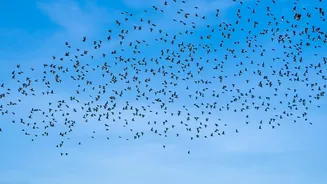
Across the globe, bird populations are facing a worrying downward trend. Since 1970, North America alone has lost nearly 3 billion birds, representing a loss of more than one in every four birds. This isn't just about rare species disappearing; even common
birds are vanishing at an alarming rate. This decline is a red flag for the health of our ecosystems, where birds play vital roles in pest control, pollination, and seed dispersal. The causes are complex, including disease and pesticide use, but two major threats stand out: widespread habitat loss and the escalating climate crisis.
The World's Avian Superhighways
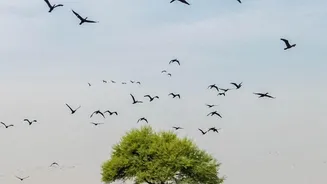
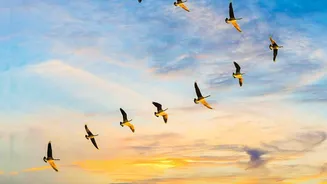
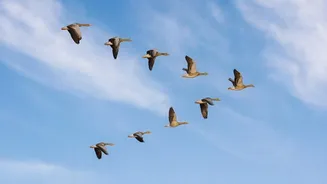
Many birds don't live in one place year-round. They travel along specific routes known as flyways, which act like highways in the sky connecting their breeding grounds with their wintering habitats. India is critically positioned at the heart of the Central Asian Flyway (CAF), a massive corridor that links the Arctic and Central Asia with South Asia and the Indian Ocean. Each year, this flyway brings millions of birds, from the iconic Bar-headed Goose that crosses the Himalayas to countless species of ducks and shorebirds, to India’s wetlands, grasslands, and coasts for the winter. These sites are not just destinations but essential refuelling stations on an epic journey.
A Journey Fraught with Peril
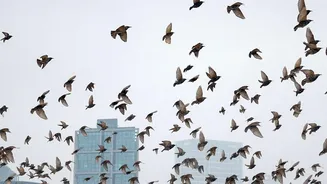
Migration is the most dangerous time in a bird's life. The journey is a high-stakes marathon that requires immense energy and safe places to rest and refuel. However, human activity has turned these routes into obstacle courses. Urban expansion, agriculture, and industrial development have led to the destruction of crucial stopover habitats like wetlands and forests. Birds face threats from collisions with buildings and wind turbines, disorientation from light pollution, and the unpredictable, extreme weather events caused by climate change. The entire journey is a chain of connected sites, and the loss of even one link can have devastating consequences for an entire population.
Connecting the Dots for Conservation
This is why protecting isolated habitats is not enough. Conservation must focus on the entire network of sites a bird uses throughout the year—a concept called connectivity. If a bird has a safe breeding ground in Siberia and a protected wintering home in an Indian wetland, it still might not survive if the critical stopover sites in between are destroyed. By studying migratory patterns using tools like satellite tracking, scientists can identify these crucial stopover locations and target them for protection. This ensures that the birds have a safe path for their entire journey, dramatically increasing their chances of survival.
Success Stories from the Flyway
The good news is that this approach works. One of India's most celebrated conservation successes involves the Amur Falcon. These small raptors were once hunted in vast numbers during their stopover in Nagaland. Through community engagement, education, and government action, the hunting was stopped. Today, the village of Pangti has transformed from a hunting ground into a sanctuary, and the Amur Falcon has become a flagship species for conservation in the region. This story, along with others like the community-led protection of Greater Adjutant Storks in Assam, demonstrates that focused conservation efforts at key migratory points can lead to remarkable recoveries.
A Global Effort for a Global Wonder
Since migratory birds cross multiple international borders, their protection requires global cooperation. The Convention on the Conservation of Migratory Species of Wild Animals (CMS) is a key international treaty that facilitates this collaboration. India plays a significant leadership role, having launched a National Action Plan for the conservation of migratory birds along the Central Asian Flyway. By working with over 30 other countries, India is helping to coordinate efforts to protect habitats, monitor species, and reduce threats across this vital corridor, recognizing that these birds connect not just ecosystems, but nations.