






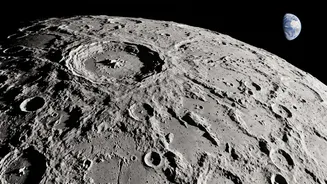
A Landmark Lunar Scar
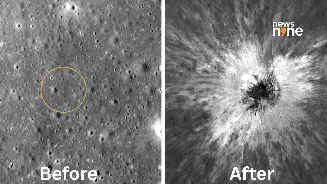
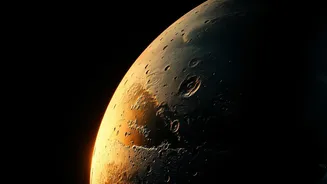
The Moon has a new, significant landmark. Officially named McGetchin crater, the feature is a staggering 222 metres (728 feet) across and 43 metres (141 feet) deep—large enough to comfortably swallow the Roman Colosseum. This isn't an ancient feature discovered
for the first time; it’s a fresh wound. Scientists have pinpointed its formation to sometime between April and May of 2024, when an object the size of a multi-story building smashed into the lunar surface. The impact was so significant that it is now considered the largest newly formed crater ever identified by scientists, not just on the Moon, but anywhere in our solar system.
Cosmic Detective Work
The discovery of McGetchin crater wasn't a single eureka moment but a feat of meticulous cosmic detective work. The impact itself, despite its power, was not observed in real-time from Earth or by any space telescope. The credit goes to NASA’s tireless Lunar Reconnaissance Orbiter (LRO), which has been mapping the Moon for over a decade. Scientists found the crater by painstakingly comparing new, wide-angle images of the lunar surface with older ones stored in the mission's vast archive. An analyst first noticed a bright spot indicating disturbed material in data from 2025, over a year after the crater formed. This led to follow-up investigations with LRO's high-resolution cameras, which confirmed the size and scale of the remarkable new feature.
An Unprecedented Scale
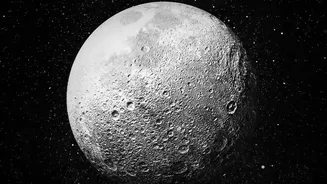
While the Moon is covered in craters, most are billions of years old. McGetchin is exceptional because it’s new, and its size shatters the previous record for a recently formed crater. It is reportedly three times larger than the last record-holder, also discovered by the LRO. To be clear, it does not rival ancient behemoths like the South Pole-Aitken Basin, which stretches over 2,500 kilometres across the lunar far side. However, witnessing the immediate aftermath of an impact of this magnitude is what makes it a 'once-in-a-lifetime observation,' according to researchers. The energy of the collision was immense, hurling rock and dust over 100 kilometres from the impact site.
A Pristine Scientific Laboratory
For scientists, a fresh crater like McGetchin is a natural laboratory. Because it is so new, it provides a pristine window into the Moon's geology, showing materials excavated from beneath the surface that haven't been altered by billions of years of space weathering. The impact did more than just dig a hole; it fundamentally changed the surrounding terrain. Thermal instruments on the LRO detected a 'cold spot' nearly 7 kilometres wide around the crater. This is because the impact's shockwave 'fluffed up' the dense lunar soil, making it less able to retain heat during the frigid lunar night. Studying this effect gives scientists vital new data on the physics of impact cratering, a fundamental process across the solar system.
Lessons for Future Lunar Missions
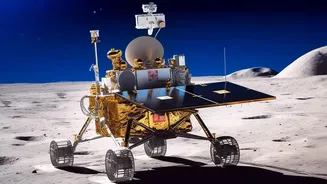
The discovery is more than just a scientific curiosity; it carries important implications for the future of lunar exploration, including for ambitious national programs like India’s Chandrayaan series. On one hand, the impact serves as a stark reminder of the hazards in the lunar environment. Understanding the frequency and scale of such events is critical for designing safe, long-term habitats and infrastructure for future astronauts. On the other hand, the pristine material ejected from the crater could become a prime target for future robotic or human missions, offering a chance to study the Moon's composition in a way that wasn't possible before. This 'once-in-a-century' event provides crucial information that will help make humanity's return to the Moon both safer and more scientifically rewarding.