



More Than Just Abdominals
Before diving into the specifics of running and Pilates, it's crucial to understand what the “core” really is. It’s not just the rectus abdominis, the muscle responsible for the six-pack appearance. The core is a complex, three-dimensional group of muscles
that acts as a muscular box or canister for your torso. This includes the diaphragm at the top, the pelvic floor muscles at the bottom, deep abdominal muscles like the transverse abdominis that wrap around you like a corset, and muscles in your back and hips. Together, these muscles work to stabilize your spine and pelvis, providing a solid foundation for all movement. A strong and coordinated core is the epicentre from which power is transferred to your limbs.
The Core as a Powerhouse for Runners
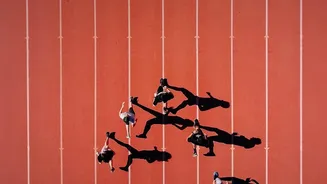
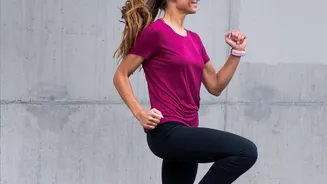
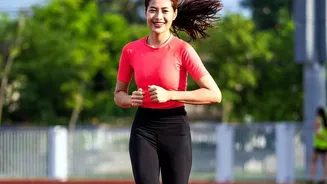
In running, the core acts as a critical force and energy transfer station. As you run, your arms swing to create rotational force. A stable core, particularly strong obliques, harnesses this rotation and channels it into forward propulsion. If the core is weak, this energy “leaks,” leading to inefficient movement, wasted energy, and quicker fatigue. Furthermore, a stable core maintains an upright posture and minimises unnecessary side-to-side trunk sway or hip dropping. This not only improves your running economy—how much energy you expend at a certain pace—but also significantly reduces the risk of injury. Weakness can force other parts of the body, like the lower back, hips, and knees, to compensate, leading to common running ailments like IT band syndrome or runner's knee.
Precision and Control in Pilates
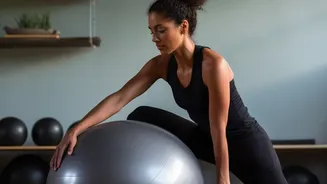
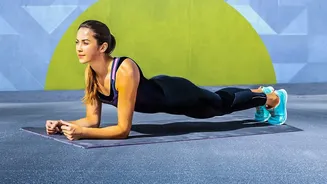
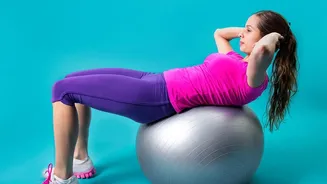
While running demands a reactive and stabilising core, Pilates trains the core for deliberate control and endurance. A foundational principle of Pilates is maintaining a stable centre while moving your limbs. Instructors often use cues like “pull your navel to your spine” to encourage the engagement of the deep transverse abdominis muscle. This creates what is known as the “powerhouse,” a solid, unmoving trunk that supports every exercise. This type of engagement is less about generating explosive force and more about building deep muscular endurance and control. Pilates hones your ability to isolate movement, ensuring that when you lift a leg, the pelvis remains perfectly still. This precise control protects the spine, improves posture, and enhances body awareness, building functional strength from the inside out.
A Tale of Two Strengths
The demands running and Pilates place on the core are distinct yet complementary. Running requires dynamic stability—the ability of the core to instantly react to the impact of each foot strike and control the resulting rotational forces. It’s about being a solid, anti-rotation anchor amidst constant motion. Pilates, on the other hand, develops isometric strength and endurance—the ability to hold the core in a contracted, stable position for extended periods while the arms and legs move through precise patterns. One is about managing external chaos (impact and momentum), while the other is about creating internal order (control and precision). A runner might have a core strong enough to handle a 10-kilometre run but struggle to maintain a stable pelvis during a Pilates leg circle, and vice versa.
Why You Need Both for Peak Performance
Integrating both running and Pilates into your fitness routine creates a more resilient and versatile athlete. The deep control and body awareness gained from Pilates can directly translate to better running form. A Pilates-trained core is better equipped to prevent the subtle hip drops and excessive trunk rotation that lead to energy waste and injury on a long run. Conversely, the dynamic, real-world challenge of running can test the endurance of a core honed in the controlled environment of a studio. By training your core for both explosive force transfer and meticulous control, you build a truly functional foundation that supports not only your workouts but all of life’s daily movements, from carrying groceries to maintaining good posture at your desk.