

The Evolution from Ingenuity
The incredible success of the Ingenuity Mars Helicopter proved that powered, controlled flight is possible in the thin Martian atmosphere. Ingenuity, which completed 72 flights over nearly three years, was a technology demonstration, a trailblazer that carried
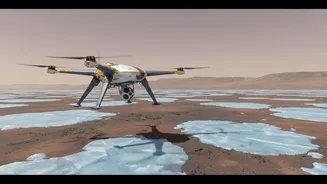
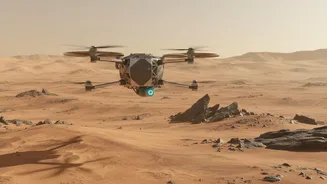
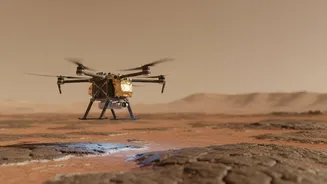
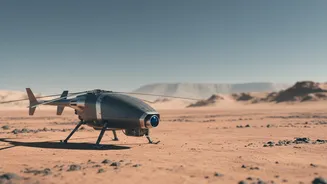
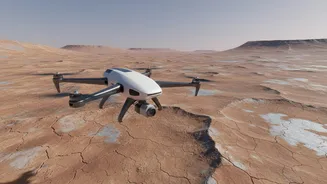
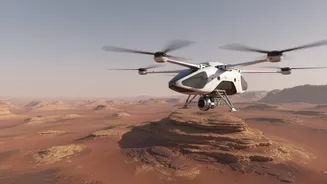
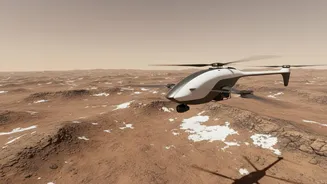
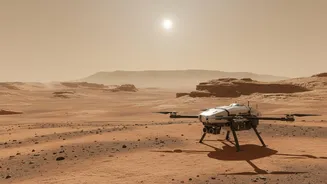
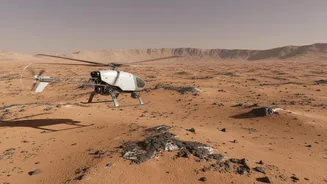
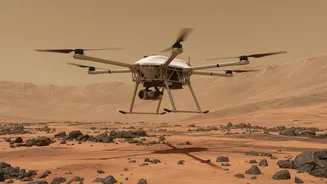
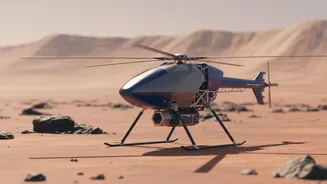
no scientific instruments. Its primary job was to prove flight was possible and to act as a scout for the Perseverance rover. The Skyfall concept, managed by NASA's Jet Propulsion Laboratory (JPL), represents the next logical step. It builds on Ingenuity’s proven design but aims to create a more capable scientific platform that can operate independently, carrying its own suite of instruments to conduct dedicated science investigations.
Why Hunt for Buried Ice?
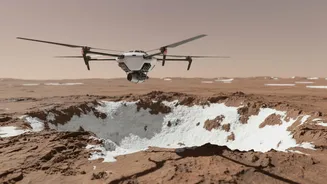
Future human missions to Mars will depend on in-situ resource utilization—the ability to use local resources to survive and operate. Water is the most vital of these. It's not just for drinking; it can also be broken down to produce breathable oxygen and key components for rocket fuel, dramatically reducing the mass and cost of missions. While Mars has vast quantities of ice, much of it is concentrated at the frigid poles, which are inhospitable for long-term human settlement. The more temperate mid-latitudes, where astronauts are more likely to land, are a different story. Here, any water ice is likely buried under a layer of soil and dust, hidden from orbiters. Finding these shallow ice deposits is paramount for selecting a safe and resource-rich landing site for the first human explorers.
How Skyfall Would Find Water
The key to Skyfall's mission is its scientific payload. The concept involves a trio of helicopters, each equipped with instruments to map the subsurface. The star of the show is a ground-penetrating radar, which uses a unique, flexible antenna that looks like a small cape trailing beneath the helicopter. This design allows the antenna to get very close to the ground to detect the fine layers where dry soil transitions to ice. By flying low and slow, Skyfall could create high-resolution maps of these hidden ice deposits in a way that Mars orbiters cannot. Data from orbiters can sense how the ground heats and cools, suggesting ice, but they cannot resolve the crucial zone between one and five meters deep—the exact depth astronauts could realistically excavate. Skyfall is designed to fill that critical data gap.
A Mission of its Own
Unlike Ingenuity, which was deployed from a rover, the Skyfall mission concept involves a more dramatic entrance. The plan calls for a delivery spacecraft, dubbed Space Reactor-1 Freedom, to release the helicopters for a mid-air deployment into the Martian atmosphere. This would allow the helicopters to operate without needing a nearby rover for communications. Developed in partnership with AeroVironment, the same company that helped build Ingenuity, the Skyfall mission is proposed for a potential launch in the late 2020s. While still a concept, this next generation of Mars aircraft represents a significant leap, aiming to provide detailed resource maps that will be essential for planning the first human outposts on another world.